
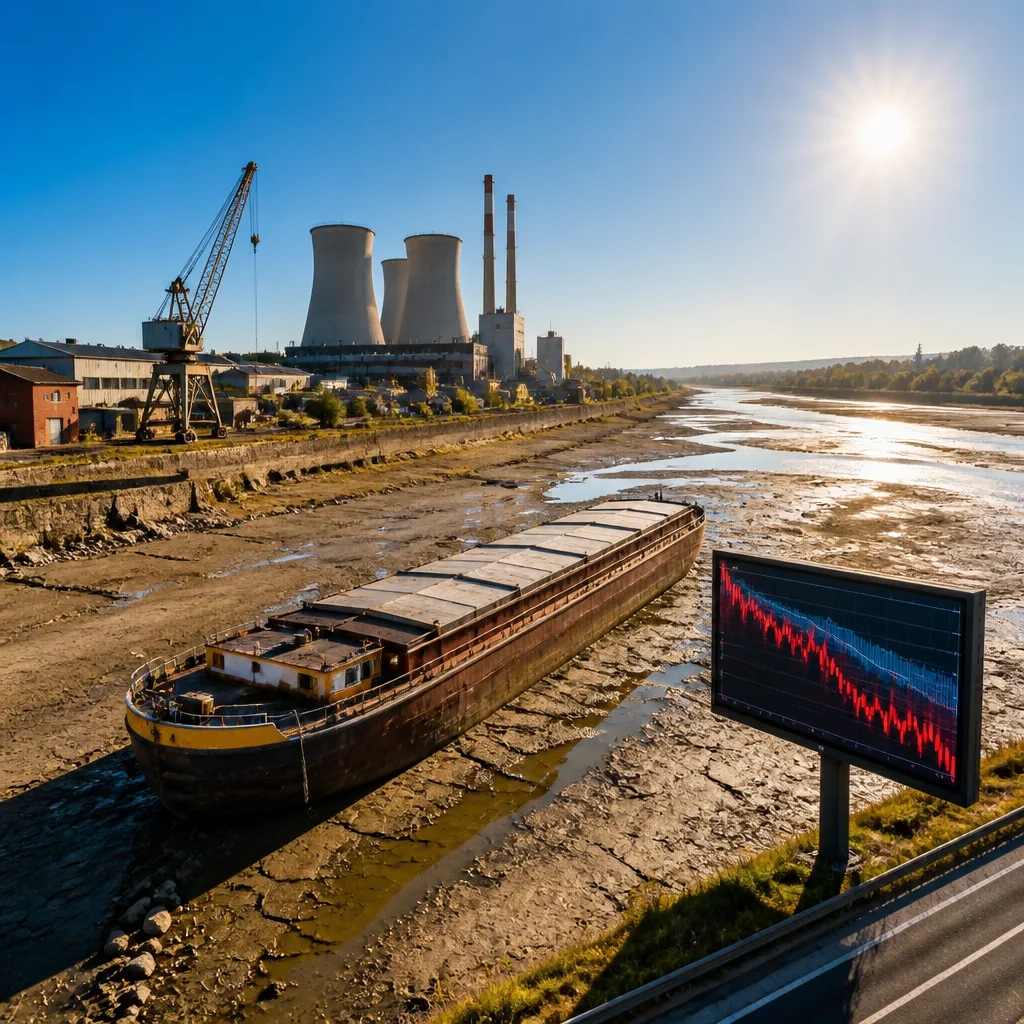
Europe’s summer heatwaves have inflicted a material economic toll, with analysts estimating losses across multiple fronts: worker productivity, tourism, energy production and freight logistics.
Analysts put total EU hit at hundreds of billions
Economists at the Dutch bank Triodos estimate that the heatwaves this season could wipe €180bn off EU GDP, a broad-brush assessment that combines unusually hot days and their likely impacts on output. In the United Kingdom, the green thinktank Verdant reported that the heat had already cost the economy £4.4bn by the end of July.
Research cited in the analysis shows that productivity tends to decline once temperatures breach 30°C, a threshold reached repeatedly across parts of mainland Europe during the recent hot spell. That decline in output affects both manual and office-based work, with knock-on effects for households and businesses through lost income and reduced economic activity.
Energy systems under pressure, especially France’s nuclear fleet
One significant channel for economic damage has been energy supply. In France, where more than two-thirds of electricity generation comes from nuclear plants, river temperature rises and low water levels have limited the ability of several nuclear facilities to discharge heat, forcing temporary shutdowns.
- Up to 15% of France’s nuclear estate was expected to be offline on a recent hot day, placing direct pressure on electricity availability.
- Triodos economists said France could be among the worst-affected European economies, with an estimated 1.4 percentage points shaved off GDP.
Reduced nuclear output raises wholesale electricity prices and can increase business costs at a time when consumers are already feeling stretched. In France’s case, Triodos noted the hit could compound pre-existing fiscal challenges for Paris, which was already facing higher borrowing costs.
Rivers, freight and wider supply-chain effects
Low water levels in major rivers such as the Rhine and Danube have produced surprising imagery — exposed artifacts and even wartime remnants — but the economic consequences are more serious. The Rhine in particular is a vital freight artery for European industry; constrained navigation reduces capacity for bulk shipments and raises transport costs for manufacturers and exporters that rely on inland shipping.
Analysts warn that disruptions to river freight and to energy supply can interact: higher transport costs feed into final prices, while energy shortages can curtail manufacturing, amplifying the hit to national output.
“could be wiped off EU GDP by the heatwaves”
What this means for households and businesses
The immediate effects are tangible: lost work hours, higher utility bills and more expensive goods where transport and energy make up a large share of costs. For firms, heat-driven outages and shipping delays raise operating expenses and complicate production planning; for households, reduced working hours and higher prices erode real incomes.
Financial markets and policymakers will watch several risk channels closely: energy market tightness that pushes up retail and wholesale prices, persistent productivity losses if extreme temperatures recur, and fiscal stress where lost GDP reduces tax receipts even as governments face higher spending needs.
| Item | Reported impact |
|---|---|
| EU total (Triodos estimate) | €180bn potential hit to GDP |
| United Kingdom (Verdant) | £4.4bn lost by end-July |
| France (Triodos) | 1.4 percentage points off GDP; up to 15% of nuclear capacity offline |
For South African businesses and policymakers monitoring international commodity and energy markets, these developments matter. Higher European energy prices and freight costs can filter through to global markets, influencing input prices for manufacturers and the cost of imported goods. Similarly, sustained productivity losses in major economies are likely to temper demand for exports over the medium term.
While the estimates are broad and subject to revision as more data become available, the combination of pronounced temperature spikes, pressure on cooling-dependent energy infrastructure and constrained inland shipping routes has produced a clear economic drag across several large European economies.
WE NEWS does not provide financial advice. The reported figures reflect the assessments of the original analysts and thinktanks mentioned above.













