
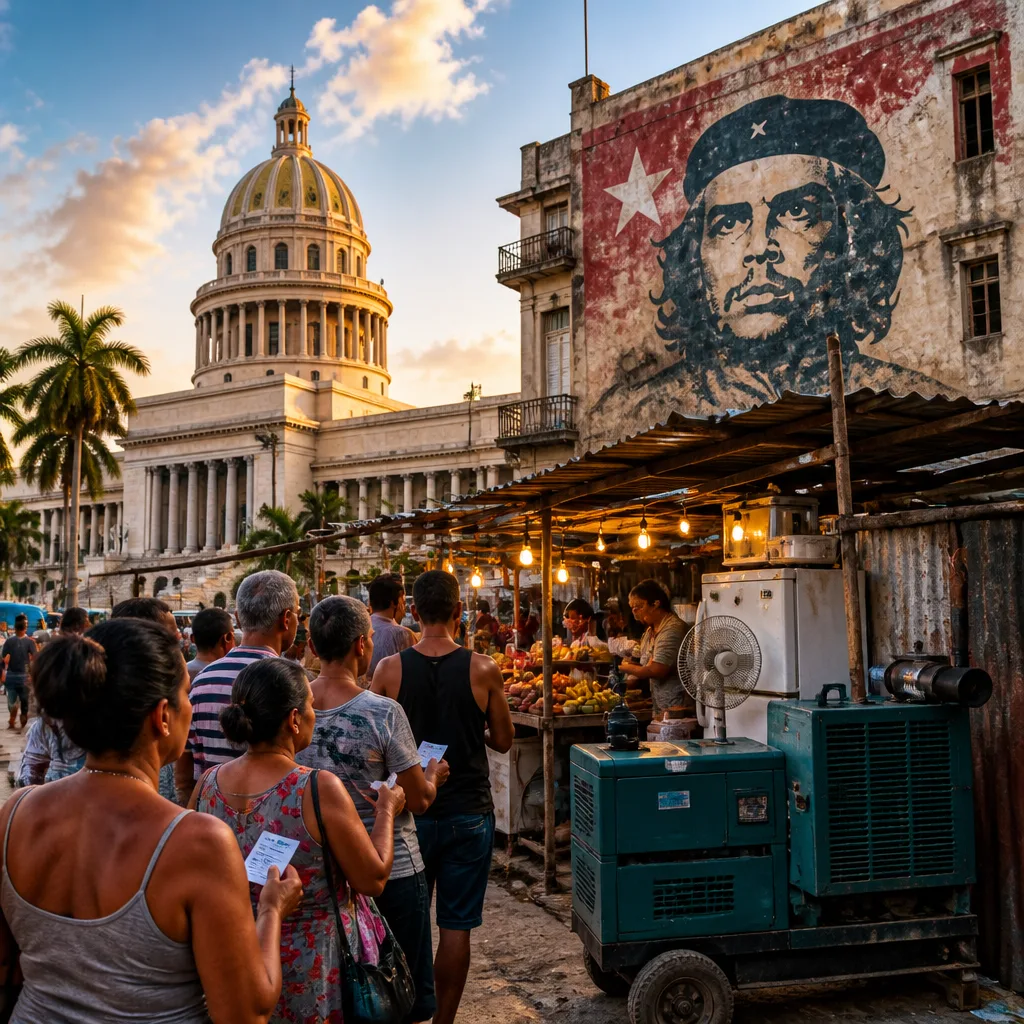
Cuba’s government has acknowledged one of the most far‑reaching economic reckonings since the 1990s, announcing reforms that expand market activity without surrendering the Cuban Communist Party’s political monopoly. The shift, described by President Miguel Díaz‑Canel as painful, is framed as necessary to confront what the leadership calls "the most difficult period of this century."
Market measures inside a political straitjacket
The Cuban leadership has signalled a pragmatic turn: reforms that increase private activity and tolerate market practices once deemed incompatible with the revolution, while retaining strict political control. Officials concede the change is difficult. As Díaz‑Canel told Russia’s RT en Español, the new direction goes "against the concepts with which one was formed, educated."
"Of course it pains me," Díaz‑Canel said, acknowledging the discomfort of adopting policies he described as contrary to his formation.
The reforms echo measures first adopted during the 1990s Special Period, when acute economic collapse forced Havana to legalise the use of the dollar, open to tourism and foreign investment, and tolerate small private enterprises under the label of cuentapropismo (self‑employment). Those changes were at times framed as exceptional concessions; the current policy appears broader but remains politically constrained.
Humanitarian and social strain
Reports of deteriorating living conditions across the island have accompanied the policy shift. The government says urgent change is needed as Cuba faces intensified external pressure from the United States and deep internal strain. Daily realities include significant shortages of medical supplies and electricity, with repeated blackouts that have provoked public frustration. There are accounts of increased visible poverty in Havana and other cities, including more beggars on the streets and highly constrained incomes.
The government acknowledges rock‑bottom wages in many sectors. One report cited in recent coverage noted workers earning about $15 a month while confronting rapidly rising consumer prices — a gap that helps explain why ordinary Cubans have grown impatient and visible acts of protest, such as banging empty pots in the streets, have been reported.
What the changes mean and the limitations
The current reforms aim to expand private activity and attract investment without ceding political power. Observers say this model — liberalising parts of the economy while maintaining tight political control — is a deliberate attempt to stabilise the country without the regime risking its hold on state power.
That balancing act raises practical questions about effectiveness. Opening up markets without meaningful institutional reform may ease some shortages and create opportunities for entrepreneurs, but it does not directly resolve constraints tied to political decision‑making, access to capital, or punitive external pressures such as sanctions.
Key immediate implications include:
- Economic relief vs structural limits: Market openings can provide short‑term service and employment gains but may be insufficient if public services and hard currency shortages persist.
- Political stability preserved: The Communist Party remains the arbiter of political life, reducing the likelihood of rapid pluralisation of power.
- Social discontent risk: Low wages and high prices risk sustaining unrest if reforms do not quickly improve living standards.
| Area | Reported condition |
|---|---|
| Wages | About $15 a month for many workers (reported) |
| Public services | Shortages of medical care and frequent blackouts reported |
| Political stance | Market measures adopted while retaining one‑party rule |
Regional and international considerations
The Cuban shift has implications beyond the island. For neighbouring countries and diasporas, changes in Cuba’s economy can affect migration flows, remittance patterns and bilateral relations. For governments and investors, the reforms present both an opening and a caution: opportunities for engagement exist, but persistent institutional and political constraints will shape what foreign capital can realistically achieve.
For South Africa, which has historical ties with Havana dating to the anti‑apartheid era and occasional diplomatic and medical cooperation, developments in Cuba matter symbolically and practically. Any large‑scale instability could influence regional diplomatic conversations and humanitarian responses, while economic opening in Cuba could reshape cooperation models that South Africa and other partners consider sustainable.
Cuba’s leadership has framed the reforms as unavoidable and painful, a strategy to stabilise an economy under severe strain without relinquishing political control. Whether the measures will be enough to ease the humanitarian pressures many Cubans face — and whether they will mollify or inflame public discontent — remains uncertain as implementation begins amid sustained external pressures.









