
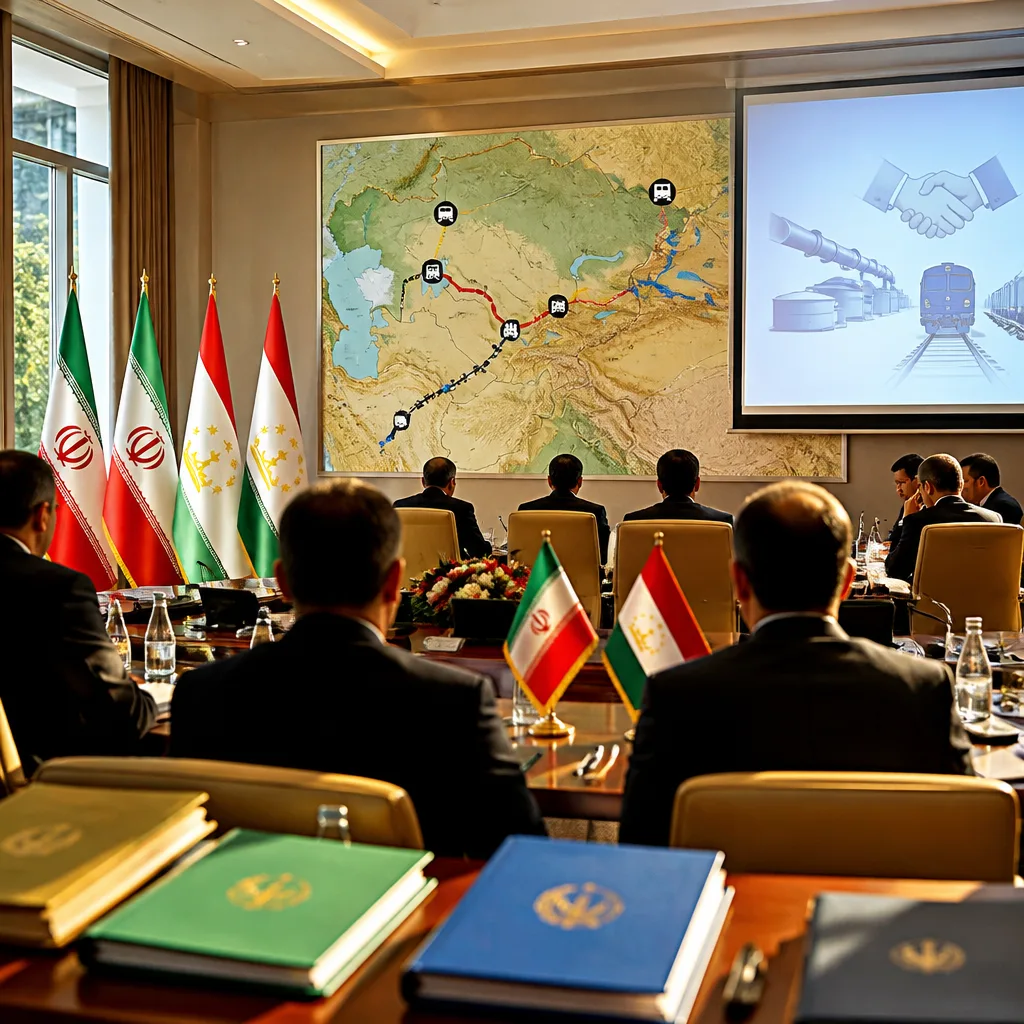
Ministers from the Republic of Tajikistan held talks in Tehran on Saturday with Iranian officials and agreed to pursue closer economic, energy and transport co‑operation, according to reporting by Tasnim News Agency.
Leaders’ visits set the tone for practical follow‑up
Dalir Jum’a, Tajikistan’s Minister of Energy and Water Resources, and Azim Ibrohim, Minister of Transport, travelled to Tehran for consultations with their Iranian counterparts and with the Iranian foreign minister, who framed the meetings as a continuation of recent reciprocal presidential visits.
The Iranian foreign minister expressed gratitude to Tajikistan for its support following what he described as "the American‑Zionist military aggression against Iran" and for President Emomali Rahmon’s attendance at the farewell ceremony for the late Iranian leader. He said the two countries, which he characterised as heirs to an ancient Persian civilisation, had long stood by one another and should make better use of their complementary capacities to lift bilateral relations, especially in commercial and economic fields.
The Tajik ministers signalled their satisfaction with the current state of relations and confirmed a clear intention from their leadership to expand co‑operation, notably in the energy and transport sectors. Both sides welcomed the idea of forming a joint working group and agreed on mechanisms to implement the memoranda reached during the presidents’ visits.
| Visitor | Position | Purpose |
|---|---|---|
| Dalir Jum’a | Minister of Energy and Water Resources (Tajikistan) | Talks on energy co‑operation |
| Azim Ibrohim | Minister of Transport (Tajikistan) | Discussions on transport links and implementation mechanisms |
| Farrukh Sharifzoda | Deputy Foreign Minister (Tajikistan) | Accompanied the ministers |
What was agreed and what comes next
While the reporting did not publish detailed texts of new treaties or commercial contracts, the meetings focused on turning understandings reached at the presidential level into executable projects. The two sides highlighted:
- the creation of a joint working group to follow up on agreements;
- the intention to use existing capacities in both countries to deepen economic and commercial links;
- priority sectors of energy and transport where implementation is to be accelerated.
The Tajik delegation described the talks as constructive and reiterated high‑level willingness in Dushanbe to broaden relations with Tehran.
For regional observers, such ministerial engagements are the routine but necessary step between diplomatic goodwill at presidential level and the practical mechanisms—project financing, technical co‑operation, cross‑border infrastructure and legal frameworks—required to deliver results.
Absent from the public account were specific timelines, financing arrangements or project names, which means tangible outcomes will depend on the pace at which the joint working group converts the agreements into concrete proposals and whether outside funding and regional dynamics support implementation.
Iran has increased diplomatic and economic outreach across Central Asia in recent years. For Tajikistan, a country with limited domestic energy resources but strategic location, deeper links on energy and transport could offer new routes to markets and potential investment in infrastructure. For Tehran, strengthening ties with a fellow Persian‑language state carries political, cultural and economic significance.
How these talks translate into projects will be of interest to capitals tracking transport corridors and energy supply options across Eurasia, and to international actors watching Tehran’s expanding regional diplomacy.












