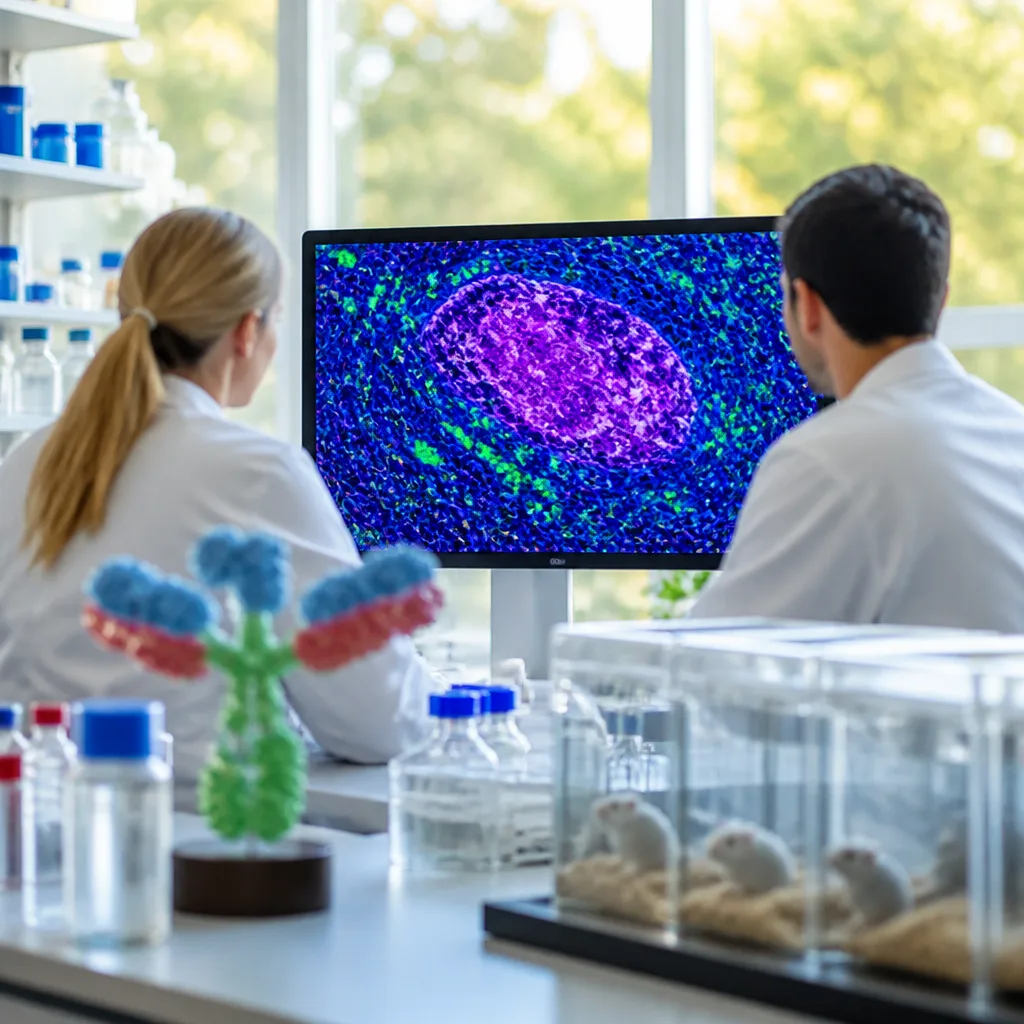
Stanford Medicine researchers report they have modified natural killer (NK) cells so the immune cells behave like a tissue‑resident form better suited to surviving inside and attacking solid tumours. In mouse experiments the altered cells entered tumours more effectively and slowed tumour growth, according to a study published in Science Translational Medicine.
What the researchers did
Natural killer cells are part of the innate immune system and can rapidly recognise and kill abnormal cells. Historically, NK‑cell and other cell‑based immunotherapies have been more successful against blood cancers than solid tumours, which often form physical and chemical barriers that keep immune cells out or neutralise them when they do enter.
To overcome those barriers, the Stanford team transformed conventional NK cells into a specialised, tissue‑resident phenotype — a state of the cell better adapted for living and functioning within tissues rather than circulating in the blood. The paper reports that these tissue‑resident NK cells infiltrated solid tumours much better than conventional NK cells and that the result was reproducible across experiments.
Key findings from the mouse studies
- The tissue‑resident NK cells showed improved infiltration into several types of solid tumours in mice.
- Animals receiving the modified NK cells exhibited slower tumour growth compared with controls.
- The anti‑tumour effect was enhanced when the engineered NK cells were paired with an antibody treatment that helps them recognise cancer cells.
The senior author, John Sunwoo, MD, the Edward C. and Amy H. Sewall Professor in the School of Medicine, described the infiltration as "very reproducible, very striking and very clear," according to the report. Co‑lead authors of the study are Nina Horowitz, PhD; Imran Mohammad, PhD; and June Ho Shin, PhD.
"We show that these tissue‑resident natural killer cells infiltrate into the solid tumours much better than conventional natural killer cells. It was very reproducible, very striking and very clear." — John Sunwoo, MD
Why this matters
Solid tumours — such as those in the lung, breast, colon and other organs — present a tougher challenge for immune cells than cancers of the blood. Tumour microenvironments can exclude immune cells, secrete factors that suppress immune function, and physically restrict access. Converting NK cells into a form that can reside and operate within tissues addresses several of these obstacles simultaneously: better infiltration, local persistence and the capacity to engage tumour cells on site.
Pairing cell therapies with tumour‑targeting antibodies is a practical strategy because antibodies can direct immune cells to recognise cancer cells more effectively. The Stanford study reports improved outcomes when the engineered NK cells were used together with such an antibody treatment, suggesting a combined approach may be more effective than either modality alone.
Limitations and next steps
These results are preclinical and were obtained in mouse models. As with many advances in cancer immunotherapy, promising findings in animals do not always translate directly to human patients. Further work will be needed to confirm safety, determine optimal dosing and manufacturing processes, and assess efficacy in human clinical trials.
The study represents an important proof‑of‑concept that adapting innate immune cells to a tissue‑resident state can improve their performance against solid tumours. If subsequent research confirms these findings in humans, the approach could expand the range of cancers amenable to cell therapy and make such treatments more accessible.
| Study element | Report |
|---|---|
| Institution | Stanford Medicine |
| Cell type | Engineered tissue‑resident natural killer cells |
| Model | Mouse models of several solid tumours |
| Outcome | Improved tumour infiltration and slower tumour growth; enhanced effect with antibody treatment |
| Publication | Science Translational Medicine |
For clinicians, researchers and funders, the paper highlights a pathway for improving NK‑cell therapies against solid tumours: modify cell phenotype to improve tissue residency, and combine that approach with tumour‑recognising antibodies. Translating the method into a safe, scalable human therapy will require careful clinical development but the study opens a credible route toward tackling cancers that currently resist immune‑based treatments.