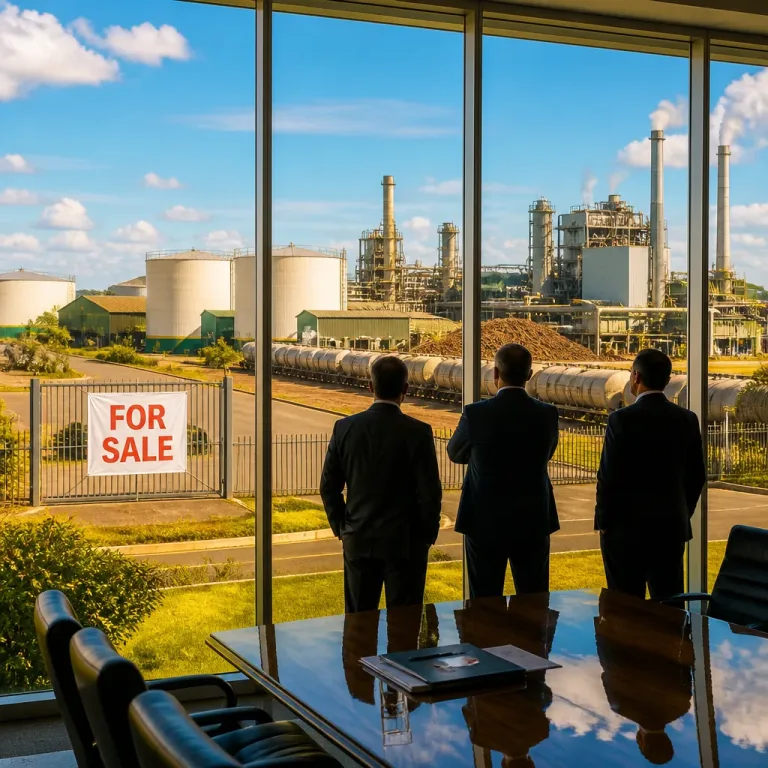
Creditors of renewable energy developer ZEN Energy resolved on 7 August to place the company and 11 associated entities into liquidation, filings with the Australian Securities and Investments Commission show. The decision follows administrators’ findings that the Adelaide-based group owed creditors about US$1.1 billion as at 30 June 2026 and that only a small portion of that debt appears recoverable.
The state government in South Australia confirmed it would lodge a claim and is “currently assessing across agencies the extent to which it is owed money by ZEN Energy”, a spokesperson said.
Scale of the shortfall
Administrators McGrathNicol reported that, in the best-case scenario, they hoped to recover roughly US$45 million from the company’s assets. That shortfall leaves most creditors facing substantial losses and follows the company appointing administrators on 3 July, an event that also led to about 60 job losses.
ZEN Energy had been a high-profile supplier to the South Australian government. The firm’s Across Government Electricity Retail Agreement to provide 100% renewable electricity to government operations was estimated to be worth US$1.53 billion through to 2035.
“The state government is currently assessing across agencies the extent to which it is owed money by ZEN Energy.”
The administrators’ report, as cited in court and media filings, set out the creditor picture: the company owed roughly US$1.1 billion but asset recoveries were projected to be limited.
Disputes with SA Power Networks and cash pressures
SA Power Networks (SAPN), which runs the state’s electricity distribution, had taken ZEN Energy to the Federal Court earlier in the year seeking outstanding payments. SAPN — owned by Cheung Kong Infrastructure Holdings and Spark Infrastructure — said it was owed US$15 million. That dispute had been subject to a payment plan under which ZEN agreed to pay US$2 million per week from the week ending 29 May 2026, until SAPN withdrew its court action after administrators were appointed.
Administrators McGrathNicol previously flagged that, as priority creditors, they would expect to have their estimated US$8 million in entitlements paid in full in a liquidation scenario.
Leadership changes and wider implications
ZEN Energy appointed Mark Butcher as chair in May, after co‑founder and green economist Ross Garnaut resigned. The administration and subsequent liquidation now place the group’s contracts, assets and ongoing projects under close scrutiny by creditors and courts.
- Creditor resolution: Wind-up of ZEN Energy and 11 related companies resolved 7 August.
- Debt position: Administrators reported about US$1.1 billion owed as at 30 June 2026.
- Projected recoveries: Administrators hope to reclaim about US$45 million from assets in the best case.
- Government exposure: The Across Government contract was estimated at US$1.53 billion to 2035; the state is assessing any claim.
The insolvency of a supplier contracted to deliver government electricity highlights the financial and operational risk governments face when long‑dated private supply contracts falter. For households and businesses, direct impacts will be felt mainly through employment losses and potential supply or contract re‑procurement costs carried by taxpayers and agencies.
| Item | Amount (US$) |
|---|---|
| Estimated creditor debts (30 June 2026) | 1.1 billion |
| Administrators’ best-case recoverable assets | 45 million |
| Across Government contract to 2035 | 1.53 billion |
| SAPN claim | 15 million |
| Weekly payment plan agreed (before administration) | 2 million |
Administrators, creditors and the courts will now oversee asset realisations, potential settlements and statutory distributions. The South Australian government’s assessment of its exposure will determine whether taxpayers bear direct fiscal costs, and whether alternative suppliers appointed to replace ZEN Energy will cost more or less than the original contract envisaged.
As the process unfolds, key questions remain about recoveries for unsecured creditors, the future of projects ZEN Energy had in development, and the prospects for employees and contractors caught up in the liquidation.