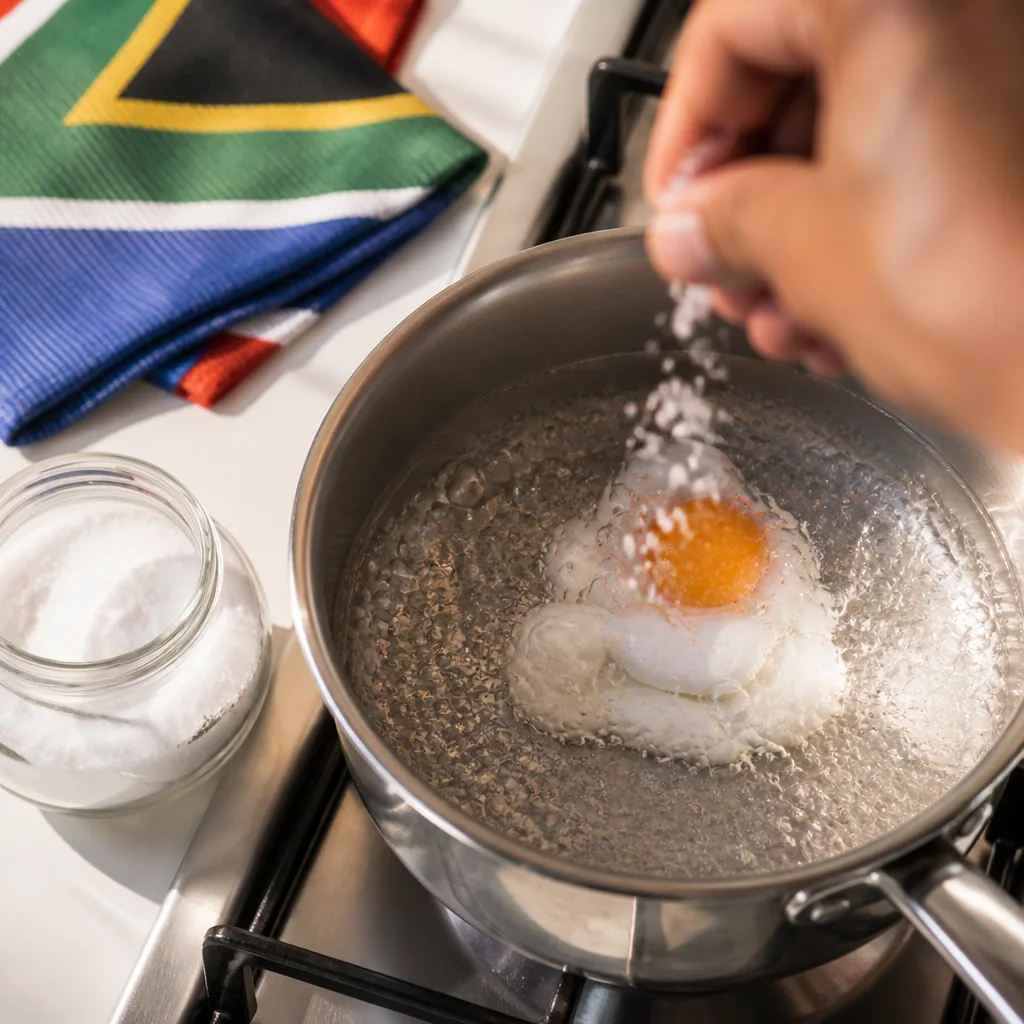
Adding a pinch of table salt to the water when boiling eggs alters the chemistry of the egg white and can speed up coagulation, according to an analysis reported by Futura-Sciences. The change is driven by how sodium chloride affects the ionic environment around the main egg-white protein, albumin.
How salt influences egg proteins
Egg white is made largely of albumin, a protein that is normally folded into a specific shape. When heat is applied during cooking the protein unfolds — a process called denaturation — and the molecules then reassemble into a network that traps water, a transformation known as coagulation. The temperature at which and the way in which this happens depend on several environmental factors, including temperature, pH and the concentration of dissolved ions such as sodium and chloride.
The Futura Team reported that adding sodium chloride (common table salt) to the boiling water changes that ionic environment and tends to accelerate the rate at which albumin molecules bind together. Practically, cooks notice this most when an egg’s shell develops a small crack during boiling: the salt-laced water causes the leaking white to set faster, reducing the amount of white lost into the pot and producing a neater result.
What this means for home cooks
This explanation reframes a long-running culinary debate. Many home cooks add salt to boiling water out of habit or family tradition; others dismiss it as folklore. The chemical view provided by food science clarifies why the practice can have a measurable effect, especially in situations where the shell integrity is compromised.
- Speed of coagulation: Salt raises the ionic strength of the water and promotes faster binding among albumin molecules.
- Cracked eggs: Faster coagulation at the point of leakage reduces white loss and can limit unsightly wisps of cooked white in the pot.
- Other factors: Temperature control and starting water temperature still matter for final texture; salt is one of several interacting variables.
Context and limitations
While the ionic effect of salt is scientifically plausible and reported by food writers and researchers, it is not a universal remedy for every egg-cooking problem. The Futura Team emphasises that coagulation also depends on heat profile and pH, among other variables. For example, differences in fresh versus older eggs, how quickly the water returns to a boil after the egg is added, and whether eggs are started in cold water or placed straight into boiling water will still influence the final texture and peelability.
| Factor | Effect on coagulation |
|---|---|
| Temperature | Primary driver; higher heat speeds denaturation |
| Ionic strength (salt) | Accelerates protein binding, especially at leak points |
| pH | Alters protein charge and stability, affecting texture |
Food writer and scientist Harold McGee is often cited in discussions of egg chemistry; the Futura Team referenced his work in support of the biochemical explanation that links salt to modified protein behaviour. That said, this is an explanation of mechanism rather than a prescriptive cooking rule. Different chefs and cooks may prefer different textures or peeling outcomes, and those preferences will guide exact technique.
Practical tips
If you want to test the effect at home, try boiling two otherwise identical eggs, adding salt to one pot and leaving the other plain. Observe whether a deliberately cracked egg loses less white in the salted pot. Bear in mind that salt will not prevent all problems—control of heat and timing remain important for achieving a desired yolk firmness and overall texture.
The report from Futura-Sciences provides a clear example of how everyday kitchen habits can be explained by relatively simple chemical interactions. Understanding these mechanisms helps cooks decide which tricks are useful and under what circumstances, rather than relying solely on anecdote.