
David Tettey Tawiah ’27, a Colby College student who has worked in the college’s tunicate research program, is taking laboratory practices he learned in Maine back to his native Ghana through a new startup called the Sankofa Lab for Learning and Discovery.
From rote learning to hands-on inquiry
Raised and educated in Ghana, Tawiah said the prevailing classroom culture emphasized memorization and deference to authority — a model that delivered strong grades and earned him admission to Colby. At Colby, however, he encountered a different pedagogical expectation: professors encouraged questioning, experimentation and treating errors as part of the learning process.
Those differences in approach inspired Tawiah to found Sankofa Lab, whose stated goal is to make science learning in West Africa more accessible, practical and engaging for pre‑college students. The effort aims to equip young learners with critical thinking and laboratory skills that Tawiah found transformative during his undergraduate research.
“Sankofa translates to ‘go back and take something,’”
The name draws on the Akan concept of sankofa — in which valuable lessons from the past are reclaimed to build a better future — and frames the venture as an effort to bring proven instructional practices back to the communities that raised him.
Laboratory experience shapes program design
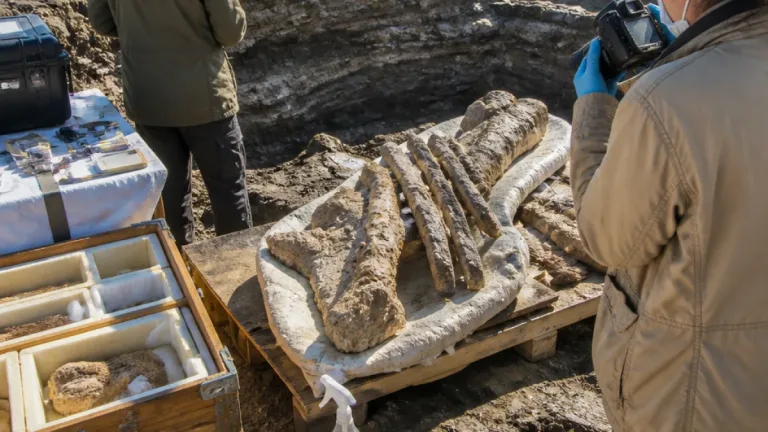
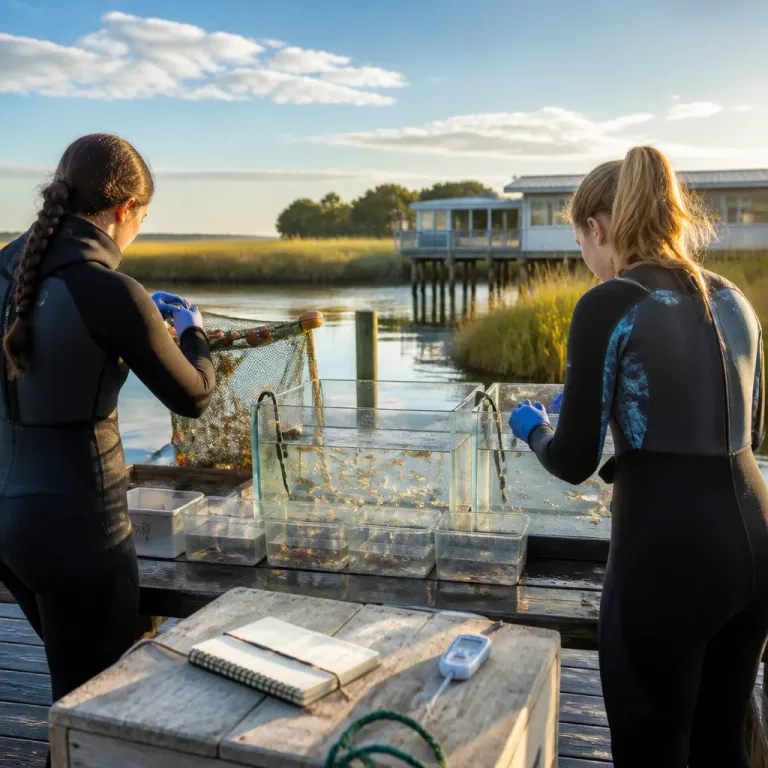
Tawiah’s hands-on experience includes work in Colby’s tunicate lab and participation in the college’s inaugural Tunicate Research Symposium on Allen Island, a program started by Assistant Professor of Biology Christina Cota. Tunicates, marine invertebrates closely related to vertebrates, served as a focus for student-led investigation and peer presentation during the symposium.
Those research opportunities exposed Tawiah to collaborative laboratory norms — peer discussion, hypothesis-driven projects and iterative experimentation — that he now seeks to adapt for younger learners in Ghana. He envisions a program where students actively participate in investigations rather than passively receiving facts.
- Target audience: pre‑college students in Ghana and West Africa
- Core aims: increase accessibility, foster practical lab skills, promote inquiry and curiosity
- Roots: inspired by Colby research experiences including the Allen Island symposium
Education, identity and scale
The profile identifies Tawiah as a Colby student with dual interests in science and the arts; the story variously refers to him as a biology and music double major and, elsewhere, as a biochemistry and music double major. Regardless of the precise disciplinary label, the combination of a life‑science major and musical training underscores a broader liberal-arts approach to learning that informs Sankofa Lab’s design.
By emphasizing interactive, mistake‑tolerant learning, the startup hopes to change student perceptions about what it means to be a “good” student. Rather than prioritizing rote recall, Sankofa Lab promotes skills often associated with college-level research: asking questions, designing experiments and presenting findings.
Those practices are not only pedagogical. Tawiah frames the initiative as a way to expand opportunity — to inspire a new generation of West African scientists who can pursue advanced study and careers in science, technology, engineering and mathematics.
As the program develops, its success will hinge on adapting hands-on research norms to local school systems, resources and expectations. The Sankofa Lab effort illustrates a broader trend among students and early‑career researchers who translate collegiate research experiences into community-facing education programs abroad.
| Element | Detail |
|---|---|
| Founder | David Tettey Tawiah ’27 |
| Initiative | Sankofa Lab for Learning and Discovery |
| Inspiration | Colby tunicate research, Allen Island symposium |
The venture remains an early-stage effort, rooted in Tawiah’s undergraduate experience and in cultural values he describes through the Akan concept of sankofa. The project underscores how collegiate research programs can seed education innovations with international reach while raising questions about how to scale laboratory-based pedagogy across different schooling environments.