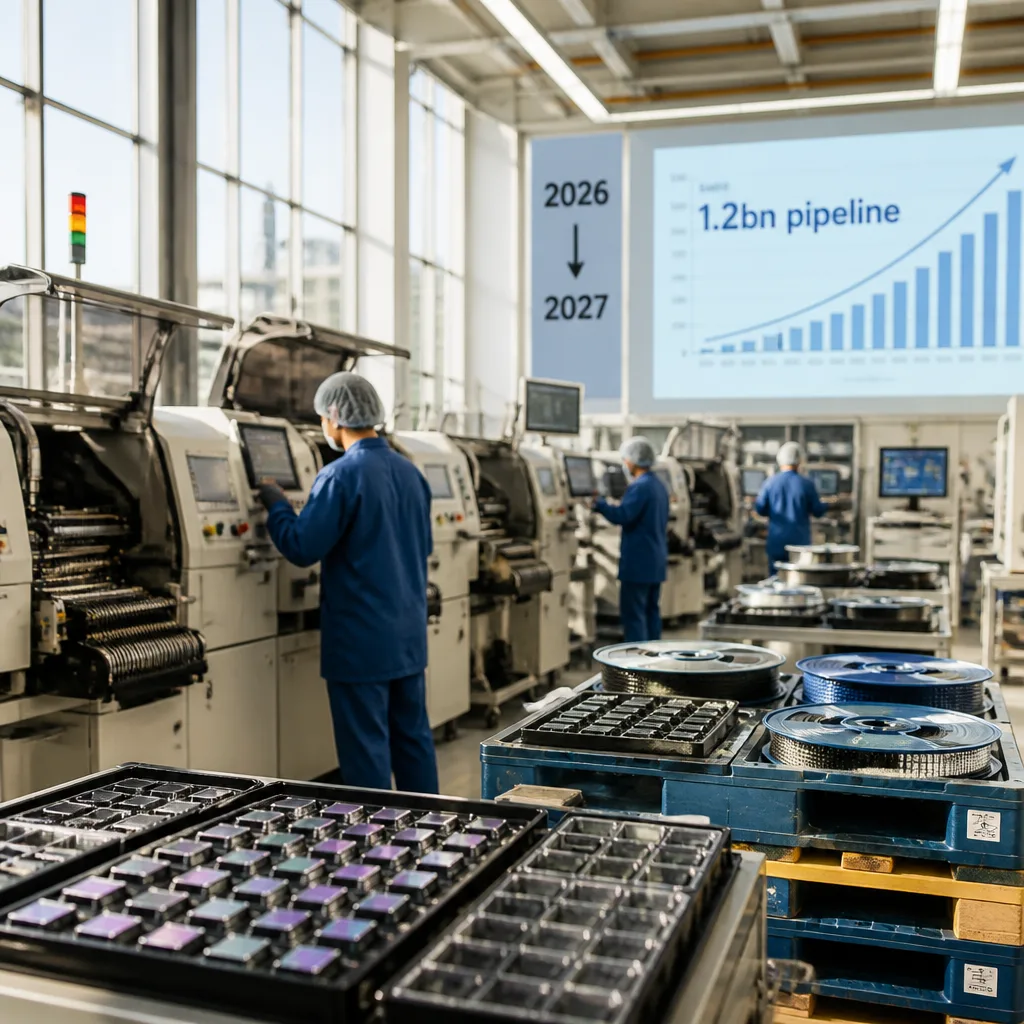
Sivers Semiconductors has signalled a decisive change in its business model, moving away from non-recurring engineering (NRE) engagements towards scalable product revenue as multiple programmes head for volume production in 2027.
From engineering projects to production ramps
The company told investors in its second-quarter 2026 interim report that it is reallocating resources away from development-driven NRE revenue and towards product lines that support customer production ramps. Management expects the effects of that transition to begin appearing in Q4 2026 and to accelerate through 2027, according to a company release shared with the market.
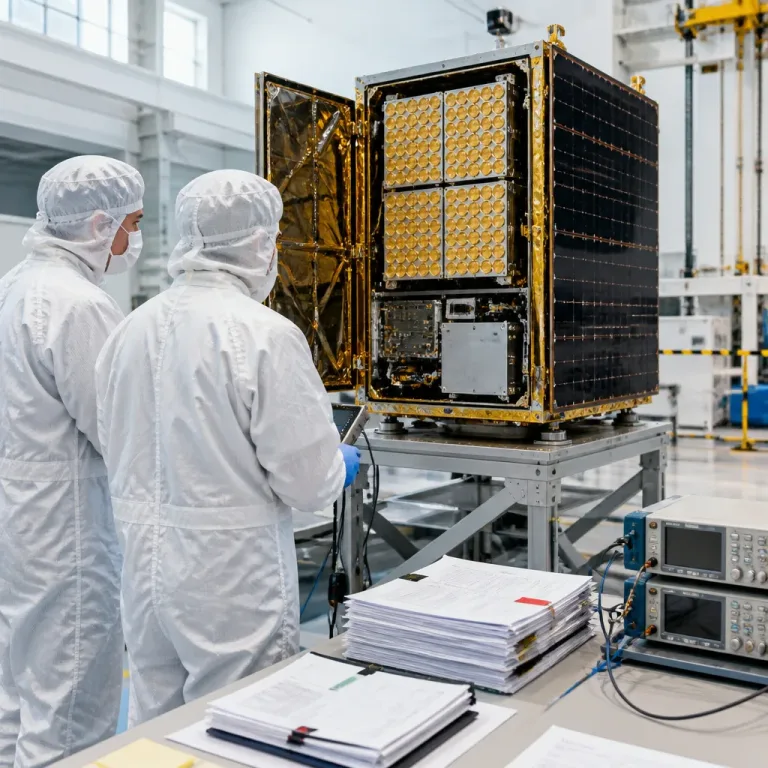
The practical consequence is that the challenge moves off the design bench and onto factories, test floors and supply chains. When a chip supplier publishes target readiness milestones, the heavy lifting falls to packaging houses, test engineers and buyers of long-lead components.
Pipeline and near-term financials
Sivers said its opportunity pipeline expanded to $1.2 billion in July 2026 — a leap of 268% since December 2025. Pipelines are not orders, but at that scale they often force suppliers and contract manufacturers to finalise qualification, test strategies and procurement plans well ahead of shipments.
"opportunity pipeline expanded to $1.2 billion in July 2026"
The quarterly numbers underpin a mixed short-term financial picture. Reported net sales were SEK 53.8 million in Q2 2026, down 12% year-on-year, while cash flow from operating activities was negative at SEK -70.0 million. At the same time, product hardware revenue rose, gaining 18% year-on-year on a currency-adjusted basis — the company framed this as early evidence that customer production ramps are beginning to outweigh project-based engineering work.
Named technology programmes
Sivers explicitly linked its production-ramp narrative to several identifiable programmes and technology areas, including:
- 1.6T optics
- Silicon photonics
- Ka-band integrated circuits (ICs)
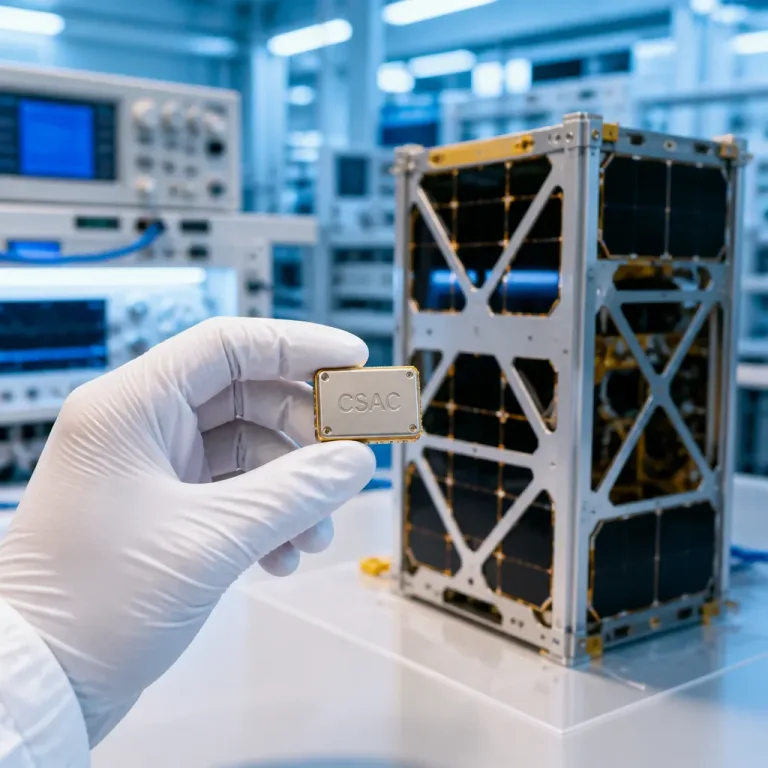
Each of these product categories carries different manufacturing and test demands. High-speed optical transceivers and silicon-photonics devices require precision assembly and cleanroom-capable packaging, while millimetre-wave Ka-band ICs need specialised RF test capability and calibration that not all contract test houses provide.
Supply-chain implications
For procurement teams and contract manufacturers, a named ramp timeline is a call to action. The typical friction points include:
- Securing long-lead components and substrates
- Qualifying packaging and wafer-level test processes
- Scaling automated test equipment capacity and throughput
That pressure can reveal bottlenecks months before the first units ship, especially in photonics and RF where specialist suppliers are fewer and qualification cycles are lengthy.
| Metric | Value | Direction |
|---|---|---|
| Opportunity pipeline (Jul 2026) | $1.2bn | Up 268% since Dec 2025 |
| Net sales (Q2 2026) | SEK 53.8m | Down 12% YoY |
| Operating cash flow (Q2 2026) | SEK -70.0m | Negative |
| Product hardware revenue | +18% YoY (currency-adjusted) | Growth |
Investors and partners will be watching whether the revenue mix change — away from one-off engineering fees and towards volume product sales — translates into improved cash generation as programmes transition from prototype to production.
What to watch next
Key milestones to monitor in the coming quarters are the company’s stated Q4 2026 readiness indicators, early production orders that convert pipeline opportunities into firm commitments, and evidence that external manufacturing and test partners have the capacity and qualifications to meet the technical demands of high-speed photonics and Ka-band RF devices.
The scale of Sivers’ pipeline and its public timeline make this a supply-chain story as much as a corporate one: when semiconductor suppliers set production targets, the industry’s manufacturing and test ecosystem must either rise to the task or risk becoming the rate-limiting step.