Spire Global has been awarded a $28 million contract by the US National Oceanic and Atmospheric Administration to build and flight‑qualify a satellite carrying a hyperspectral microwave sounder intended for operational weather forecasting.
From demonstration to operational scale
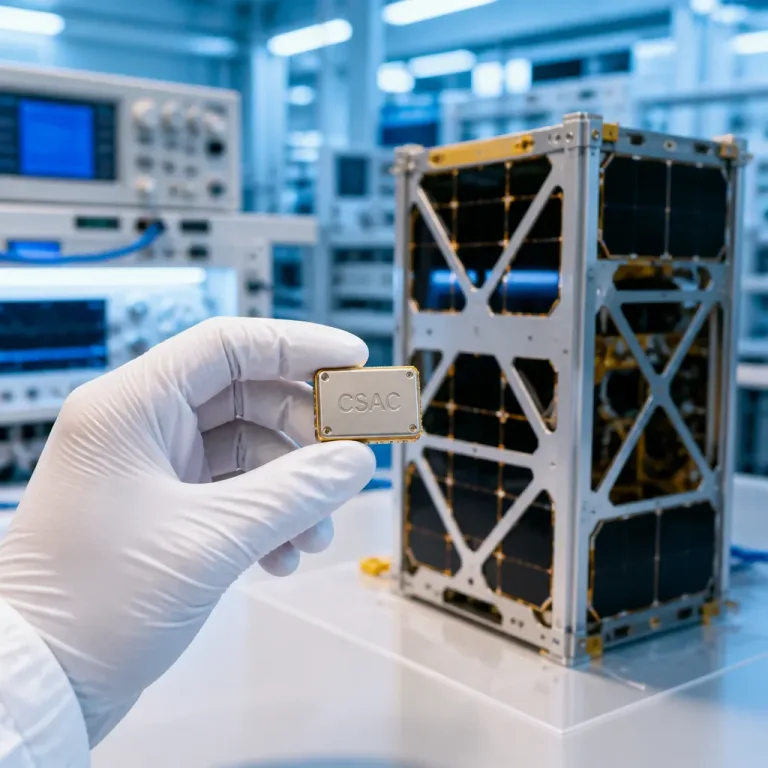
The contract is structured as a two‑year award aimed at advancing hyperspectral microwave sounding beyond its current on‑orbit demonstration phase and toward the scale required for routine weather observations. In January, Spire launched a demonstrator instrument, the Hyperspectral Microwave Sounder (HyMS), on a 16‑unit cubesat using NOAA funding to validate the technology.
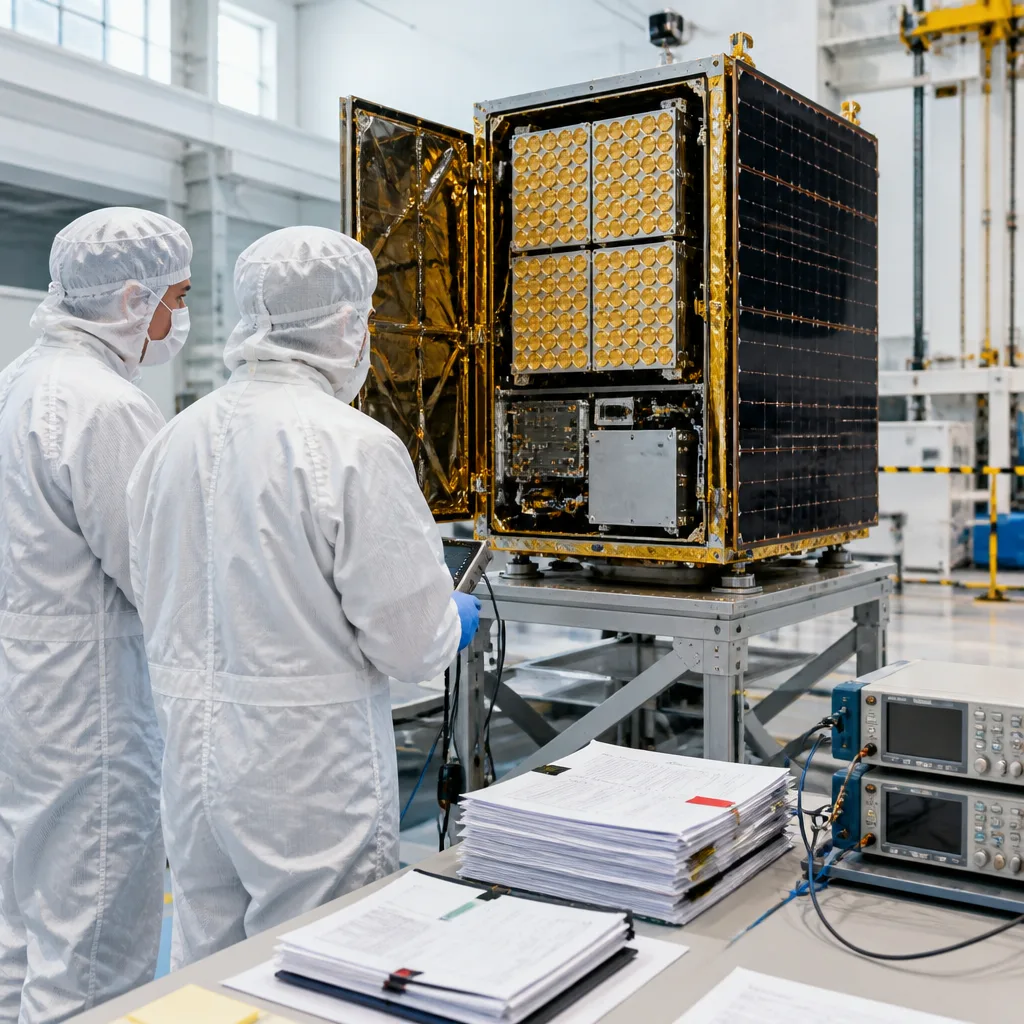
NOAA previously gave Spire a separate $3 million contract to assess how data from that demonstrator could improve numerical weather prediction. The new award aims to build and flight‑qualify a full satellite and an operational‑grade HyMS instrument, with operational capability targeted to begin no later than 2030, according to Spire.
"Hyperspectral microwave sounding has the potential to change what's possible in weather forecasting," Spire chief executive Theresa Condor said in a company news release.
What hyperspectral microwave sounding offers
Hyperspectral microwave sounders measure atmospheric temperature and humidity across many narrow spectral channels in the microwave band. That gives meteorologists a fine‑grained vertical profile of the atmosphere, including through clouds and precipitation — information highly prized for numerical weather prediction models.
Spire says the system will support NOAA's forecasting needs and allow the agency to analyse the impact of hyperspectral microwave observations on numerical weather prediction. The company positions the technology as a means to deliver richer observations at the scale and cadence required for improving forecasts.
- January: HyMS demonstrator launched on a 16‑unit cubesat with NOAA funding.
- Earlier phase: NOAA awarded Spire $3 million to evaluate demonstrator data for forecasting models.
- New award: $28 million to develop and flight‑qualify a full satellite and instrument, two‑year contract.
- Operational target: capability to begin by 2030.
Programme implications and context
The contract is framed as the next step in proving that advanced hyperspectral microwave sounding can be delivered from a smaller, commercially developed satellite platform. That phrasing signals NOAA's interest in partnering with commercial providers to accelerate and diversify sources of data for operational forecasting.
For operational agencies and model centres, the key question will be how many instruments and what orbital coverage are needed to deliver consistent improvements to forecast skill. Spire's approach — moving from cubesat demonstrators to a flight‑qualified, commercially produced instrument — follows a wider industry trend of using smaller, lower‑cost satellites to fill gaps in Earth‑observation networks.
| Item | Detail |
|---|---|
| Demonstrator | HyMS on 16‑unit cubesat (launched January) |
| Previous NOAA award | $3 million to evaluate demonstrator data |
| New contract | $28 million to build and flight‑qualify satellite and HyMS instrument |
| Operational target | No later than 2030 |
Operational weather forecasting relies on a steady stream of high‑quality observations. Hyperspectral microwave sounding is attractive because it can see through clouds that block infrared sounders, and its dense spectral sampling can yield more accurate atmospheric profiles — particularly important for short‑term, high‑impact weather prediction.
However, the source material is explicit that this award represents a development phase rather than a fully scaled operational deployment. The two‑year timeline and the targeted 2030 start date make clear that further testing, qualification and likely additional procurement will be required to reach the density of observations that forecast centres favour.
What to watch next
Observers should look for technical milestones from Spire and NOAA during the two‑year contract period: the delivery schedule for the flight‑qualified HyMS unit, planned environmental and electromagnetic testing, and details on how data will be processed and ingested into numerical weather prediction systems.
The move also highlights an ongoing shift in Earth‑observation purchasing: national agencies increasingly fund demonstrations with commercial partners, then scale successful technologies through follow‑on contracts. How well Spire's HyMS data integrates with model workflows will determine whether the approach becomes a template for future operational sensors.