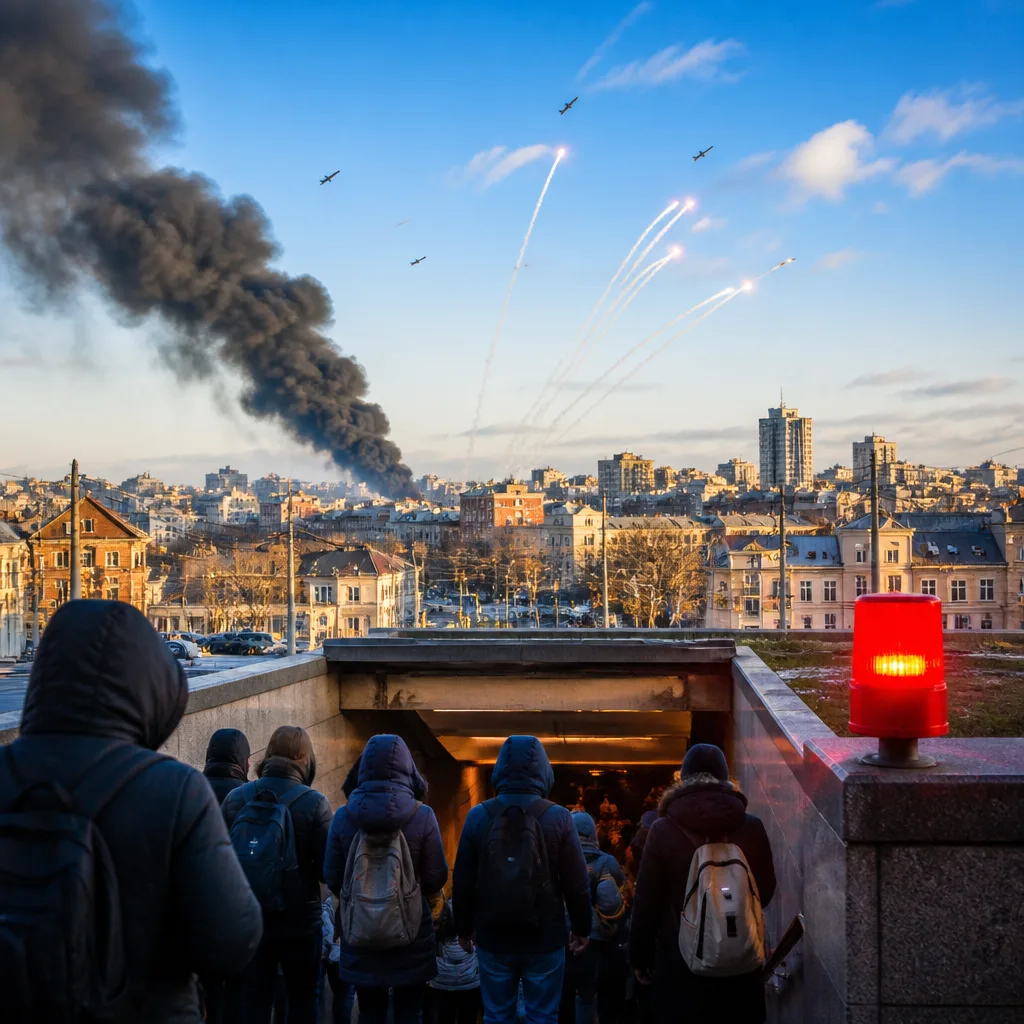
Kyiv has been subjected to prolonged daytime air raids after Russia deployed a new wave of faster, jet‑propelled Shahed drones, Ukrainian authorities say. The strikes came in sustained waves over several days, producing repeated air‑raid alerts and at least one of the war’s deadliest single incidents in recent weeks.
Scale and speed of the new threat
Ukrainian officials report that across a four‑day period nearly 1,500 drones of all types were used in strikes and that more than 800 of those were the jet‑powered models. The latest variants are reported to cruise at between 200mph and 250mph, roughly double the speed of the earlier piston‑engine Shahed versions, which reached around 115mph. Their greater velocity places them beyond the interception envelope of many of Ukraine’s low‑cost anti‑drone systems, forcing Kyiv to rely increasingly on combat aircraft for defence.
The enhanced performance appears designed to overwhelm air defences through prolonged, high‑tempo waves of attack. Kyiv experienced repeated alarms: by one midday there had been eight air‑raid alerts in the city, disrupting normal life, business activity and emergency responses.
Human cost and damage
The most severe single strike in the spate of attacks struck an ammunition depot at Myla, a village approximately 15 miles west of Kyiv. The explosion and ensuing secondary detonations killed 38 people, destroyed warehouses and damaged nearby homes. The blast produced hours of secondary explosions, complicating rescue and firefighting operations.
Other targets have included food storage and logistics facilities; in one recent attack a storage site in Boryspil, east of Kyiv, was hit, and warehouses used by distribution chains inside Russia have also been struck in apparent retaliation by Kremlin forces. The disruption to supply chains has been linked to shortages in some shops, though Ukrainian officials have urged the public not to panic.
“There were almost 1,500 drones of all types in these four days alone – about 800 of them jet‑powered,”
The quote above was provided by Ukraine’s president as he described the shift in the composition of the Russian drone fleet and the intent to “wear down” Ukrainian defences through attritional attacks.
Operational implications and civilian response
Daytime raids have been a particular feature of the recent campaign. While daytime strikes are not unprecedented, they were less common earlier in the conflict. Their frequency has left civilians and businesses making difficult choices: whether to halt operations, shelter in place or continue working despite the alerts. The risk of a nearby strike can force emergency services to withdraw from an incident, increasing the potential for fires and damage to escalate.
Military analysts watching the conflict say the introduction of faster, jet‑powered loitering munitions changes both the tactical and logistical calculus for Ukrainian air defences. Slower, cheaper interceptors that proved effective against earlier piston‑engine drones are less capable against weapons travelling at higher speeds and possibly at different flight profiles.
- Reported drone numbers: ~1,500 drones used in four days, ~800 jet‑powered.
- Speeds: Jet‑powered models ~200–250mph; piston‑engine ~115mph.
- Casualties: 38 killed in the strike on an ammunition depot at Myla.
| Item | Figure |
|---|---|
| Estimated drones used (4 days) | ~1,500 |
| Jet‑powered drones | ~800 |
| Speed – jet model | 200–250mph |
| Speed – piston model | ~115mph |
| Deaths at Myla | 38 |
The tactical shift elevates the burden on Ukraine’s air force and allied air‑defence supplies. Kyiv has increasingly used manned combat aircraft to intercept incoming unmanned systems — an approach that carries its own risks, demands fuel, airframes and trained crews, and may not be sustainable if high sortie rates continue.
For civilians, the immediate consequences are practical: disrupted commerce, constrained emergency response and heightened fear during daytime hours when people are normally active. Longer term, persistent attacks against logistics and storage facilities risk deeper supply problems for food and essential goods.
The pace and scale of the recent raids underscore the evolving nature of the conflict’s aerial dimension. Faster, cheaper unmanned weapons are altering how both sides allocate scarce defensive and offensive assets, while the civilian population continues to bear much of the cost of disruption and destruction.