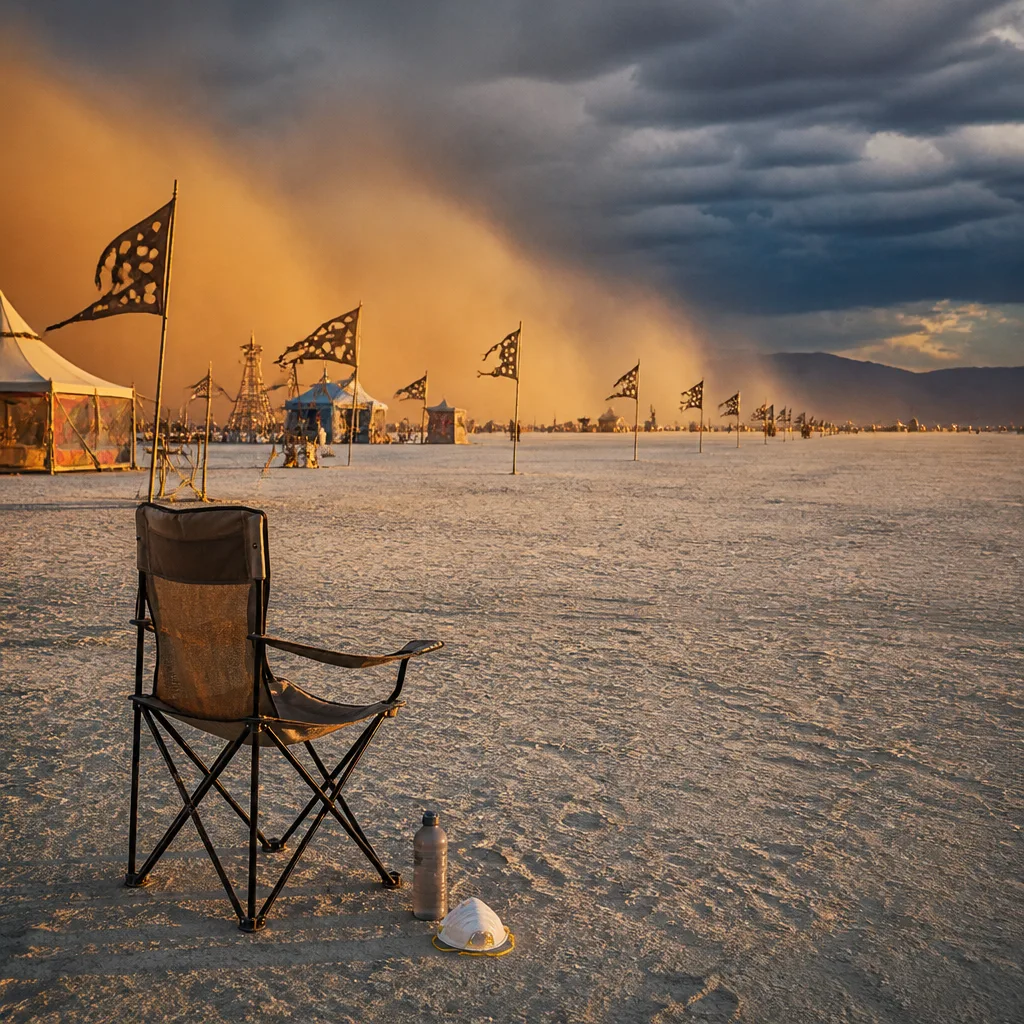
Burning Man in Nevada has opened for the week-long event, but attendees should be ready for a changing and sometimes hazardous weather picture: wildfire smoke, warm daytime temperatures and a risk of thunderstorms are all possible during the festival period, which runs until the night of 6 September.
What to expect and when
The gathering takes place on the Black Rock Desert, roughly 120 miles north‑northeast of Reno. Gates opened just after midnight early on Sunday, and the site will remain active through the following Sunday night. Forecasters are flagging three main concerns that could affect comfort, safety and operations at the playa:
- Wildfire smoke: Several wildfires are burning across north‑west Nevada, including the Hawk, Bug and Stallion fires. While none of those blazes are reported to be directly threatening the festival footprint, a persistent southwesterly wind through the middle of next week could transport smoke toward the Black Rock Desert, particularly during the afternoon hours.
- Heat: Early forecasts indicate mostly sunny conditions with daytime highs typically in the 70s (F), so attendees should expect pleasant daytime temperatures but still allow for variability and strong sun exposure on the open playa.
- Thunderstorms and gusty winds: Late‑summer thunderstorms remain possible. Some storms may be "dry"—producing lightning and strong gusts with little rain—which can kick up dust and increase the risk of lightning‑caused ignitions if there are dry fuels off playa.
Health, safety and practical steps
The combination of smoke, dust and sun can pose several health and logistical challenges. Plan and pack with these risks in mind. Practical steps to reduce harm include:
- Bring appropriate masks or respirators to filter fine particles if smoke moves into the area.
- Carry plenty of water and sun protection; sunscreen and shaded structures remain essential despite milder air temperatures.
- Prepare for sudden gusts and blowing dust—store loose items securely and have protective eyewear.
- Monitor local updates from event organisers and regional fire authorities, and follow any evacuation or camp safety instructions promptly.
Wildfire smoke contains very small particles that can harm the lungs and enter the bloodstream. Even when smoke is not visibly dense, fine particulate matter can affect those with respiratory or cardiovascular conditions, older adults, children and pregnant people more severely.
Confidence and timing
Forecast confidence is moderate: the presence of regional fires is well established, and meteorologists are seeing a pattern that favours southwesterly flows in the afternoons through mid next week. However, the exact timing and concentration of smoke at the burning playa will depend on day‑to‑day shifts in wind direction and the intensity of the fires. Thunderstorm development in late summer deserts can be locally variable and sometimes rapid, so short‑notice changes are possible.
| Hazard | Likelihood | Immediate action |
|---|---|---|
| Wildfire smoke | Possible (southwesterly afternoons) | Use masks, reduce exertion, monitor air quality |
| Warm daytime temperatures | Likely (daytime highs in the 70s °F) | Hydrate, shade, sun protection |
| Thunderstorms / gusty winds | Possible (locally variable) | Secure structures, avoid exposed locations during lightning |
For visitors and organisers alike, the best approach is preparedness: bring the right protective equipment, check forecasts and air‑quality information frequently, and be ready to alter plans. Event operations teams and local emergency services will be monitoring conditions closely and will issue guidance if risks escalate. Staying informed and having simple contingency measures in place will reduce the chances of weather‑related disruption or harm during the week.