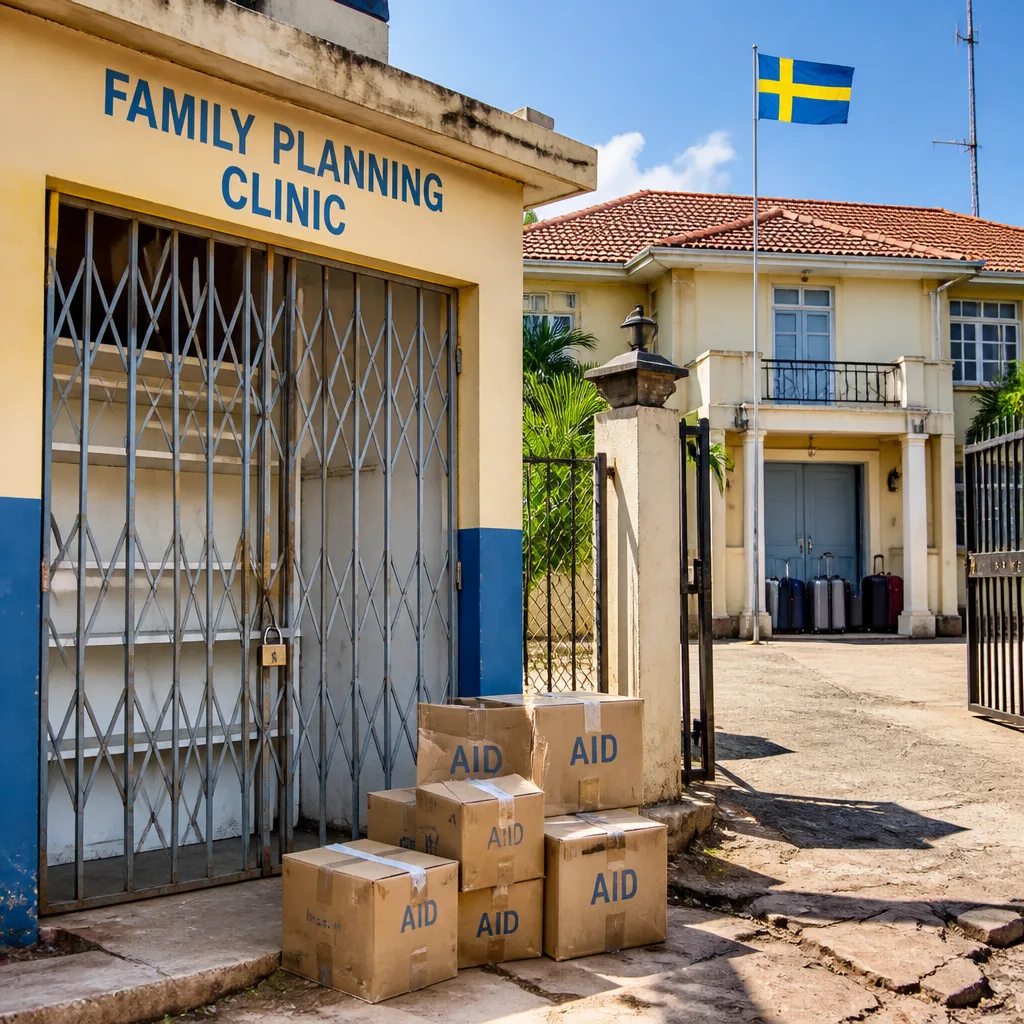
Sweden terminated its on‑the‑ground development presence in Liberia on 31 August, closing embassy doors to visitors and halting direct bilateral aid that has supported the west African state since 1961. The decision brings to an end a post‑conflict partnership that delivered more than SEK5.77bn (£445m) in support since 2008 and, according to aid records, channelled over a quarter of last year’s spending to programmes for women’s rights, family planning, HIV care and efforts to tackle gender‑based violence.
Immediate effects on services
The Swedish embassy in Monrovia will not lower its flag until 31 October, when diplomatic and support staff complete a wind‑down of operations, but the cessation of funds is effective immediately, leaving clinics and non‑governmental organisations already reliant on Swedish grants facing urgent funding gaps. The withdrawal follows recent reductions in other donors: the article notes that the dismantling of USAID has already left some Liberian clinics without contraceptives.
Local civil society groups warn of rapid consequences for sexual and reproductive health and rights (SRHR). Naomi Tulay‑Solanke of the Amplifying Rights Network (ARN), a coalition of 10 Liberian organisations, described the situation starkly:
"Imagine the challenges we faced when this funding was available – imagine what it will be like now. It is going to affect those who were already struggling to access family planning and SRHR services."
What Sweden funded
Sweden’s portfolio in Liberia included infrastructure projects, support for democratic institutions, humanitarian assistance, resource management and a prominent role in epidemic response — it was an influential donor during the 2014–2016 Ebola outbreak. In 2025 its aid reportedly prioritised women’s rights and sexual and reproductive health, making Sweden a leading backer of these programmes in Liberia.
- Historical partnership: Sweden’s development presence in Liberia dates from 1961; a formal post‑war partnership began in 2008.
- Financial scale: More than SEK5.77bn (£445m) provided since 2008.
- Priority areas: Women’s rights, family planning, HIV care, gender‑based violence prevention, infrastructure and democratic governance.
| Item | Detail |
|---|---|
| Total aid since 2008 | SEK5.77bn (£445m) |
| Share directed to SRHR in 2025 | More than a quarter of Sweden’s aid to Liberia |
Pressure on health systems and wider consequences
The withdrawal is likely to reduce the availability of contraceptives, funding for HIV programmes and services to prevent and respond to gender‑based violence. Clinics and NGOs that depended on Swedish grants will have to seek alternative financing or reduce services. Liberia’s health system remains fragile after decades of conflict and constrained public finances; donor withdrawals of this magnitude can create immediate shortages of supplies and staff capacity.
Sweden has said it will continue to contribute to global and regional mechanisms through the EU and multilateral bodies such as UN Women and the UN Population Fund (UNFPA). However, multilateral channels may not be able to replace the direct, project‑level support and local partnerships Sweden provided, or to do so with the same speed and flexibility.
Analysts caution that the relationship between donor withdrawal and health outcomes is complex. While reductions in bilateral funding are associated with disruption to services, the long‑term effects depend on whether remaining donors, the Liberian government or multilateral agencies step in to fill the gaps, and on the absorptive capacity of local health providers.
Policy and aid implications
The cut comes amid wider shifts in donor patterns in Liberia. The sudden loss of a major bilateral partner amplifies the challenge for domestic policymakers and civil society groups working to protect vulnerable populations, particularly women and girls. Restoring service continuity typically requires rapid reallocation of funds, emergency procurement of supplies and short‑term bridging grants — all of which are constrained by bureaucratic and fiscal limits.
For beneficiaries already facing barriers to care, the immediate risk is reduced access to contraception, routine HIV treatment support and outreach services aimed at preventing gender‑based violence. For health planners and donors, the episode underscores the fragility of service delivery that depends heavily on a small number of external funders.
As funds are wound down over the coming weeks, monitoring of service availability, contraceptive stocks and the capacity of referral systems will be essential to quantify the practical impact and to guide any emergency responses from other donors or multilateral agencies.
Reporting for this article is based on information provided by a contemporaneous account of the Swedish withdrawal and statements from Liberian civil society reported in that account. The full scale of downstream effects will become clearer only with detailed data on service disruptions and financing flows in the weeks ahead.