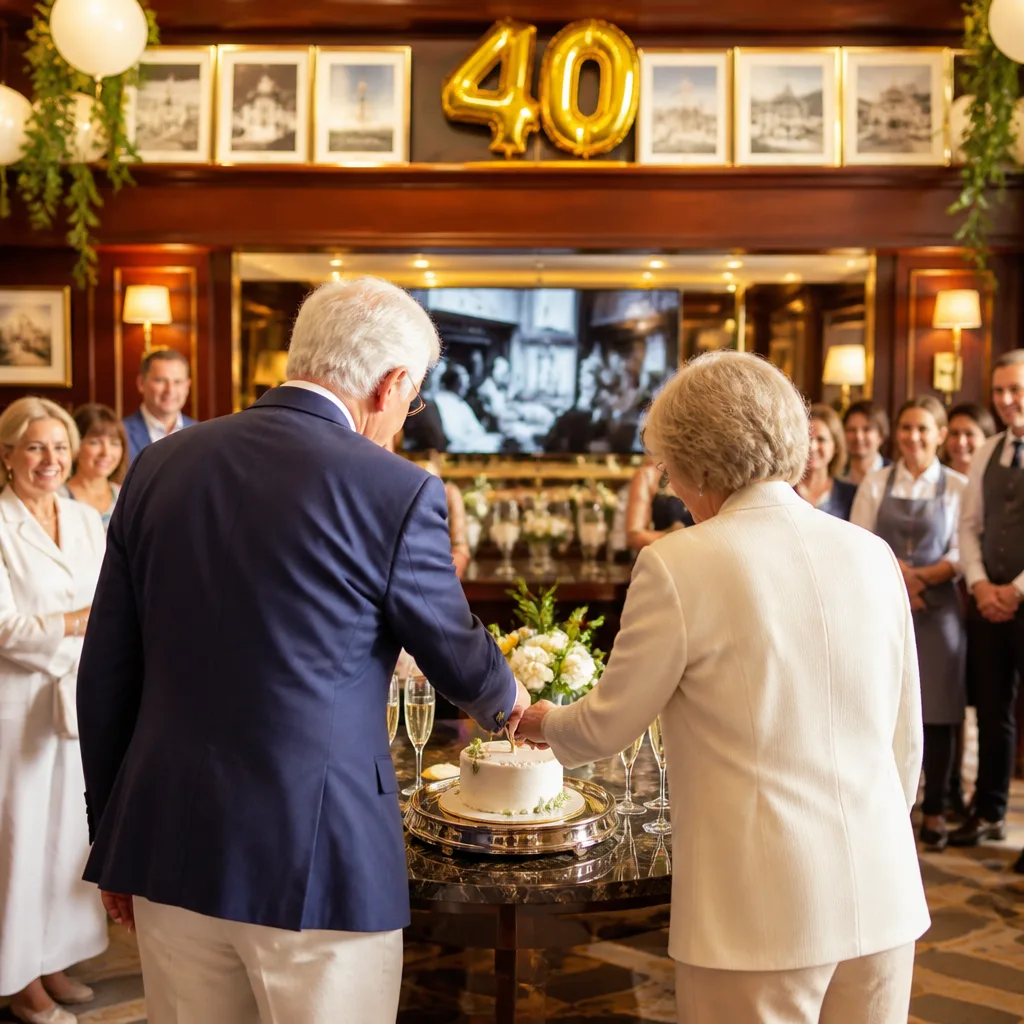
Eugene and Catherine McKeever are celebrating 40 years in the hospitality business after building a family‑run hotel portfolio that now comprises seven properties across Northern Ireland. The couple joined presenter Cathy to outline a story of steady expansion rooted in long hours, thrift and an emphasis on family values.
From modest beginnings to a seven‑hotel portfolio
The pair described their rise as the result of sustained effort and practical decisions taken over decades. They emphasised that the business is very much a family enterprise: management and staffing have been drawn from close relations and long‑standing employees.
Their account, broadcast as part of a wider programme, placed the hotel story alongside a sequence of cultural and political recollections from Northern Ireland's recent history — illustrating how private entrepreneurship and public memory often share the same airwaves.
Programme strands that framed the conversation
The episode juxtaposed the McKeevers' interview with three recorded features that traced notable local stories and moments:
- A revisit to the case of Maura Lyons, a west Belfast teenager whose move to Scotland in 1956 and conversion to Free Presbyterianism prompted accusations of "abduction" and public controversy surrounding the Rev Ian Paisley.
- A retrospective on the 1994 Loyalist ceasefires, coming six weeks after the IRA’s announcement of a "complete cessation" and viewed as a pivotal step towards the wider peace process.
- Coverage of a contemporary political row in which the Ulster Unionist Party’s Mike Nesbitt resigned as health minister, a dispute centred on retaining emergency general surgery at the Causeway Hospital in Coleraine and critical of his party leader Jon Burrows.
They were accused of “abduction”, and at one point he gathered his supporters in the Ulster Hall to listen to a recording of Maura’s voice at the Ulster Hall, renouncing her Catholic faith as a “religion of fear and dread”.
The mix of business profile and historical pieces underlines how local radio and television packages in Northern Ireland continue to blend human‑interest entrepreneurship with examination of the province’s fraught past.
What the McKeevers’ story means locally
For the hospitality sector in Northern Ireland, the McKeevers' trajectory is notable for its longevity. A series of modest acquisitions and reinvestments, coupled with family labour and community ties, has delivered a multi‑property operation that has survived changing tourism patterns, economic cycles and the long shadow of political unrest.
Their emphasis on a family model echoes broader trends in regional hospitality, where close‑knit management structures often provide stability and a particular brand of local welcome not easily replicated by larger chains.
| Aspect | Detail |
|---|---|
| Time in business | 40 years |
| Number of hotels | Seven |
| Business model | Family‑run, generational staffing |
While the interview concentrated on the couple’s work ethic and family values, the adjacent programme items reminded listeners of the social and political forces that have shaped public life in Northern Ireland — from contested religious conversions to ceasefires that altered the backdrop for local business and everyday life.
Whether the McKeevers' success will inspire a new generation to follow a family‑based approach to hospitality remains to be seen. For now, their four decades in the trade stand as a testament to incremental growth and community ties — a quietly conspicuous feat in a region where the past and present often meet in the same conversation.