The story of a 15-year-old girl smuggled from west Belfast to Scotland by members of the Free Presbyterian Church has been revisited in an archived programme that frames the episode as an early, defining moment in the public life of the Rev Ian Paisley.
Young convert at the centre of a public row
The programme recounts how the teenager, known in the item as Maura Lyons, had converted from Catholicism to Free Presbyterianism and was taken to Scotland by church members in 1956. Her family, strongly opposed to the conversion, accused the Rev Paisley of what they characterised at the time as “abduction”.
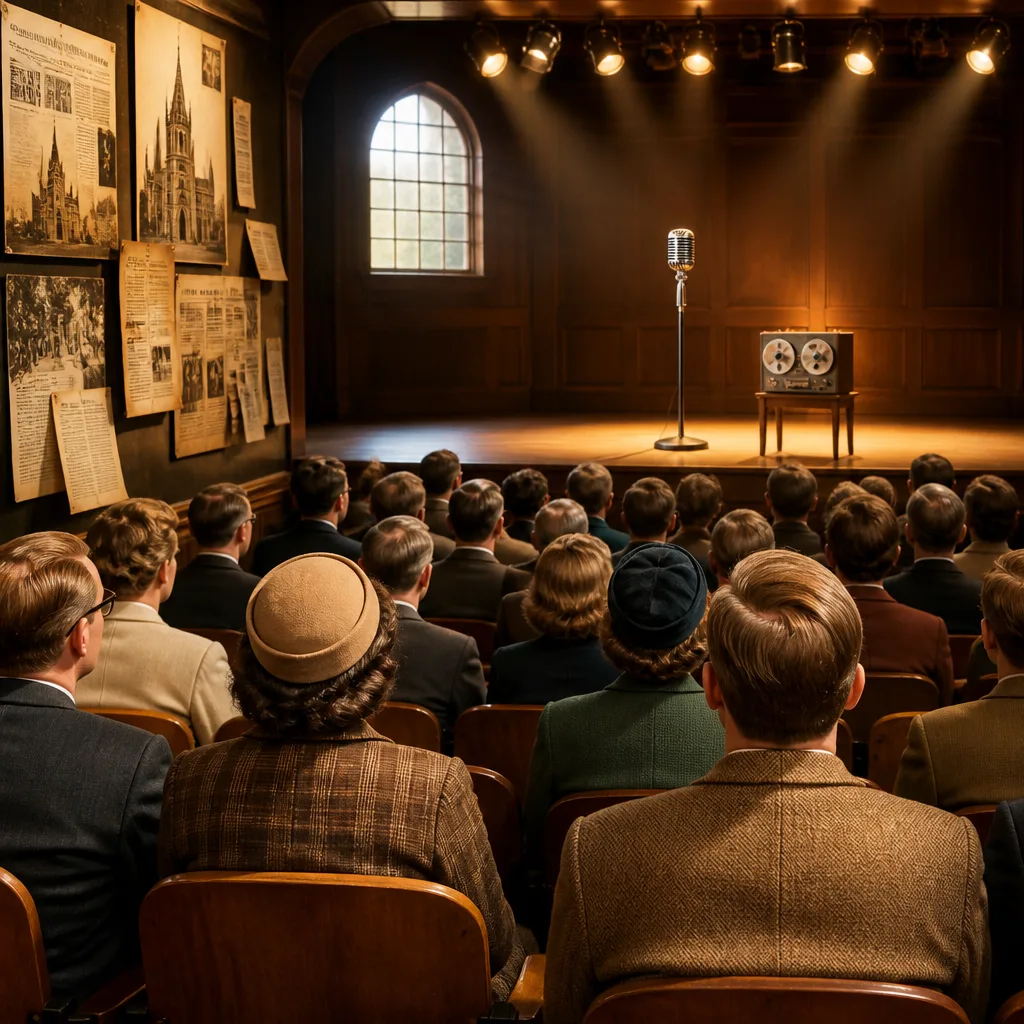
At one point, he gathered his supporters in the Ulster Hall to listen to a recording of Maura’s voice at the Ulster Hall, renouncing her Catholic faith as a “religion of fear and dread”.
The archival audio and recollections presented in the broadcast are used to illustrate how the incident helped raise Paisley’s profile beyond the confines of church pulpits and into the wider public spotlight.
Context: other segments on the same programme
The broadcast that carries the Maura Lyons item also includes discussions of other pivotal moments in Northern Ireland history and current political developments, providing listeners with a compact survey of unionist and loyalist politics across decades.
- A segment on the 1994 Loyalist ceasefires recalls the declaration by Loyalist paramilitary groups on 13 October 1994, six weeks after the IRA’s announcement of a complete cessation. The programme notes the UVF’s Gusty Spence saying loyalist violence was over, a step widely viewed as crucial to the peace process.
- A contemporary political item examines a dispute within the Ulster Unionist Party after the resignation of health minister Mike Nesbitt, and the resulting tensions for party leader Jon Burrows, specifically over emergency general surgery at Causeway Hospital in Coleraine.
| Segment | Topic | Reference time (programme) |
|---|---|---|
| Maura Lyons | Conversion and removal to Scotland; early Paisley publicity | — |
| 1994 Loyalist ceasefires | Declarations by Loyalist groups; role of Gusty Spence | 27:28 (original release October 2024) |
| UUP row | Mike Nesbitt resignation; Jon Burrows' stance on hospital surgery | 20:55 |
What the programme adds
By placing the Maura Lyons episode alongside the later Loyalist ceasefires and an airing of modern-day party tensions, the broadcast invites listeners to see continuity in how personal stories, religious conviction and political theatre have intersected across Northern Ireland’s recent history. The account emphasises how a single, contested incident — a teenager changing faith and being removed from her home community — could be mobilised as a public demonstration and a rallying point.
It also highlights how archival material — recordings played to support political aims — can be used to construct or magnify a public figure’s presence. In this case, the programme relays that Mr Paisley assembled supporters to hear a recording of the teenager renouncing her former faith, a moment the broadcast suggests contributed to his emergence as a public figure.
The same edition offers a reminder of the fragile, contingent steps towards peace in the 1990s, noting the Loyalist ceasefires and the role of senior figures such as Gusty Spence in announcing an end to loyalist violence — an action the programme describes as one of the vital steps towards lasting peace in Northern Ireland.
Finally, the contemporary strand on the UUP dispute — focusing on hospital services in Coleraine and the public resignation of a health minister — points to the ongoing interplay of local service issues and party politics in Northern Ireland’s public life.
The broadcast, originally released in parts between October 2024 and October 2025, repackages archival testimony and conversations with journalists and former politicians to chart moments that helped shape political identities and decisions across decades.