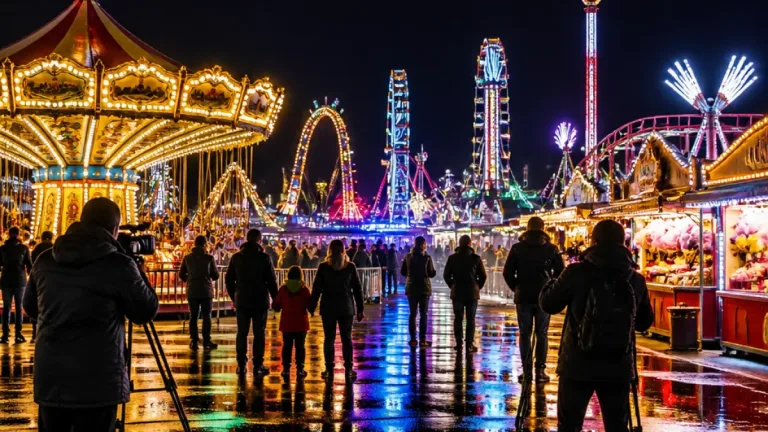

Short bursts of fear experienced in safe, managed settings — think haunted houses, horror films or themed attractions — can produce measurable benefits for mind and body, according to psychologists and emerging research. Far from simply making you jump, these controlled scares trigger physical responses and social reactions that may improve focus, reinforce relationships and build psychological resilience.
What happens to your body during a scare?
When you experience fear, even in a deliberately frightening environment, your body mounts an automatic response: heart rate and breathing increase as the nervous system prepares you to react. That surge of activation can feel energising rather than purely distressing, similar in some ways to the mood lift runners describe after exercise.
"There are quite a few benefits to fear,"
Those are the words of Sarah Kollat, a professor of psychology at Penn State University, who notes the physiological arousal produced by fear is distinct from enduring anxiety because it occurs within a clearly bounded, safe context. In other words, the body gets the beneficial kick of adrenaline without the lasting harm associated with chronic stress.
Social and psychological payoffs
Alongside bodily changes, short-term fright appears to strengthen social bonds. Being scared with others triggers caregiving instincts and mutual support, a response psychologists describe with reference to the tend-and-befriend idea: under perceived threat, people often look after one another rather than simply withdrawing. This interaction can increase feelings of closeness and prompt the release of oxytocin, sometimes called the "love hormone," which further cements social connection.
- Sharper attention: A heightened state of alertness can boost focus and sensory perception.
- Bonding: Shared fear encourages mutual support and closeness.
- Resilience: Repeated exposure to controlled fear may help people adapt to real-world stressors.
Research from the Recreational Fear Lab at Aarhus University in Denmark adds to this picture, finding people who enjoy scary films or video games displayed greater adaptability when facing uncertainty during the Covid pandemic. That suggests—cautiously—that voluntarily engaging with frightening stimuli can act as a form of practice for handling stress.
When a scare helps and when it doesn’t
Important caveats apply. The benefits described are most likely to arise in situations where the threat is clearly artificial, the participant feels in control, and the experience ends quickly. For those with a history of panic disorders, post-traumatic stress, or severe anxiety, deliberately seeking frightening experiences could be harmful rather than helpful. Likewise, repeated exposure that becomes overwhelming or involuntary is unlikely to confer any advantage.
Practical advice for anyone curious to try a controlled scare:
- Choose an experience you can exit if it becomes too much — escape routes and staff support are key.
- Go with people you trust to increase the social bonding benefit and to feel safer.
- Opt for mild thrills first and observe how your body reacts before escalating intensity.
| Benefit | How it arises |
|---|---|
| Increased alertness | Adrenaline and heightened sensory processing during short scares |
| Social bonding | Mutual care responses and oxytocin release when fear is shared |
| Resilience | Repeated, voluntary exposure builds tolerance to stressful stimuli |
Short, deliberate scares are not a one-size-fits-all wellness strategy, but for many people they offer a safe, social and even uplifting way to experience fear. Whether you're lining up for a Halloween attraction or settling in for a horror night at home, the trick is to keep it controlled, consensual and brief — that’s where the potential benefits lie.