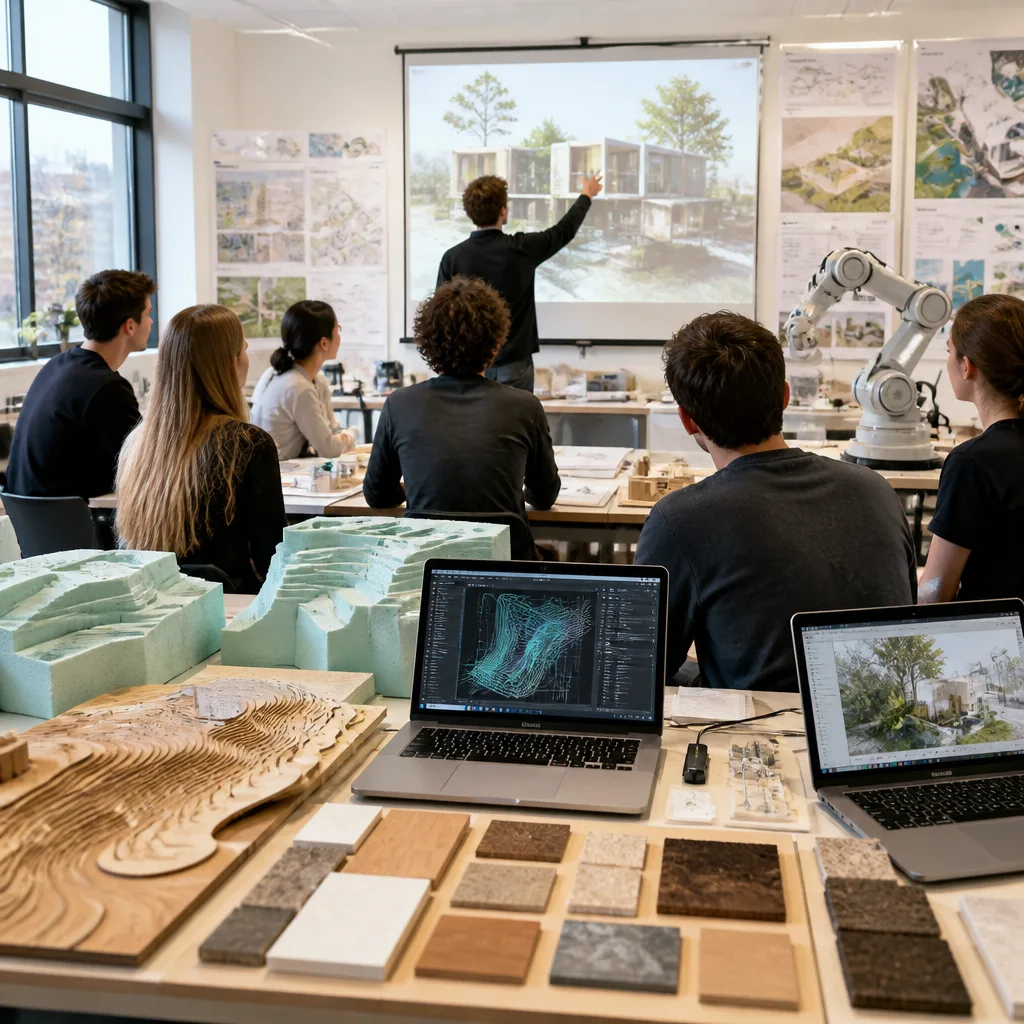
As the new academic year begins, architecture faculties across the United States and Canada are rewriting the brief for design education to reflect a world of accelerating change. Deans, directors and department chairs who spoke to industry outlets describe a shift away from narrow technical mastery towards training that enables graduates to respond to uncertain climates, new technologies and evolving social needs.
Curriculum pivot: resilience, technology and public purpose
Leaders cite a cluster of priorities driving reform: climate resilience, interdisciplinary collaboration, emerging technologies such as AI and advanced fabrication, and a renewed emphasis on housing and community-based design. Schools are launching experimental programmes and building partnerships intended to broaden the professional remit of architects and connect studio teaching to real-world problems.
- Climate and adaptability — instruction that prepares students to design for uncertain environmental scenarios rather than fixed conditions.
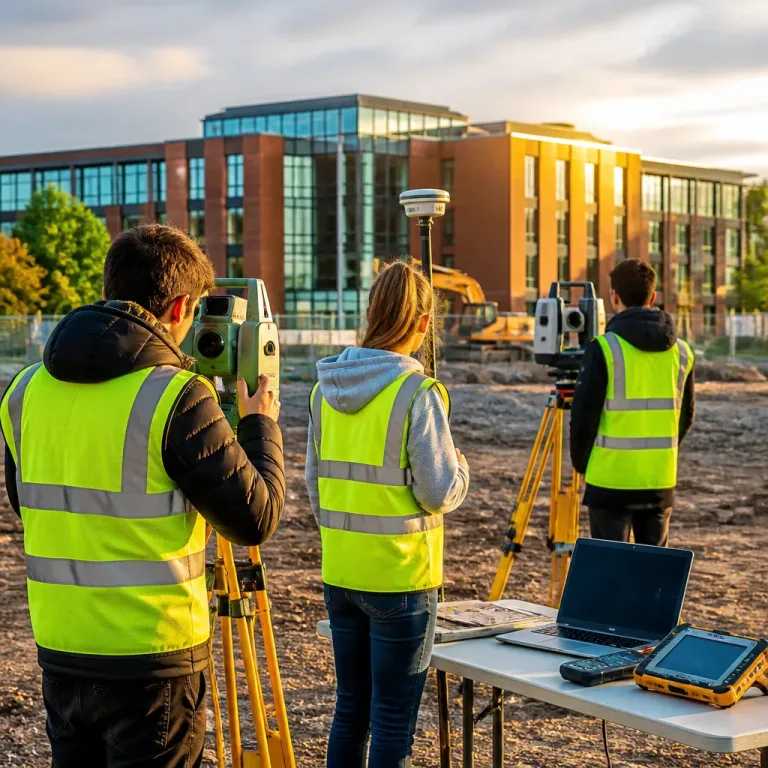
- Technology and fabrication — integrating AI, digital design tools and mass timber/advanced fabrication methods into coursework.
- Community engagement — projects that embed students in local contexts and focus on housing and public engagement.
One institution highlighted for its experimental agenda is the Southern California Institute of Architecture (SCI-Arc). The school is expanding initiatives that position it as both a laboratory for innovative practice and a more engaged civic actor within its urban setting.
New pathways and specialisations
Among the concrete changes is the introduction of an Accelerated Master of Science pathway, which provides a route for recent B.Arch and M.Arch graduates to pursue specialised study. Such routes are intended to deepen technical expertise in areas where demand is growing, while keeping studio-based, exploratory pedagogy at the heart of degree programmes.
Academic leaders argue that expertise in architecture can no longer be understood as control over stable conditions. Instead, successful practice will depend on the capacity to work within systems that are constantly in flux — whether ecological, technological or social. That reframing has implications for assessment, research priorities and the kinds of partnerships schools seek with industry, civic bodies and other disciplines.
Research, partnerships and the role of the academy
Research is taking on greater weight within architecture schools, with many institutions encouraging projects that cross disciplinary boundaries — engaging with material science, ecology, computer science and social research. The aim is to produce graduates who can navigate and integrate multiple forms of knowledge when addressing complex built-environment challenges.
Partnerships with cities, communities and specialised industries are also being prioritised to ensure studio work connects to lived experience and policy needs. For some deans, this means reasserting the public-facing role of the architect and investing in projects that have measurable social impact, particularly in housing and urban resilience.
Implications for students and the profession
For students, the evolving curriculum promises broader skill sets — from computational design fluency to an understanding of socio-ecological systems — but also a less certain professional future. Schools emphasise adaptability, teaching students how to design for change and to anticipate transformation throughout a building’s life. For the profession, the changes signal a potential redefinition of architectural expertise that moves beyond single-building authorship towards collaborative, systems-focused practice.
| Priority | Educational response |
|---|---|
| Climate uncertainty | Scenario-based design, resilience-focused studios |
| Technological change | AI, digital fabrication, mass timber modules in curricula |
| Social purpose | Community-engaged projects, housing practice |
The orientation towards experimentation also raises practical questions about resources, staff expertise and assessment methods. Sustaining interdisciplinary work requires investment and long-term institutional commitment, while the balance between open-ended enquiry and vocational training remains contested.
As the academic year gets underway, architecture schools described by their leaders as platforms for experimentation will be watched closely. Their efforts to recalibrate training for a profession that must now account for rapid technological shifts, climate volatility and public need could influence how new generations of architects practise and how the built environment responds to the crises of the coming decades.