Artificial intelligence may accelerate scientific research, but it cannot remove the need for experiments, human judgement or rigorous testing, researchers have told an international science forum in Shanghai.
The technology was a central theme at the 2026 World Laureates Forum, a three-day meeting that brought together prize-winning scientists, early-career researchers and representatives from industry. Discussions ranged from drug development and large-scale data analysis to the use of AI in mathematical research.
The message from speakers was neither a wholesale endorsement nor a rejection of AI. Instead, they described it as a powerful instrument whose value depends on how scientists use it and how carefully its results are checked. In that sense, AI was presented less as an autonomous laboratory and more as a highly capable assistant: able to process information quickly, but unable to carry out every stage of discovery on its own.
Designing medicines is only the first step
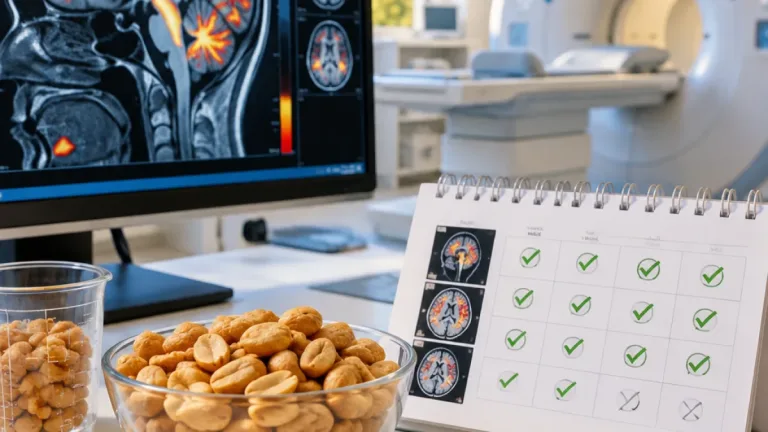
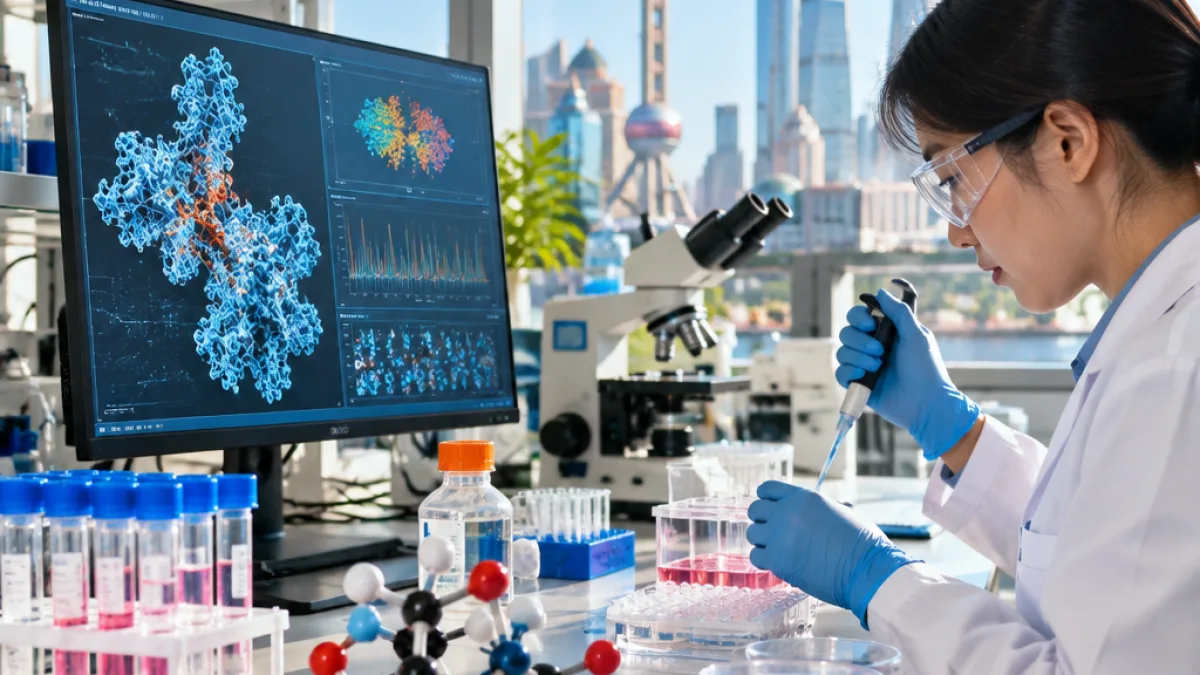
Drug research illustrated the distinction particularly clearly. AI can help identify or design chemical compounds, potentially shortening the earliest part of the development process. But a promising computer-generated candidate remains a proposal until it has been made and tested.
“We can design compounds, but we still need to synthesize them and test them in animals, in cells, eventually in humans, to test the efficacy.”
The comment came from Yuan Junying, the 2026 World Laureates Forum Prize laureate in Life Science or Medicine and director of the Center for Interdisciplinary Research in Biology and Chemistry at the Shanghai Institute of Organic Chemistry, part of the Chinese Academy of Sciences.
That sequence matters because each stage answers a different question. A computational system may suggest that a molecule is worth investigating, while laboratory work determines whether it can be produced and how it behaves in biological systems. Later testing is needed to establish whether a treatment works and whether it is safe. Faster design therefore does not mean that the evidence required for a medicine has become shorter.
Acceleration without a transfer of responsibility
Speakers also described more routine uses of AI in scientific workflows. These include helping researchers decide how to use analytical tools and examining data, tasks that can consume considerable time when carried out manually. Such assistance could allow scientists to move more quickly through familiar stages of a project.
But the forum's researchers stressed that efficiency should not be confused with independence. Xie Weidi, a 2026 World Laureates Forum Prize laureate for Young Scientists and associate professor at Shanghai Jiao Tong University, said AI could accelerate research processes without replacing people.
“AI can help to accelerate the process, say how you call the tools and analyze the data. I won't say AI will replace human at all.”
| Research area | Potential contribution from AI | Work still required |
|---|---|---|
| Drug development | Designing compounds and shortening early research | Synthesis, biological testing and human evaluation |
| Scientific workflows | Calling tools and analysing data | Scientific oversight and interpretation |
| Mathematics | Searching the published literature | Expert reasoning and judgement |
A wider view of the scientific record
In theoretical research, the effect of AI may be less about replacing calculation than about changing access to knowledge. Ingrid Daubechies, the forum's 2026 laureate in Computer Science or Mathematics and professor emeritus of mathematics at Duke University, said an expert working with AI could achieve more than either working alone.
Her reasoning was that AI tools can help an expert search the full body of published literature. That possibility could make it easier to identify relevant methods, connect findings from separate areas and locate earlier work. Yet searching is not the same as understanding: the scientist must still decide which material is reliable, relevant and useful to the problem at hand.
The discussions therefore placed verification at the centre of AI-assisted science. A system may produce an answer, a proposed compound or a useful route through existing research, but the result remains provisional until specialists test it against evidence. The forum's conclusions point towards a model in which AI changes the pace and reach of research while responsibility for judging the result remains with scientists.