Research policy becomes an election issue
New Zealand’s political parties are offering sharply different approaches to science, research and higher education ahead of the country’s election on 7 November, with the outcome potentially determining whether recent reforms are consolidated or partly reversed.
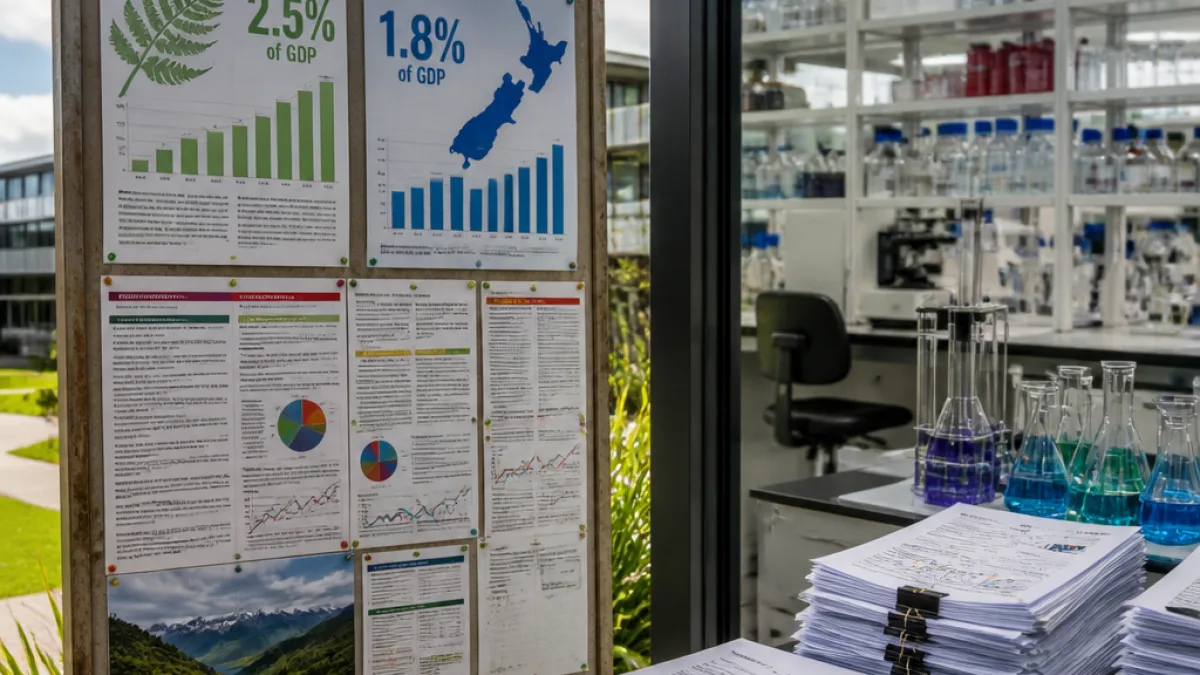
The contest has been described by the Save Science Coalition (SSC), linked to the New Zealand Association of Scientists, as a “high-stakes election for science”. Its central demands include raising research investment to 2 per cent of gross domestic product, establishing dependable support for research carried out for the public good, and creating a national workforce plan to attract researchers who have left the country.
The policy choices concern more than the size of the science budget. They also address how research should be selected, how quickly it should be expected to produce economic results, and whether long-term work should be protected from short-term political priorities. Those questions matter because the interval between a discovery and its practical use can be measured in decades rather than election cycles.
“Our funding and support systems need to acknowledge the time it takes to get from discovery to application and take-up by industry or end users.”
Parties offer different routes to investment
The Labour opposition has said it would give greater priority to public spending on research, science and innovation. The Greens have proposed a target of 2 per cent of GDP for research funding and a national research strategy developed with researchers, Māori, communities, industry and the wider public sector.
That proposed strategy would seek a balance between immediate economic returns and longer-term outcomes. The Greens have also backed a “mission-led” funding system focused on objectives including decarbonising the economy, although the available policy response ends before further details are provided.
New Zealand First, a coalition partner in the current government, has reiterated its view that expenditure on education and science should be treated as an investment in the country’s future. Its emphasis is on primary industry and results that add value. The National Party, the senior party in the governing coalition, did not respond to questions put by the Science Media Centre.
| Party or group | Position outlined |
|---|---|
| Labour | Prioritise public investment in research, science and innovation |
| Greens | Target 2% of GDP and create a national research strategy |
| New Zealand First | Support science and education as investment, with emphasis on primary industry |
| Opportunities Party | Long-term target of 3% of GDP for research |
| National | No response to the questions reported |
The argument over discovery and application
The Opportunities Party has criticised what it sees as a retreat from investigator-led research in favour of science designed primarily to generate economic growth. It said that approach would be an error, arguing that funding systems must recognise the time needed for promising work to move from discovery towards practical adoption.
Its stated long-term ambition is more than the targets put forward by Labour and the Greens: 3 per cent of GDP for research. The party also gave a specific indication of the timescale involved, saying that progress from discovery to industrial or end-user application typically takes 20 years in engineering and the physical sciences.
That figure provides a useful measure of the tension in the debate. Governments may seek visible economic returns within a parliamentary term, while research programmes can require sustained support before their value becomes clear. A funding system heavily weighted towards immediate application could therefore narrow the range of work undertaken, even if it produces quicker results in selected areas.
Workforce concerns form part of the debate
The SSC has linked funding to the future of the research workforce. Its call for a “whole-of-system workforce plan” reflects concern about researchers who have moved overseas and the challenge of bringing them back. Stable financing, campaigners argue, is part of the infrastructure needed to retain expertise and make scientific careers viable.
The election will consequently test whether New Zealand’s science policy is built around short-term economic priorities, broad public investment, or a combination of both. The parties have not offered a single shared route: their proposals range from stronger public funding and national planning to mission-led research, industry-focused outcomes and a higher long-term spending target. The decision on 7 November will determine which of those approaches has the opportunity to shape the country’s research system.