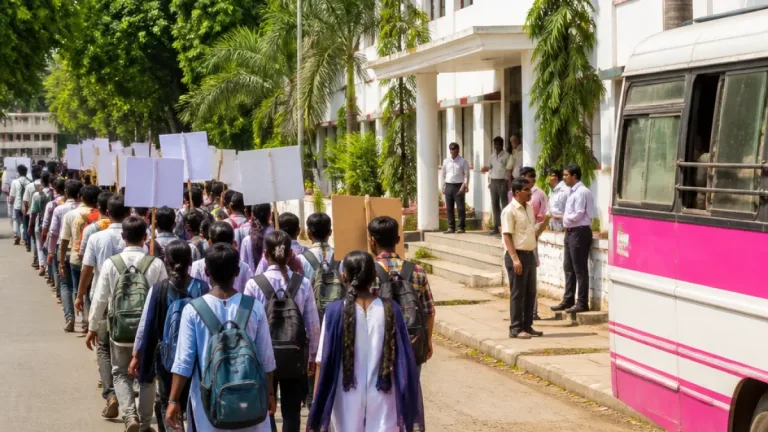
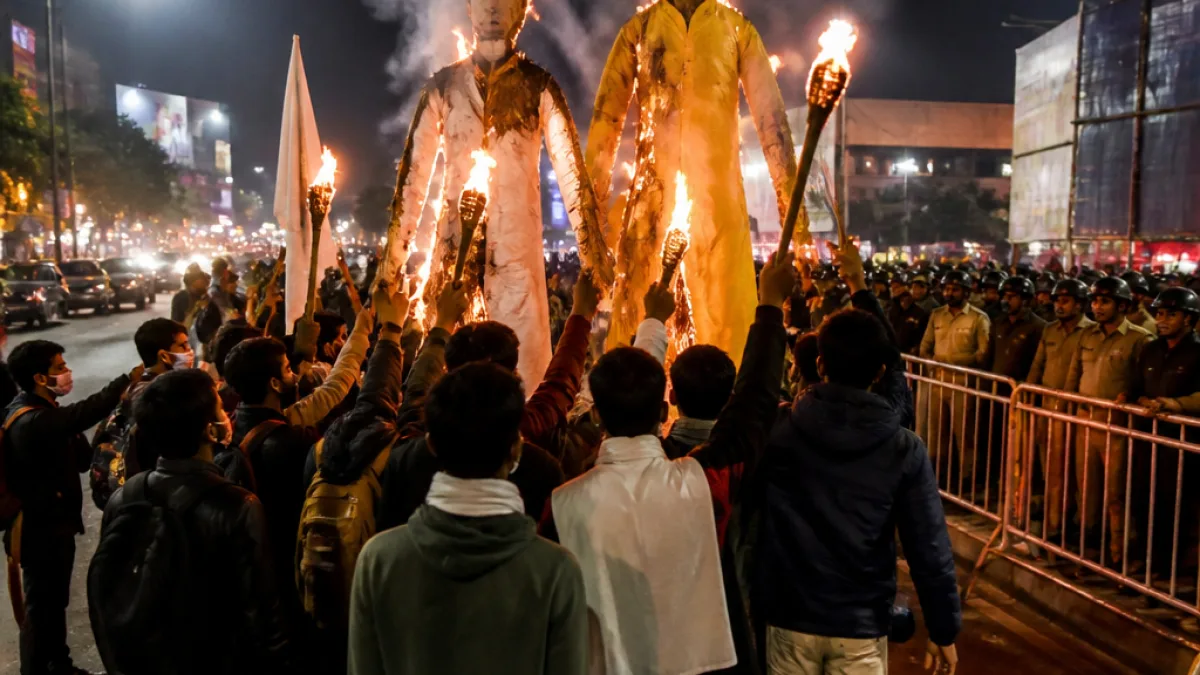
Student leaders in France have rejected a government education package and vowed to continue nationwide demonstrations, saying the measures presented by ministers did not meet their core demands. The stand-off comes as protests spread beyond schools into unions and anti‑austerity groups, intensifying pressures on public order and the Macron administration.
Students say proposals fail to meet key asks
After a meeting with government officials, representatives of high school and university students described a package that included targeted reductions in class sizes, loans to repair school buildings and proposals to alter the university admissions system students regard as unfair. They said the package did not satisfy the fuller set of reforms they are seeking for the education system.
"Not all our demands were met. We'll go on for as long as it takes," said Louis Letoublon, one of the high school student representatives.
Details of the government's offer had not been officially confirmed by ministers at the time students spoke, and a planned press conference to set out the proposals was postponed. Observers noted that the funding required to implement the measures remained unclear, at a time when France's public finances are already under strain.
Wider unrest and political consequences
The demonstrations, which began as student action, have drawn in trade unions and activists from the "yellow vest" movement. Violence in dozens of cities about nine days earlier heightened concerns about public order and prompted stepped up security responses, including the use of water cannon and a greater deployment of police and gendarmes in urban centres.
President Emmanuel Macron acknowledged the likelihood of further unrest and, during a visit to Marseille to assess damage and thank emergency services after recent disturbances, said security measures would be maintained and that efforts would be made to divert protests away from city centres. A larger nationwide protest is scheduled for 5 November, according to organisers and commentators.
Political fallout is already evident: polls have shown improved ratings for far‑right presidential contender Marine Le Pen amid the turmoil, underscoring the wider electoral implications of unrest over public services and the cost of living.
Fiscal questions and the limits of the offer
Analysts and student leaders pointed to the difficulty of committing to sizable investment in education while France's public debt is nearing 120% of GDP. That fiscal backdrop has complicated discussions about how any package would be funded and implemented.
Students said the measures as presented would not deliver the structural changes they demand, particularly on fairer access to higher education and a comprehensive plan to upgrade worn school buildings.
- Offered in package: selected class‑size caps; loans for school renovation; replacement of the current university admissions system.
- Students' broader demands: systemic education reforms, improved school infrastructure and a fairer admissions process across the board.
- Uncertainties: official confirmation of the package, the timetable for implementation and where the money will come from.
| Measure | Described in meeting | Student response |
|---|---|---|
| Class‑size limits in some schools | Yes | Insufficient — limited scope |
| Loans to renovate buildings | Yes | Welcomed but funding unclear |
| Replacement of university admissions system | Yes | Seen as necessary but details lacking |
The government has yet to confirm the precise content of the proposals publicly, and ministers deferred a press briefing that had been expected to outline the plan. In the absence of full details, student leaders and campaigners have said they will keep up demonstrations until their full set of demands is addressed.
For schools and universities, the standoff creates immediate disruption and uncertainty for pupils, parents and lecturers, and for the wider public it raises questions about how education policy, public finance and security are to be balanced as the protests continue.