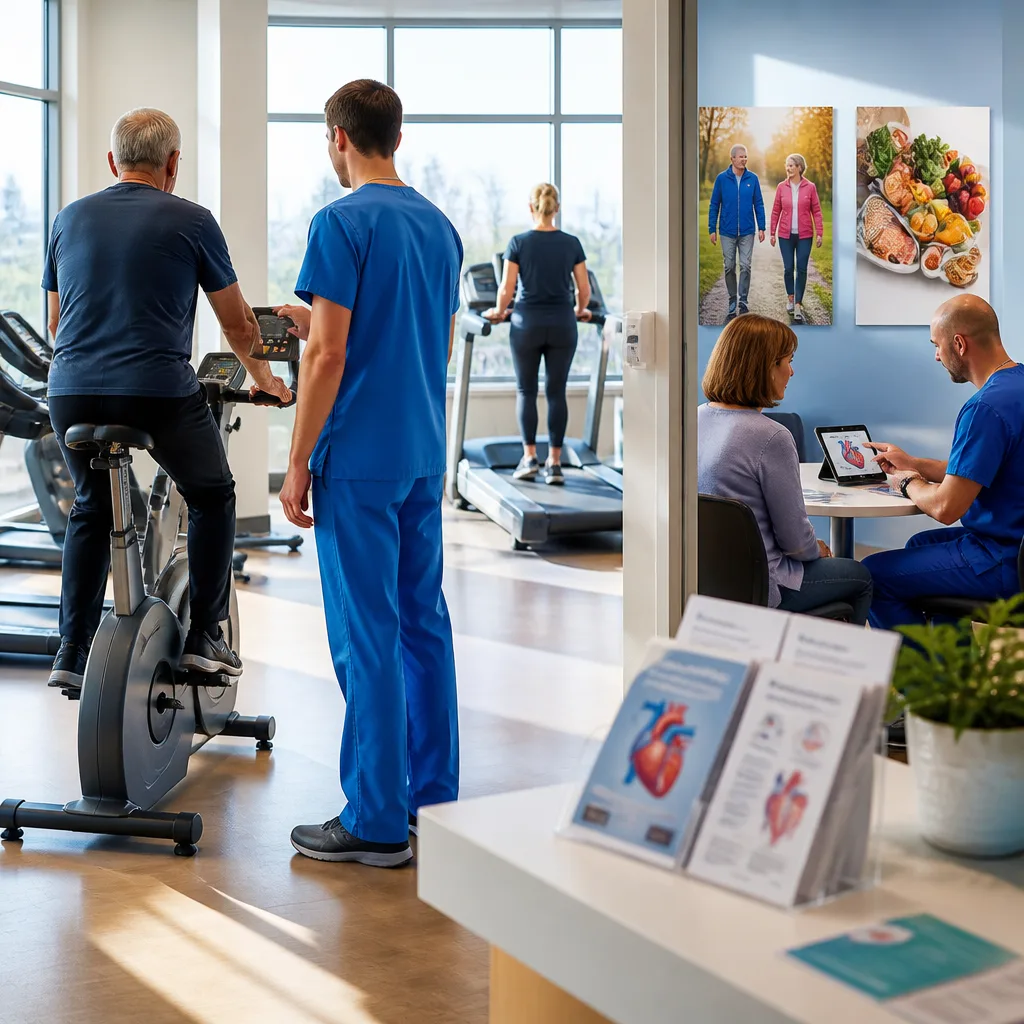
New guidelines from the European Society of Cardiology (ESC) formally define cardiac rehabilitation as an essential, personalised programme for people recovering from cardiac events or surgery, and for those living with ongoing cardiovascular disease. Presented at ESC Congress 2026, the guidance brings together evidence across a wide range of cardiac conditions and sets out practical recommendations on who should be offered rehabilitation and how it should be delivered.
Scope and purpose
Until now, recommendations on rehabilitation have typically been embedded within condition-specific guidance. These are the ESC’s first dedicated cardiac rehabilitation guidelines, consolidating the evidence base and outlining the core components of programmes designed to improve not only heart health but also physical function, quality of life and mental wellbeing.
The document stresses that rehabilitation should be individualised, reflecting patients’ medical needs, personal preferences and life circumstances. It endorses a collaborative, shared decision-making approach between clinicians and patients to tailor interventions and enhance sustained engagement.
Key elements of rehabilitation
The guidelines recommend delivery by multidisciplinary teams and describe several interlinked elements that together support recovery and secondary prevention. These include structured exercise training, emotional and psychosocial support, and personalised education aimed at promoting durable lifestyle change and medication adherence.
- Exercise training to restore physical capacity and reduce functional limitations.
- Psychological support to address anxiety, depression and confidence in physical ability.
- Education and self-management covering risk factors, medication, and sustainable lifestyle adjustments.
| Component | Primary aims |
|---|---|
| Exercise training | Improve fitness, reduce symptoms and restore independence |
| Emotional support | Address mental health, boost confidence and quality of life |
| Education | Promote medication adherence and healthier behaviours |
Patient-centred delivery and selection
A central theme of the ESC guidance is tailoring. Programmes should be adapted to each person’s recovery trajectory and social context, and clinicians are encouraged to involve patients in decisions about rehabilitation format and intensity. The guidance therefore recognises the importance of flexibility — for example, offering interventions in hospital settings, community centres or remotely where appropriate.
Multidisciplinary input is highlighted as critical: effective teams typically comprise clinicians, physiotherapists, nurses and mental health professionals working together. The guidelines underline that rehabilitation is not solely about reducing future cardiac events; it also seeks to restore confidence, independence and trust in physical capabilities.
Implications for services and policy
By articulating a coherent, evidence-based model of care, the ESC’s guidance provides a framework for health services to plan investment, workforce training and service delivery. For policymakers, the recommendations emphasise that cardiac rehabilitation is a multifaceted intervention with benefits that extend beyond cardiovascular outcomes to include functional recovery and psychological wellbeing.
Implementation will require consideration of local capacity and access barriers. The guidance supports individualised care pathways, which may help reduce inequities in uptake by offering different delivery modes and encouraging shared decision-making.
While the guidelines consolidate current evidence and expert consensus, they also highlight the need for ongoing evaluation of programmes to ensure they achieve intended outcomes in diverse populations. As always, the translation of guidance into practice depends on local resources, commissioning decisions and the willingness of services to adopt multidisciplinary and patient-centred models.
What this means for patients:
- People recovering from heart attacks, surgery or living with cardiovascular disease should be offered tailored rehabilitation.
- Programmes are designed to support physical recovery and tackle psychological impacts.
- Shared decision-making should shape the rehabilitation plan, including delivery mode and goals.
The ESC’s first stand-alone cardiac rehabilitation guidelines mark a step towards more consistent, comprehensive care for people recovering from cardiac events. They advocate structured, multidisciplinary, and patient-focused programmes that address the full spectrum of recovery needs — physical, psychological and educational — while recognising the practical challenges of delivering such services at scale.