
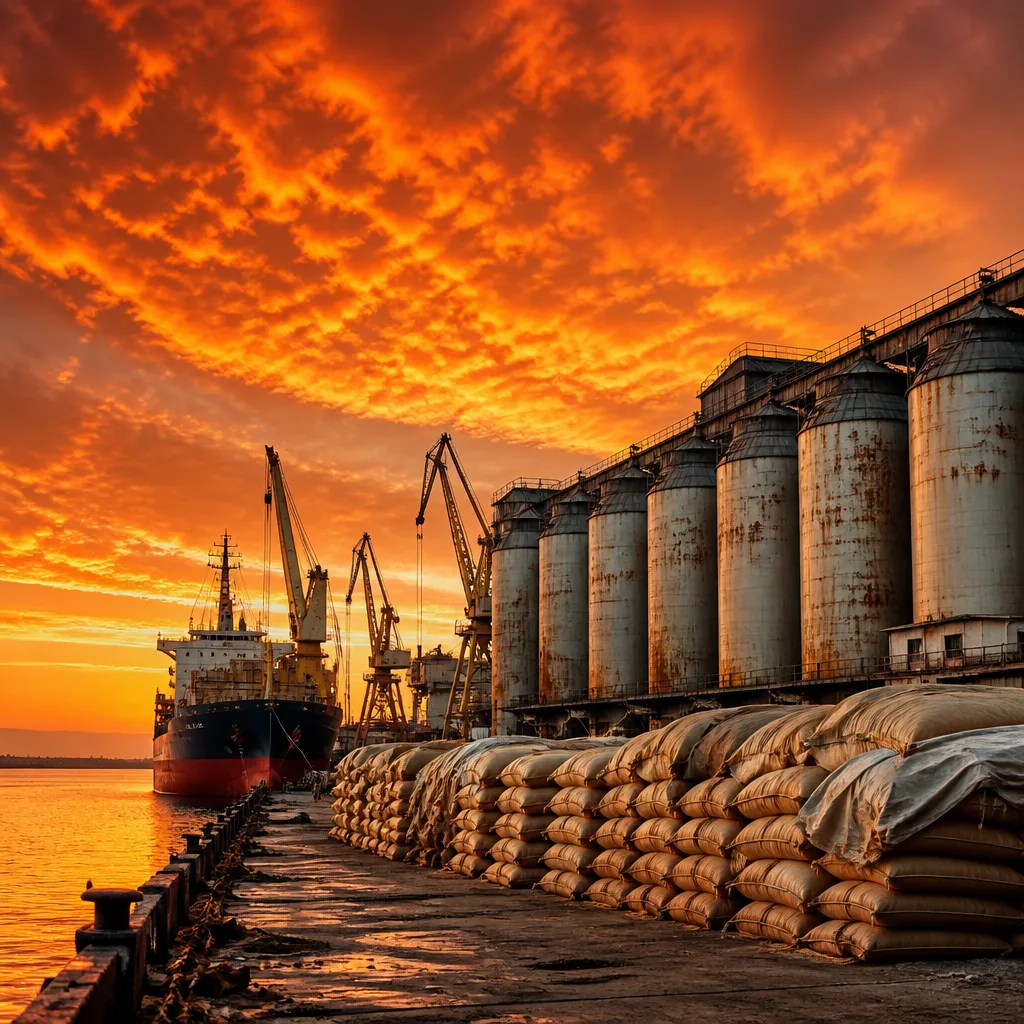
Global agricultural prices have climbed sharply in August, recording their biggest monthly gain since 2012 as conflict and adverse weather constrain supplies and push up the cost of staples from wheat to sugar and cocoa.
What has happened
The Bloomberg Agriculture Spot Index, which tracks 10 major farm commodities, rose by more than 13% in August to mark the steepest monthly jump in over a decade. Several factors are combining to tighten markets and lift prices.
Wheat has been a principal driver of the move higher. Prices recently reached their highest level in three years after attacks on ports in the Black Sea disrupted shipments from one of the world’s most important grain-exporting regions. Together, Russia and Ukraine account for more than a quarter of global wheat exports, as well as sizeable shares of barley, corn and sunflower oil, leaving buyers with limited alternatives.
Why it matters
The price rise comes on top of elevated energy and transport costs, which have been affected by tensions in the Middle East. That combination increases the risk that commodity price rises will feed through into higher supermarket prices for everyday items such as bread, meat and dairy.
Weather has amplified the supply squeeze. A powerful El Niño is developing and forecasters warn it could pose crop risks into next year. Summer heatwaves have already dented US and European corn harvests, while concerns about cocoa and sugar centre on how weather patterns in key growing regions will affect crop development.
| Commodity/Index | Approx. August change |
|---|---|
| Bloomberg Agriculture Spot Index | +13%+ |
| Sugar | ~+20% |
| Cocoa | ~+20% |
Market strain and supply outlook
Traders and analysts warn the disruption may not be short-lived. Black Sea export channels remain constrained as both sides strike at shipping and port facilities, and observers note that existing alternative suppliers face limitations.
“Argentine quality is questionable, Canada has limits, Australia has export capacity constraints and US wheat is increasingly the expensive residual supplier,”
Analysts at Lachstock Consulting have warned that unless shipping from the Black Sea resumes, markets risk a multi-season supply shortfall rather than a temporary logistics problem.
Added to this, reports indicate unsold grain is accumulating while Ukraine expects farmers to reduce winter-wheat planting for the 2027 season — a development that could keep supplies tight into the next crop cycle.
What consumers and businesses should expect — and do
- Expect further volatility: Prices can move quickly as weather forecasts and geopolitical developments change. Household food bills may rise if higher commodity costs filter through the supply chain.
- Monitor essentials pricing: Staple items such as wheat-based products, sugar and cocoa-containing goods are likeliest to show early effects of these moves.
- Businesses should review supply chains: Retailers and food manufacturers may need to consider alternative sourcing, hedging strategies, or adjusting product mixes to manage margin pressure.
Forecast confidence is moderate: short-term price spikes are evident, but the length and severity of supply disruption will depend on whether Black Sea flows resume, how El Niño evolves and whether other exporters can sustainably raise shipments. For now, households and firms should prepare for higher costs and continued market uncertainty, while policymakers and industry groups monitor the situation closely to limit pass-through to consumers.
Further updates will be required as crop reports, shipping patterns and weather forecasts develop over the coming weeks.