A tenant holding a secure Agricultural Holdings Act (AHA) tenancy has asked whether it is sensible — and common — to surrender a portion of productive land back to an institutional landlord in return for the freehold of the farmhouse, outbuildings and a small yard. The case crystallises a set of tensions now playing out across the countryside as landlords, tenants and buyers for renewable-energy projects vie for scarce, well‑located acreage.
What the advisers say
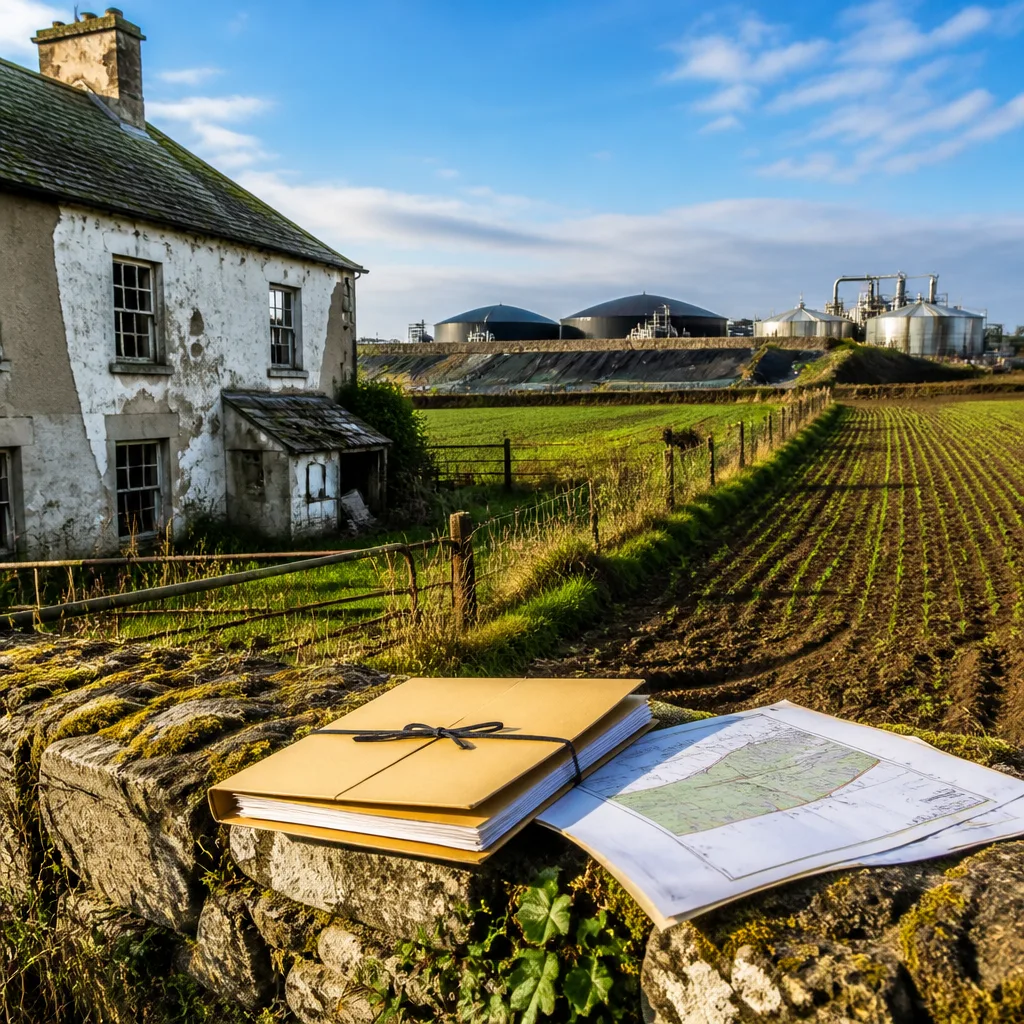
Legal advisers responding in Farmers Weekly emphasised that AHA surrenders take many forms and that no two deals are identical. The specific facts here are stark: the tenant has a robust next‑generation successor in his late 20s; the farmhouse suffers from "severe structural and energy efficiency defects" and long‑term neglect by the landlord; and the productive land proposed for surrender is in high local demand from large anaerobic digestion (AD) plants.
Those three elements — succession, dilapidation and third‑party demand for land — drive both the opportunity and the complexity of negotiation. Experts point to a set of practical and legal considerations that must be resolved before a transfer is agreed.
Key points for tenants and landlords
- Valuation and consideration — Surrenders can involve cash or other forms of consideration. Land coming back to the landlord will need to be valued relative to the freehold interest in the farmhouse and buildings.
- Successor rights — The presence of a viable next‑generation successor influences bargaining strength and the landlord’s willingness to agree terms that avoid long‑running tenancy arrangements.
- Repair liabilities — Where the farmhouse has long‑standing defects and energy‑efficiency shortfalls, tenants will want protection against future costs or an adjustment in consideration to reflect remediation obligations.
Advisers warn that the negotiation is rarely straightforward. Institutional landlords will assess the market value of reacquired productive land, particularly where AD developers are active, and will weigh that against the cost and liability of a neglected farmhouse. Tenants need independent valuations and legal advice to ensure the proposed swap reflects both the commercial value and longer‑term rights under the AHA.
"Surrenders can arise in a number of situations and can be driven by either the landlord or tenant," the advisory note explained.
Wider economic and market consequences
At a national level, such swaps are part of two broader trends: the reconfiguration of farm holdings around intensive food and energy projects, and the growing importance of property condition and energy performance in farm succession planning. Where productive acreage is snapped up by AD plants or other large users, local land prices and rents can be pushed up, affecting the economics of neighbouring farms and contracting firms.
For tenants, the immediate consequence is often a trade‑off between securing a family home freehold — potentially offering long‑term security for a successor — and giving up acreage that may generate ongoing rental income or contribute to farm-scale output. For landlords, reacquiring productive plots can unlock higher land values and alternative uses; but inherited repair liabilities for residential property can be a costly and politically sensitive burden.
Practical checklist before agreeing a partial surrender
- Obtain independent valuation of both the farmhouse package and the productive land proposed to be surrendered.
- Clarify who will bear the cost of necessary repairs and energy‑efficiency works, and whether there will be a price adjustment.
- Secure formal settlement of successor rights or compensation arrangements to avoid future disputes under the AHA.
- Consider tax consequences for both parties and the potential impact on farm business cashflow and borrowing facilities.
| Issue | Tenant concern | Landlord concern |
|---|---|---|
| Valuation | Fair exchange | Market re‑acquisition price |
| Repairs | Cost allocation | Long‑term liability |
| Successor rights | Security for family | Control of holding |
These are not theoretical points. In areas where AD operators are active, demand for land can materially change the bargaining positions of both tenants and landlords, with knock‑on effects for rural employment, local contractor demand and the mix of on‑farm enterprises. Yet any quick transactional fix can leave unresolved liabilities that bite back over years, particularly where the residential element of the deal is in poor condition.
In short, a partial AHA surrender can be an effective way to rationalise holdings and secure a farmhouse freehold, but it requires careful valuation, clear apportionment of repair liabilities and explicit settlement of succession rights. Without those protections, tenants risk losing productive assets; landlords risk taking on costly dwellings. Given the competing commercial pressures — not least from renewable‑energy developers — both sides should approach negotiations with detailed legal and financial advice.