
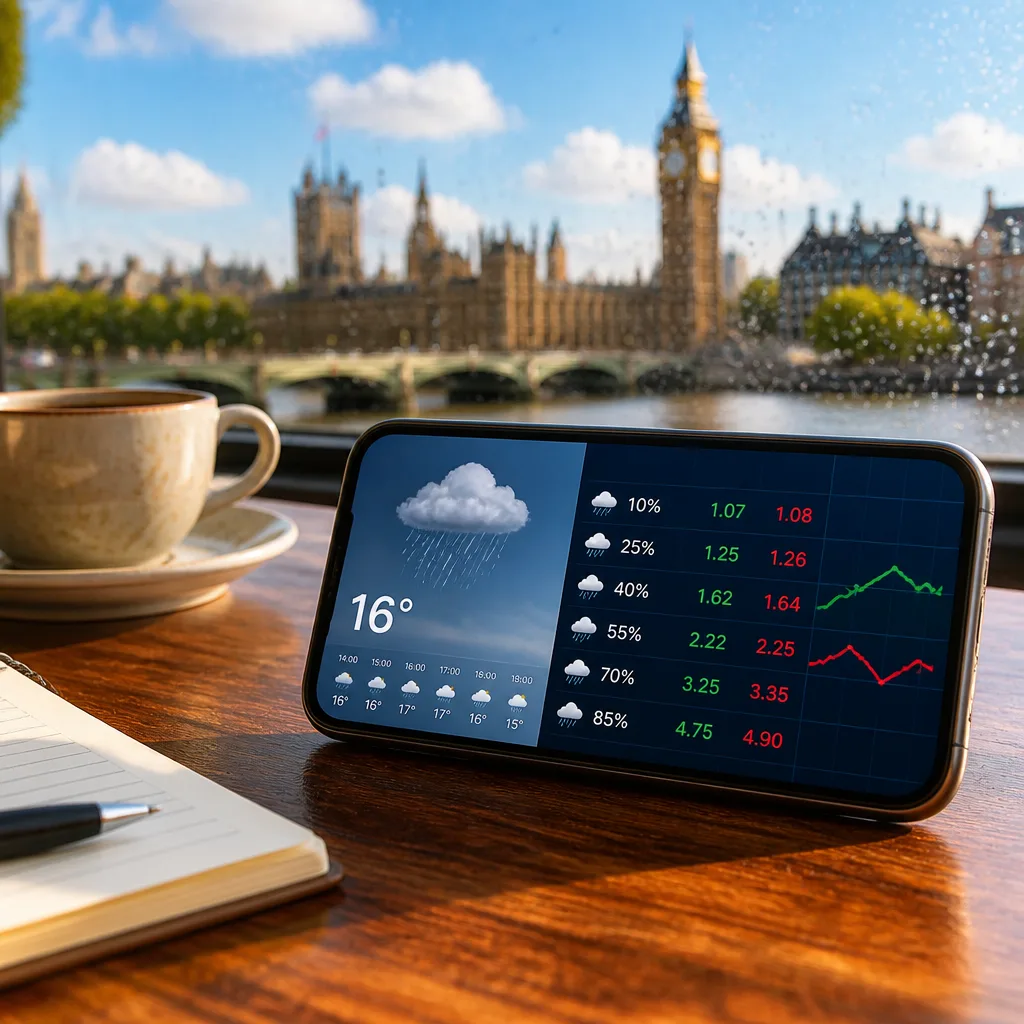
The Weather Company, which operates weather.com and the Weather Channel app, has agreed a partnership that will add prediction-market odds from trading platform Kalshi into its forecast products. The move will make market-priced probabilities — including contracts on highest temperature, rainfall and other weather outcomes — visible to millions of users.
What is changing and why it matters
Kalshi allows users to place contracts that pay out based on whether a specific weather event occurs. Under the agreement, The Weather Company will be able to display Kalshi’s probability data across its digital services, surfacing how markets are pricing the likelihood of particular weather outcomes. The companies say the partnership aims to give users an additional lens on uncertainty, complementing traditional meteorological forecasting and expert analysis.
This is not a minor experiment: Kalshi’s climate and weather vertical has seen rapid growth, with trading volume expanding by 500% year-on-year and the firm projecting it will reach around $1.1 billion in trading activity this year. Those figures underline why commercial weather providers are exploring new data sources to inform users and customers about risk.
“Weather is one of the fastest-growing and most crucial categories at Kalshi because it affects everyone — from individuals and businesses to governments,”
The statement came from Will Brackett, Kalshi’s head of partnerships, outlining the rationale for the collaboration.
How users will see and use market odds
According to the companies, market-derived odds will be displayed alongside conventional forecast elements. Examples of contracts already traded on Kalshi include markets for highest temperature in a given city on a specific day and other measurable weather outcomes.
- Complementary information — Markets provide a probability-implied view of risk that may differ from deterministic forecast products.
- Decision support — Individuals and businesses may use price-implied odds to inform short-term plans or hedging strategies.
- Visibility of uncertainty — Market prices can highlight when traders expect a high chance of extreme or unexpected conditions.
Benefits, limitations and concerns
Forecasting benefits from more ways to represent uncertainty. Market odds condense many participants’ views into a single price and can reflect rapidly changing expectations as new information arrives. For end users, this could provide a quick signal about how likely an event is seen by a broad group of traders.
But there are important caveats. Market prices are shaped by the composition, incentives and capital of traders, and they are not a substitute for meteorological analysis. Weather prediction remains rooted in observations, physics and ensemble modelling; markets package belief about outcomes rather than produce a forecast from first principles. Users should treat market odds as an additional indicator, not definitive science.
Separately, the expansion of weather trading has prompted debate. Prediction markets allow bets on events including hurricanes and other disasters, which some critics argue risks commodifying catastrophe — or creating perverse incentives if traders profit from damage. The companies involved have presented the products as tools for understanding uncertainty and managing risk, but the ethical and regulatory questions are likely to draw scrutiny as the markets grow.
| Metric | Reported figure |
|---|---|
| Year-on-year growth (climate & weather vertical) | 500% |
| Projected trading volume (this year) | $1.1 billion |
Practical advice for users
For the public, the practical steps remain unchanged: follow official forecasts and warnings from national meteorological services for safety-critical guidance, such as severe-weather warnings, flood alerts and travel advisories. Market odds can be a useful supplementary signal when deciding, for example, whether to make flexible arrangements around an outdoor event — but they do not replace expert guidance on safety and preparedness.
For businesses and planners, market-derived probabilities may offer an additional tool for short-term hedging or risk assessment, particularly where rapid sentiment shifts matter. That said, organisations should evaluate the provenance and limitations of any new data stream and ensure it is integrated alongside established forecasting and operational protocols.
The partnership marks a notable shift in how weather information is packaged for a mass audience. It is likely to accelerate discussion about the role of commercial markets in public understanding of weather risk, while offering a new signal that, used carefully, could help people and organisations make better-informed decisions about uncertain conditions.









