South Korea leads OECD nations in higher education participation among young adults, but the advantages of degree-level study appear smaller than might be expected when measured in employment and earnings, according to a new analysis by the country’s Education Ministry and the Korean Educational Development Institute (KEDI) of the OECD’s Education at a Glance 2026 indicators.
High participation, muted labour-market gains
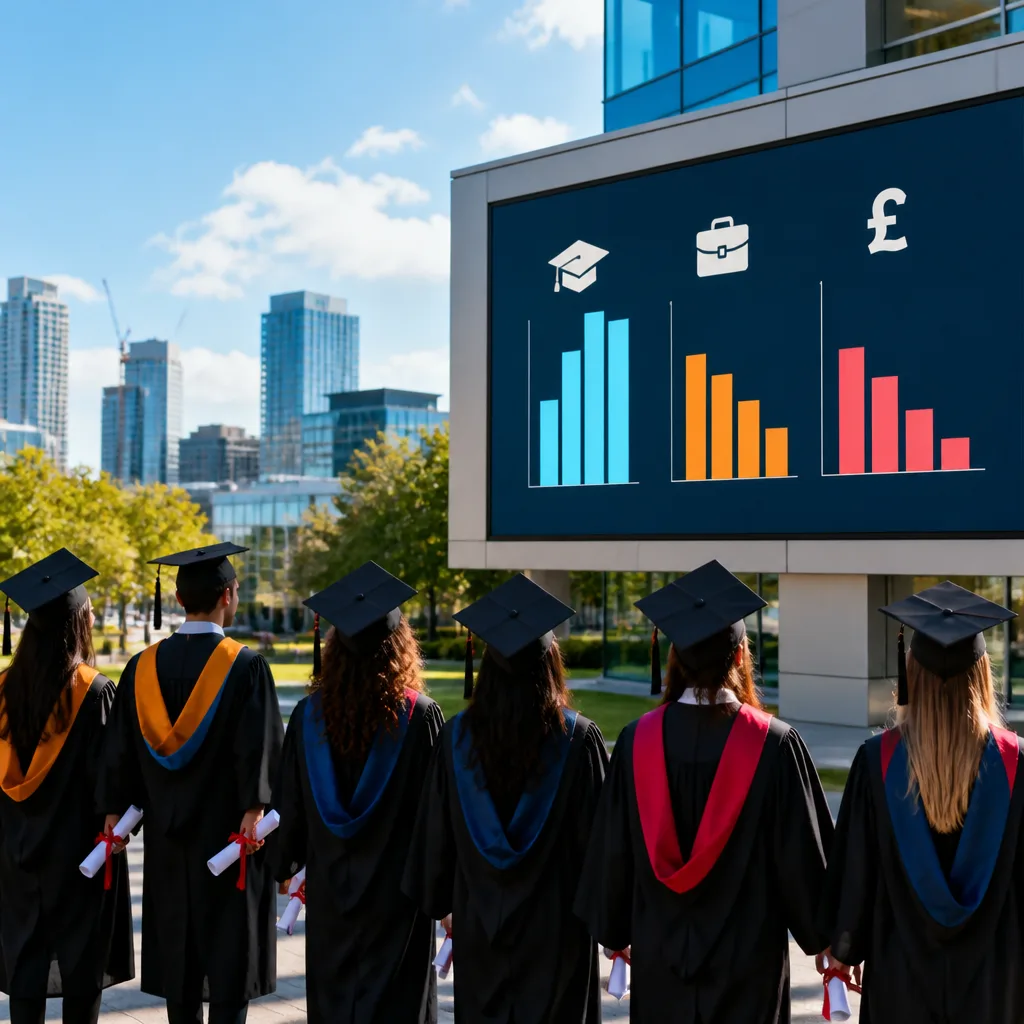
The figures show that in 2025, 71.1% of South Koreans aged 25 to 34 had completed higher education — the highest rate among OECD members and substantially above the organisation’s average of 47.5%. For the broader working-age population (25 to 64), the share with higher education stood at 58.2%, compared with an OECD average of 42.6%.
Yet the high level of attainment does not map neatly on to stronger employment outcomes. The employment rate for South Korean university graduates aged 25 to 64 was 80.1%, which is 5.9 percentage points below the OECD mean of 86%. For junior college graduates the rate was 78.1%, compared with an OECD average of 83.4%.
Smaller pay premium for degree-holders
The data also point to a narrower wage premium from university study in South Korea than across the OECD. Using high school graduate wages as a baseline of 100, the earnings index for university graduates in South Korea was 131.8 in 2024, lower than the OECD average of 139.3. Holders of postgraduate qualifications earned 173.5 in South Korea, again beneath the OECD figure of 179.7.
These outcomes suggest that while South Korea has been successful in expanding access to higher education, that expansion has not delivered proportionately larger returns in the labour market.
Spending patterns diverge across education levels
Public and private investment per higher education student in South Korea was reported at $16,479 in 2023, marking a 12.1% rise from the previous year but amounting to roughly 72% of the OECD average of $22,878. By contrast, spending per pupil at the elementary and secondary stages exceeded OECD averages, with government-funded elementary and secondary education expenditure at 3.2% of gross domestic product (GDP), higher than the OECD mean of 3%.
Public spending on higher education was 0.7% of GDP in South Korea, below the OECD average of 0.9%. The analysis also notes a role for private funding in the tertiary sector, although the source summary stops short of detailing the exact private-public split.
What the statistics imply for policy and students
- Rapid expansion of degree-level provision has increased participation, yet employment and wage returns lag behind peer countries.
- Lower per-student spending at tertiary level may be linked to the smaller wage premium and employment gaps for graduates.
- Stronger investment at school level contrasts with comparatively modest higher education funding, highlighting distributional choices in public budgets.
For students and families these figures matter at the point of choosing pathways after secondary school. A higher education credential remains associated with better outcomes than non-completion in many contexts, but the OECD-comparative data underline that the value of a degree depends on how economies absorb graduates and on the intensity of investment in tertiary provision.
Comparative perspective and limits of the data
The Education at a Glance indicators are widely used for international comparison, but they provide a snapshot that requires careful interpretation. Employment rates and earnings are influenced by the structure of the national economy, the supply of graduates in particular fields, labour-market regulations and the balance between public and private provision.
South Korea’s policy choices — prioritising widespread access to higher education while investing relatively less per tertiary student than many OECD peers — raise questions for policymakers about how best to align supply with labour-market demand and whether further investment or different labour-market reforms are required to raise the payoff from degrees.
As governments weigh those choices, the South Korean case offers a reminder that participation targets are only one part of the picture; the outcomes for graduates, and the resources directed towards their education, are equally central to debates about the purpose and funding of higher education.