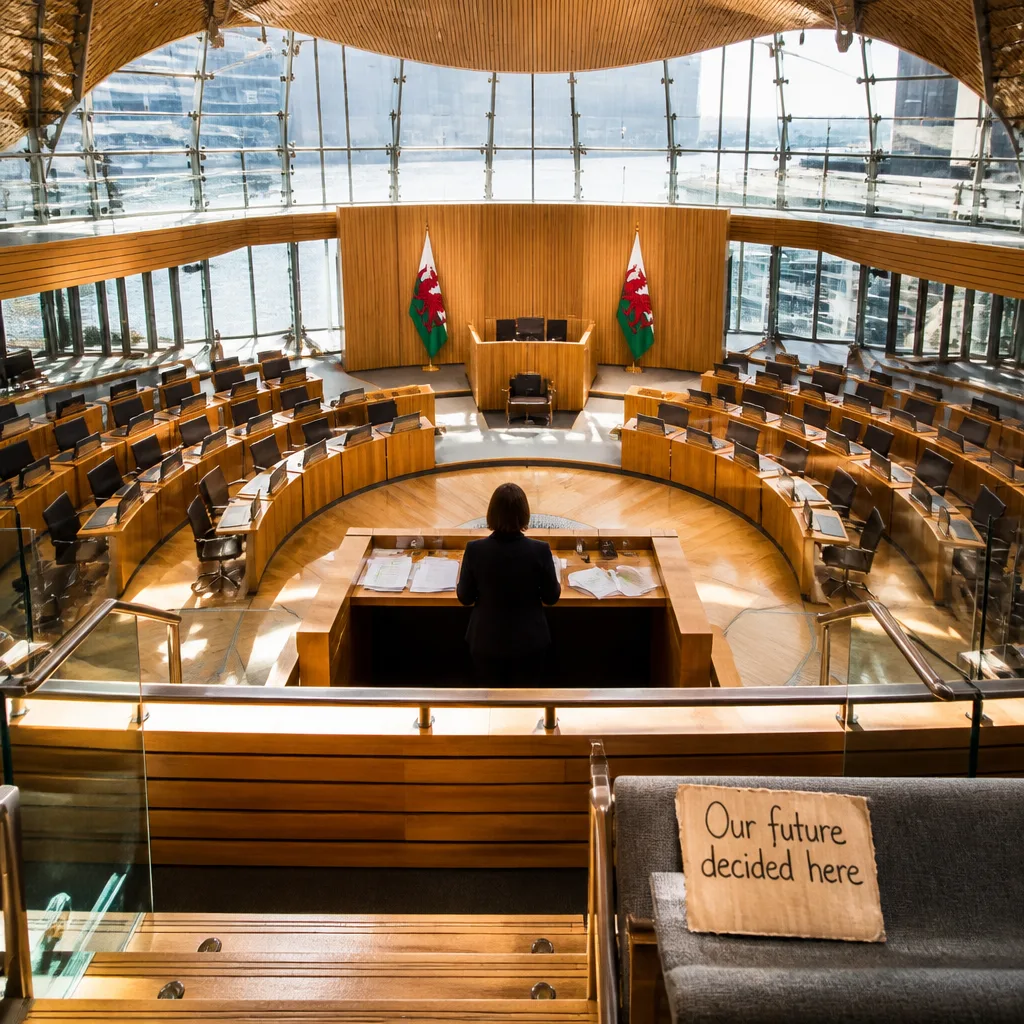
The First Minister of Wales told the Senedd that Wales’ constitutional future is a matter for its people, and warned it should not be “endorsed or exploited” by external actors after comments made by Russia’s foreign minister. The intervention followed a high-profile meeting of nationalist leaders and a pro-independence march in Cardiff.
Rhun ap Iorwerth, who attended the weekend march, sought to distance himself from remarks attributed to Sergei Lavrov, who was reported to have said he did “not know what will become of the country called Great Britain” after a summit of nationalist party leaders. The summit, called by Plaid Cymru, brought together leadership from Plaid, Sinn Féin and the Scottish National Party.
“I do not know what will become of the country called Great Britain.” — Sergei Lavrov
Speaking in the Senedd on Tuesday, the First Minister criticised senior Welsh politicians for citing a “Kremlin propagandist” in pursuing a unionist argument, and emphasised that decisions about constitutional change rest with the people of Wales.
Political tensions after nationalist summit
The meeting of nationalist leaders ended with a joint statement asserting that no Westminster government had the right to “block democracy”. Sinn Féin and the SNP are campaigning for referendums on Northern Ireland and Scotland respectively; Plaid Cymru has long pressed for the power to hold a vote on Welsh independence to be devolved.
Plaid has, however, repeatedly stated it will not attempt to hold a referendum during the current Senedd term, which finishes in 2030. During the May election campaign the party told voters the contest was not a vote on independence, and it has yet to set a date for any future plebiscite.
Welsh Conservative Senedd leader Darren Millar used first minister’s questions to link the nationalist activity to the Russian comments, saying Lavrov’s intervention revealed the “folly” of preoccupation with constitutional questions rather than services such as education and the NHS.
Consequences and context
- Foreign interference concerns: The appearance of a foreign minister capitalising on domestic constitutional debate has heightened sensitivities about outside actors seeking to influence or amplify UK political disputes.
- Nationalist coordination: The summit of Plaid Cymru, the SNP and Sinn Féin underlined ongoing co-operation among parties seeking independence or reunification across the UK and Ireland, and reignited debate over how and when referendums might be held.
- Senedd timetable: Plaid’s commitment not to hold a referendum before the Senedd term ends in 2030 sets a clear short-term limit on any immediate constitutional action by the party.
The First Minister has argued for devolving the power to hold a referendum to Cardiff, and has stated he would advocate for Wales to become an independent state. At the same time, Plaid has been careful during the current Senedd term to avoid proposing a specific vote date.
| Party | Position or demand |
|---|---|
| Plaid Cymru | Calls for power to hold a referendum to be devolved; no referendum in current Senedd term (ends 2030) |
| Sinn Féin | Campaigning for a referendum on Northern Ireland leaving the UK |
| Scottish National Party (SNP) | Campaigning for a referendum on Scotland leaving the UK |
Opponents of independence framed the Russian comments as evidence that nationalist debate risks international exploitation. Mr Millar told the Senedd Lavrov’s remarks showed the distraction and potential danger of prolonged constitutional focus while public services face serious challenges.
The first minister’s rebuke also reflected concern about political rhetoric that might enable outside powers to amplify divisions within the United Kingdom. His remarks underline a broader tension between parties pressing constitutional change and those who argue the focus should remain on delivering public services and economic recovery.
As the debate continues, the balance between democratic aspiration, the legal and political pathway to change, and the possibility of external commentary or exploitation will remain central to how the issue is argued across Westminster and the devolved administrations.