Historic city centre church partly closed while ceiling damage assessed
Part of Bristol Cathedral has been cordoned off after a piece of masonry fell from the high ceiling, with staff saying a section of the south aisle will remain shut to the public for some weeks while damage is investigated.
The Grade I listed Church of England building in the city centre — which has been a place of worship for around 900 years — has kept the majority of its spaces open, but the south aisle has been closed to visitors and worshippers since 22 September after pieces of stone were found on the floor.
- South aisle closed to the public from 22 September after masonry was discovered on the floor.
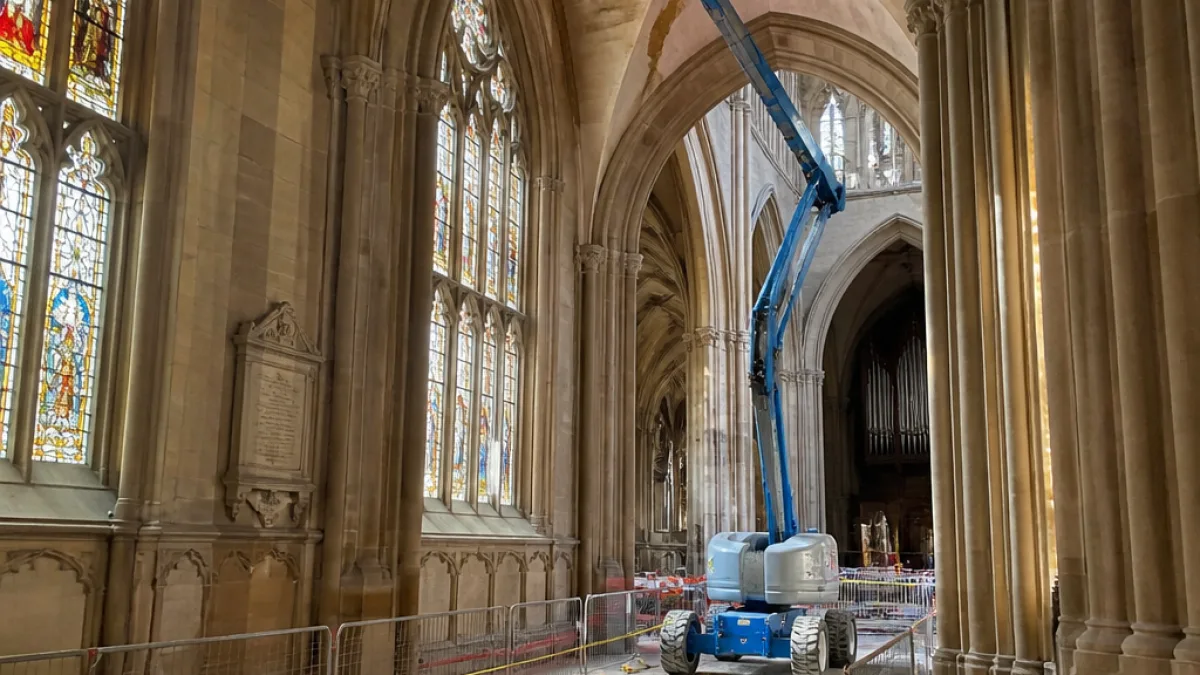
- Cathedral staff used a cherry picker to examine high arches and the ceiling.
- Investigations will establish cause, implications and remedial work required; other services continue.
Cathedral representatives used a cherry picker to reach the high arches and ceiling to inspect the affected area. They expect the cordoned section to remain closed "for a few weeks" while assessments and planning for repair work are carried out.
"We can confirm no individuals were in the immediate vicinity when the masonry fell and no injuries were sustained."
All services and activities at the cathedral are expected to continue as normal, the spokesperson added. The incident has focused attention on the practical challenges of maintaining ancient stonework in an active place of worship and a much visited city landmark.
Conservation of cathedral fabric is a technical and sometimes prolonged task. Specialists typically need to determine not only the immediate cause of collapse — whether weathering, mortar failure, vibration or another factor — but also how much of the surrounding stonework is unstable and what temporary and permanent measures are required to make the space safe again.
For communities, closures to parts of a cathedral can affect daily routines, from worship and choir rehearsals to tourism and educational visits. In Bristol, where the cathedral sits within the historic fabric of the city centre, the presence of scaffolding or cordons also alters the streetscape around College Green and the surrounding lanes, a reminder of the constant upkeep required by ancient buildings.
Local heritage groups and conservation teams often work with cathedral authorities to ensure repairs are sympathetic to the original materials and techniques. While this can add time to the programme, it helps protect the building's long-term structural and historical integrity.
Though no one was hurt in the incident, the cathedral's announcement will likely prompt a closer look at routine inspection regimes and preventive maintenance for tall stone vaults and arches, particularly in older churches that continue to host public events.
| Fact | Detail |
|---|---|
| Closure date | 22 September |
| Area affected | South aisle — high stone arch/ceiling |
| Building age | Approximately 900 years (Grade I listed) |
| Public access | Majority of cathedral remains open; south aisle cordoned off |
Cathedral staff have said investigations will look to establish the cause of the damage and the implications, as well as what remedial work will be necessary. In the meantime, worshippers and visitors will still be able to use most of the building while the restricted area is examined and stabilised.
The closure is a reminder of the responsibilities faced by custodians of historic buildings in Bristol, a city where medieval, Georgian and Victorian structures form an everyday backdrop to modern life. Repairing and preserving those buildings must balance immediate safety with long-term conservation — a process that can be disruptive but is vital to keep such places open for future generations.