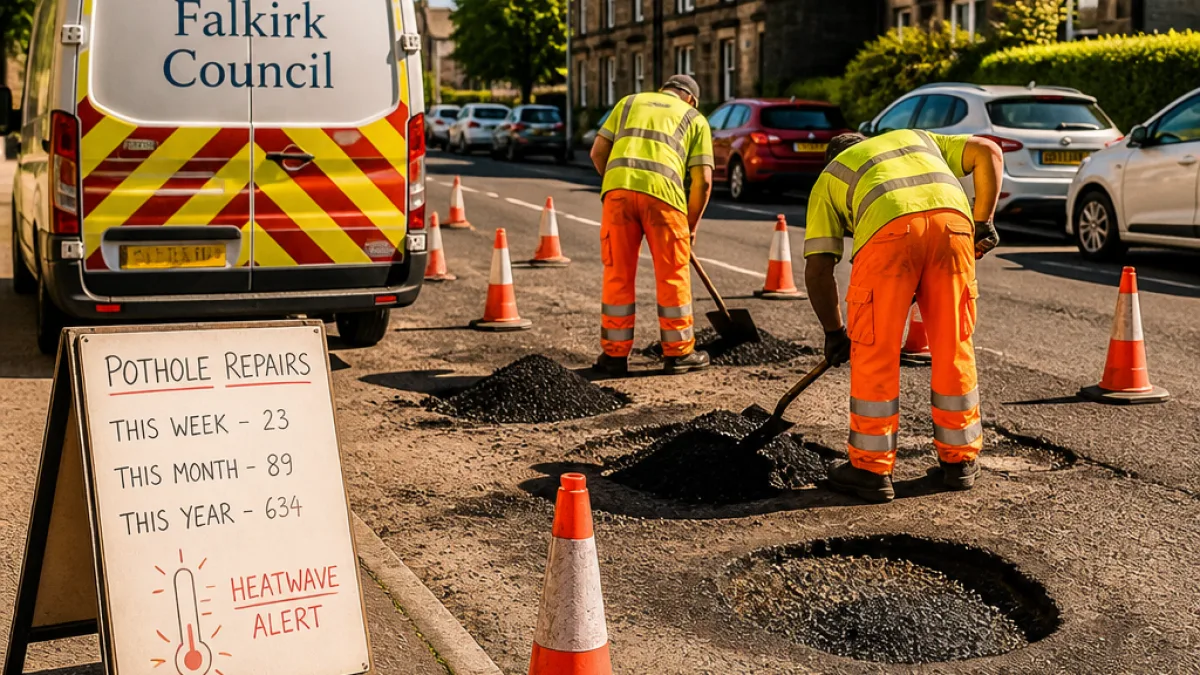
Falkirk Council has spent £2.2 million fixing 9,015 potholes on local roads over the past three years, according to freedom of information data compiled into a Scotland-wide review.
How Falkirk compares across the region
The figures, gathered by legal experts requesting information from councils across Scotland, place Falkirk in the middle of a wide range of local authority responses to pothole maintenance. Nearby authorities showed markedly different totals for both the number of defects recorded and the sums allocated to repairs.
- Falkirk: 9,015 potholes — £2.2m spent
- Clackmannan: 1,984 potholes — £479,881 spent
- Stirling: 3,878 potholes — amount spent not disclosed
- Glasgow: 58,279 potholes — £5.1m spent
- Fife: 20,645 potholes — £17.1m spent
Across Scotland the combined spend on pothole repairs since 2023 amounts to more than £60.6 million, the compilation shows.
Local implications for drivers and the council
Maintaining the road network is a core responsibility of councils, and the data highlights differences in how authorities approach detection, reporting and repair. For Falkirk drivers, the council’s three-year spend equates to almost one repair for each reported defect, but the figures do not disclose the size, severity or location of the potholes fixed.
"Potholes are often associated with cold or wet winters, but prolonged periods of hot, sunny weather also takes its toll on the roads."
The comment above comes from the RAC, which warned that the exceptional heat this summer could make road surfaces more susceptible to damage. The motoring organisation explained that intense UV and high temperatures can break down the binding agents in tarmac, leaving surfaces brittle and more likely to crack and fail when traffic resumes or when rain follows.
What the numbers tell us — and what they do not
The released data provides raw counts and expenditure but leaves several practical questions unanswered for Falkirk residents. It does not specify whether spending rose or fell year-on-year, which roads were prioritised, or how quickly repairs were completed after defects were logged. Nor does it clarify whether the council relied on permanent resurfacing or temporary patching.
For context, the wider compilation shows councils adopt divergent strategies and budgets for road repairs. For example, Glasgow recorded by far the highest number of potholes yet its repair bill was lower than Fife’s despite a much greater defect count. Such differences can reflect reporting practices, inspection regimes, the nature of the local road network and procurement choices.
| Council | Potholes reported | Repair spend |
|---|---|---|
| Falkirk | 9,015 | £2.2m |
| Clackmannan | 1,984 | £479,881 |
| Stirling | 3,878 | No data |
| Glasgow | 58,279 | £5.1m |
| Fife | 20,645 | £17.1m |
Councils are under growing pressure from motorists and road safety campaigners to both detect defects earlier and deliver long-lasting repairs. The RAC figures quoted in the review suggest drivers are encountering potholes frequently: the organisation reported that the majority of motorists face potholes on most trips, with over half encountering them every journey.
Locally, Falkirk residents seeking clarity on repair priorities and timescales should expect their council to be able to provide further breakdowns on where work was carried out and whether longer-term resurfacing programmes are planned. The financial figures published so far give a headline view of expenditure but not the operational detail that determines day-to-day road quality for drivers and cyclists.
As councils prepare budgets for upcoming years, the interaction between climate-driven deterioration and maintenance capacity will be an important factor for Falkirk and other authorities around Scotland.