Russia plans to cut funding for welfare, education and healthcare in its draft 2027 state budget while substantially increasing defence spending, according to reporting based on official figures and news agency analysis. The proposed defence allocation would rise to 17.1 trillion roubles — equivalent to about $202.58 billion — a roughly 27% increase on the previous budget.
Winners and losers in the spending plan
The draft outlines significant reductions to social programmes at a time when the economy has been under strain for nearly five years of conflict in Ukraine. Spending on pensions, veterans’ payments and related social policies is set to fall by 7%, while the education budget would be cut by 6% and healthcare by 6.8%. Investment in infrastructure and agriculture faces a decline of around 7.4%.
Officials say the government is trying to balance long-term planning with the immediate pressures of higher military expenditure. A move towards preparing a three-year budget is being advanced, but in practice Moscow has repeatedly revised its fiscal projections upwards and missed deficit targets.
Debt and fiscal pressures
Despite reductions for social services, the cost of servicing Russia’s debt is projected to grow notably. Debt interest and related charges are expected to account for 9.4% of total spending in 2027 and to continue rising thereafter. The budget has been under pressure from sustained use of fiscal reserves, increased borrowing and a sequence of revenue measures introduced to meet military costs.
- Defence: up to 17.1 trillion roubles (+27% vs previous budget)
- Welfare/social: down 7%
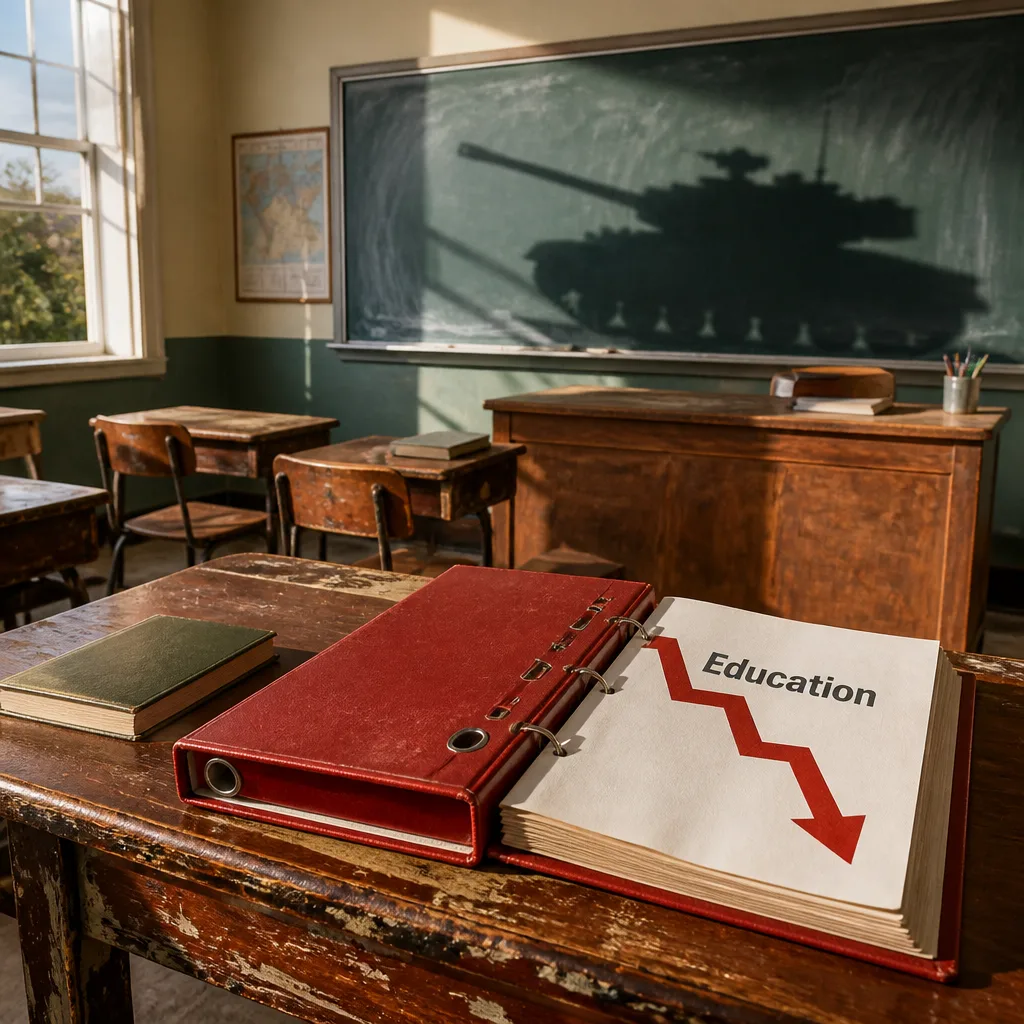
- Education: down 6%
- Healthcare: down 6.8%
- Infrastructure & agriculture: down 7.4%
- Debt servicing: expected to reach 9.4% of total spending in 2027
| Sector | Projected change (2027) |
|---|---|
| Defence | +27% (to 17.1 trillion roubles) |
| Welfare/social | -7% |
| Education | -6% |
| Healthcare | -6.8% |
| Infrastructure & agriculture | -7.4% |
Implications for classrooms and communities
For teachers, school leaders and parents, a national reduction in education spending of the scale indicated would most likely be felt through tighter school budgets, slower capital investment and potential pressures on staffing and support services. The figures do not specify how cuts would be distributed across regions or between school phases, but an across-the-board decline of 6% in the education envelope gives little room for new initiatives or catch-up programmes.
The planned squeeze on healthcare and welfare alongside rising debt costs presents a compound challenge. The budget measures follow a period in which the state has relied on reserves and borrowed to finance elevated military spending. In recent years tax changes and higher utility tariffs have already prompted discontent among some elements of the population, including supporters of the government.
Analysts will watch whether the three-year budget planning aim reduces the need for frequent upward adjustments. To date, however, fiscal targets have been missed and assumptions revised as the economic impact of an extended conflict endures.
While defence spending is being prioritised in the short term, the increase in debt servicing as a share of total expenditure will further limit discretionary funds available for social priorities in future years unless revenue rises materially or spending elsewhere is reduced even more.
The proposed 2027 allocations underline the difficult trade-offs facing states when prolonged conflict and macroeconomic pressures force choices between security and public services — with direct consequences for pupils, patients and pensioners.