
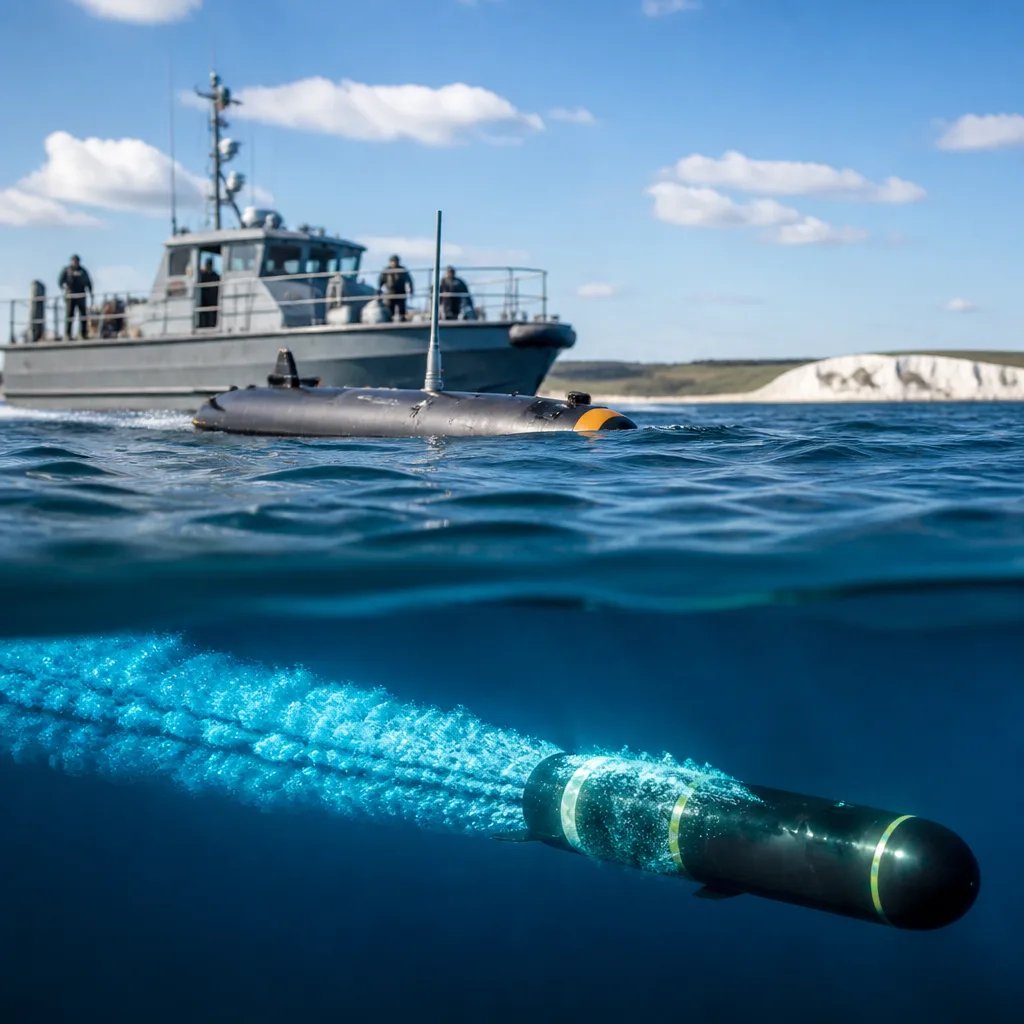
Britain has for the first time fired a heavyweight torpedo from an uncrewed, underwater drone, officials said, in a test designed to bolster defences for the UK’s seabed infrastructure and to deter emerging undersea threats.
Significant step in remote undersea capability
The test took place last week in UK waters using the Royal Navy’s 12-metre undersea drone known as Excalibur. The weapon, which was fired from the unmanned vessel, was described as a heavyweight torpedo jointly developed by the United States and Australia.
Defence sources emphasised the milestone because it is the first time either Britain, the US or Australia has launched a torpedo from an uncrewed undersea craft rather than a crewed submarine.
The Excalibur drone is currently conducting sea trials. It was built in Plymouth and can be remotely operated from almost 10,000 miles away, officials added.
Why the test matters
UK ministers have framed the trial as part of a broader effort to protect critical seabed assets such as communications cables and pipelines. The Government and allied agencies are increasingly wary of attempts by hostile actors to gather intelligence or conduct sabotage beneath the waves.
In recent months, officials have pointed to a pattern of activity they characterise as a form of “hybrid warfare” at sea, including the use of spy vessels and covert undersea capabilities to probe the location and vulnerability of subsea infrastructure.
“A significant breakthrough”
The Government hailed the successful test as a “significant breakthrough” for Euro-Atlantic security and NATO’s undersea capabilities.
- Platform: Excalibur undersea drone (12 metres)
- Weapon: heavyweight torpedo, jointly developed by the US and Australia
- Purpose: protect seabed cables and pipelines; counter undersea threat activity attributed to Russia
- Control: remote operation from nearly 10,000 miles away
The test was carried out under the AUKUS defence partnership between the UK, the US and Australia, a pact that aims to develop advanced submarine, artificial intelligence and autonomous undersea capabilities.
| Item | Detail |
|---|---|
| Drone name | Excalibur |
| Length | 12 metres |
| Remote control range | Nearly 10,000 miles |
| Weapon partners | United States and Australia |
Wider diplomatic context
The timing of the announcement comes as the Prime Minister travels to New York for the United Nations General Assembly, where security issues including the conflict in Ukraine and other global tensions will be discussed by world leaders. British officials say the test signals an intention to strengthen allied capabilities in the face of rising concerns from European intelligence services that Russia could intensify operations against NATO members.
European intelligence officials have warned that a possible escalation could materialise in the near term, though assessments vary about the immediacy of any plan. The UK-US-Australia test is intended to demonstrate both technological progress and the interoperability of partners working to defend undersea infrastructure.
Defence analysts will watch the programme closely for implications on naval doctrine, rules of engagement for unmanned systems and how allies distribute deterrent and protective responsibilities across subsurface, surface and cyber domains.
For now, the test is being presented domestically as a tangible advance in maritime security and as an example of the practical outputs from the AUKUS partnership. Ministers are likely to use the result to underline commitments to protect critical infrastructure and to reassure partners and commercial operators about the resilience of undersea networks.















