Taiwanese pupils have secured positions among the world’s top five in several key areas across four major international education studies, with particularly strong showings in civic knowledge and computational thinking.
High rankings across multiple assessments
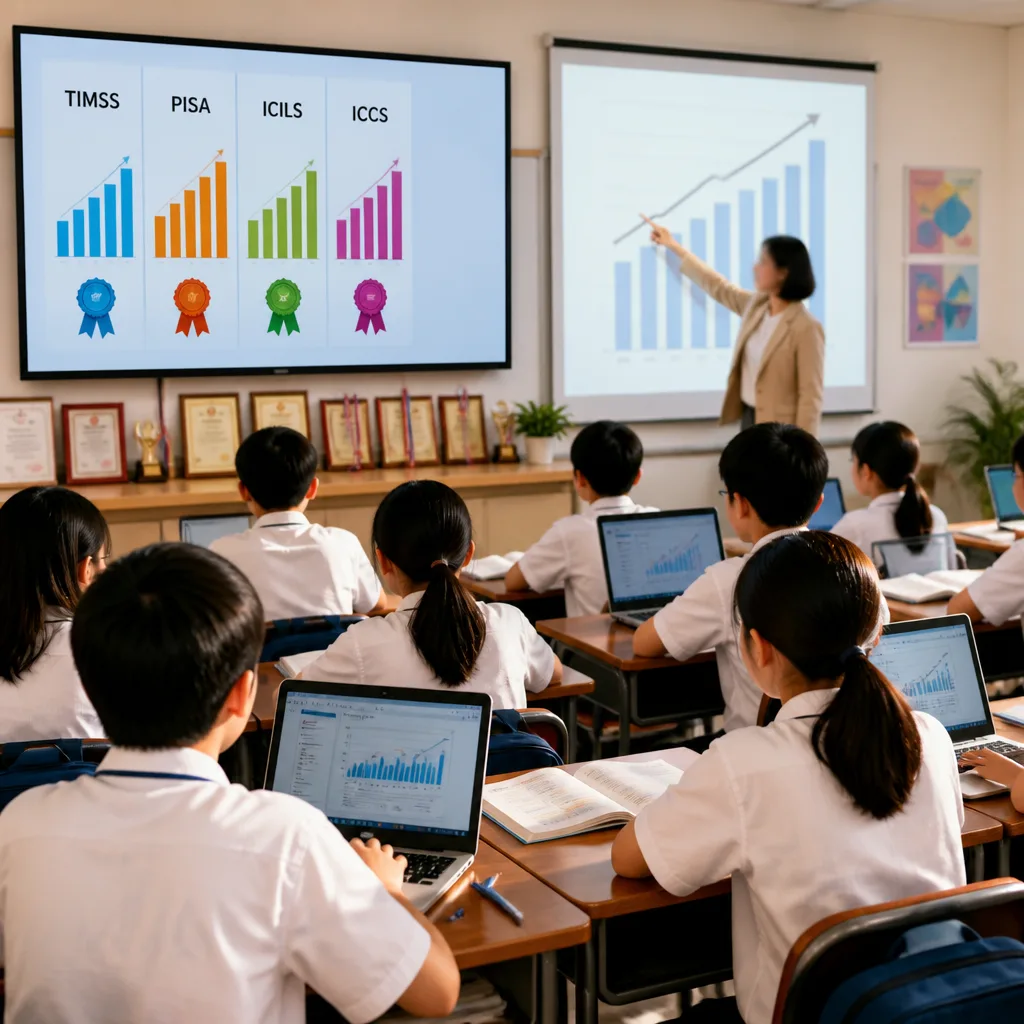
Results published from TIMSS 2023, PISA 2025, ICILS 2023 and ICCS 2022 show Taiwanese students performing consistently at the highest levels. The data indicate robust outcomes in mathematics, science, reading, civic education and digital skills for pupils at different ages.
Key results from the four studies include:
- TIMSS 2023 (70 participating countries/education systems): fourth graders were second in mathematics and third in science; eighth graders were second in both subjects.
- ICCS 2022 (about 24 participants): Taiwan ranked first in eighth-grade civic knowledge.
- ICILS 2023 (35 participants): Taiwan placed first in computational thinking and fourth in computer and information literacy for eighth-grade students.
- PISA 2025 (around 91 participants): 15-year-olds ranked fourth in science and mathematics, third in reading and fifth in computational problem solving.
| Study | Age / Grade | Top Results |
|---|---|---|
| TIMSS 2023 | Fourth & Eighth grade | 2nd (math, 4th), 3rd (science, 4th); 2nd (math & science, 8th) |
| ICCS 2022 | Eighth grade | 1st (civic knowledge) |
| ICILS 2023 | Eighth grade | 1st (computational thinking); 4th (computer & information literacy) |
| PISA 2025 | 15-year-olds | 4th (science & maths), 3rd (reading), 5th (computational problem solving) |
Officials and experts point to system strengths
The results drew praise from Taiwan’s Education Minister, who described the outcomes as a source of national pride and offered thanks to teachers and parents. He highlighted the role of educators as “unsung heroes” in supporting human resources and the nation’s technology sector.
“Unsung heroes who support Taiwan’s human resources and the development of its technology industry,”
Commentators from within Taiwan’s education research community connected the high rankings to a number of systemic factors. The deputy director of the National Taiwan Normal University Center for Educational Research and Evaluation attributed performance to a combination of a stable basic education system, longstanding traditions in teaching mathematics and science, curriculum reforms and continued emphasis on reading, information technology and civic education.
The deputy education minister noted the diagnostic value of international assessments, saying they can identify learning outcomes and areas needing improvement.
Implications and context
Taken together, these results position Taiwan within the global lead group for academic, digital and civic literacies at the levels assessed. For policymakers and educators, the data offer both commendation and direction: confirmation of strengths in core disciplines and digital competencies, and a reminder that international benchmarks can expose areas requiring targeted development.
Such performance is likely to inform ongoing curriculum discussions, teacher professional development and resource allocation — particularly where nations seek to strengthen computational thinking and civic education in secondary classrooms.
For parents and teachers, the findings provide an external measure of how pupils are performing in relation to peers worldwide and may shape expectations around the skills deemed essential for future study and employment.
While international comparisons have limitations and cannot capture all aspects of schooling, Taiwan’s consistent presence near the top of several major assessments indicates a sustained, system-level capacity to deliver high outcomes across a broad range of student competencies.