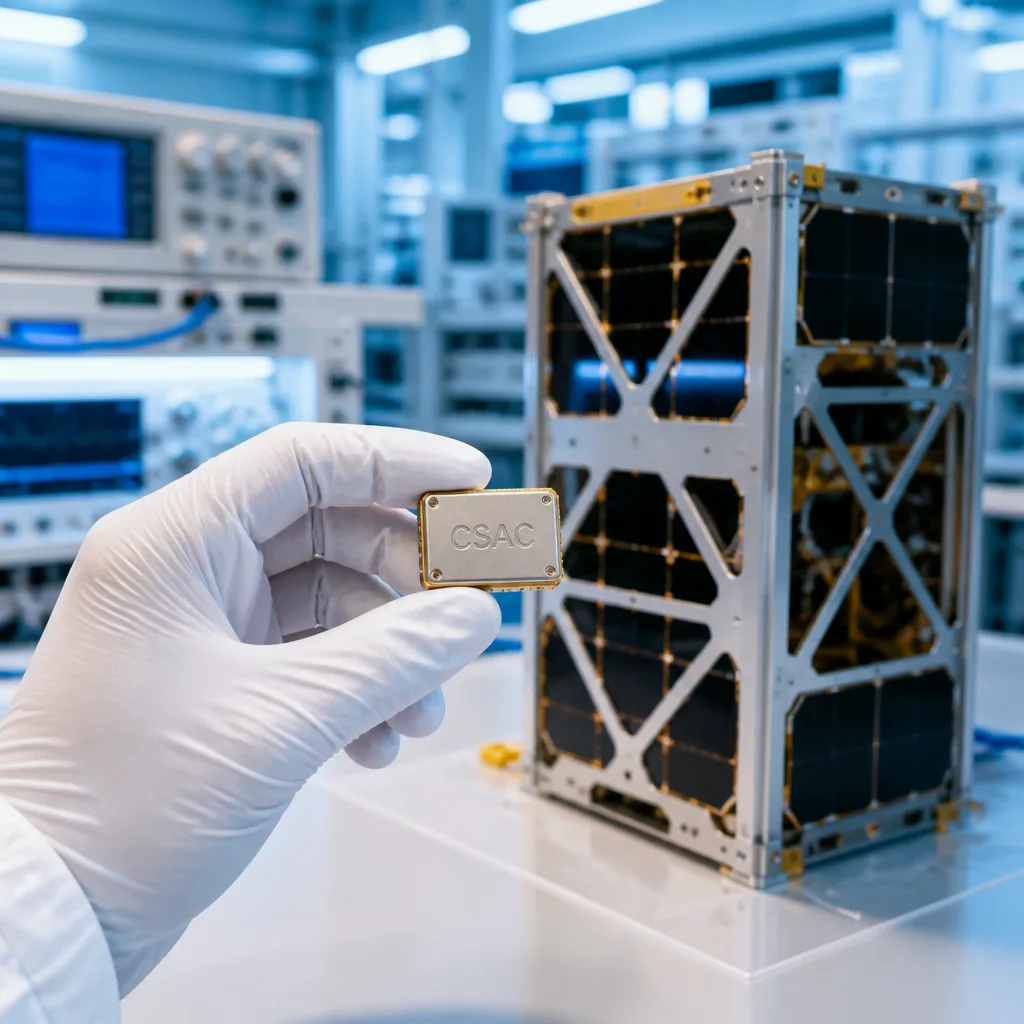
Microchip Technology has introduced a radiation‑tolerant chip scale atomic clock designed for satellite electronics, signalling a deeper push into space‑qualified timing components even as the company’s immediate financial priorities remain focused on margin recovery and inventory management.
What Microchip announced
The new device, named the Space CSAC‑SA65, is a compact, low‑power atomic clock engineered to tolerate the radiation environment encountered in Low Earth Orbit. The product complements Microchip’s existing portfolio of radiation‑tolerant timing chips and is intended to offer precise timing without the size, weight and power penalties of larger timing systems.
Why timing matters in satellites
Precise, reliable timing is a foundational requirement for many satellite functions, from navigation and communications to payload synchronisation. Smaller, lower‑power atomic clocks can simplify satellite designs and reduce system costs by avoiding the need for bulkier timing subsystems or frequent ground synchronisation.
- Size and power: chip scale atomic clocks reduce the footprint on satellite boards and limit power draw, both critical for small satellites and constellations.
- Radiation tolerance: the Space CSAC‑SA65 is specified for harsh orbital environments, lowering the engineering barriers to adoption in space missions.
- System cost: by simplifying onboard timing systems, these clocks can help control overall platform costs — a growing priority for commercial constellations and government programmes alike.
Commercial and investor implications
The announcement adds to a steady rollout of space‑qualified timing parts from Microchip — the company recently released the DSA504RT radiation‑tolerant clock generator — creating a clearer product pathway into aerospace and defence markets. For customers, the incremental benefit is access to a broader set of timing building blocks from a single supplier. For Microchip’s investors, the launch broadens the company’s addressable market but does not, in isolation, change the near‑term financial picture.
Analysts and company watchers are likely to weigh this product in the context of several ongoing corporate priorities: managing high leverage, reducing excess inventory, improving margins and sustaining a dividend. In other words, space‑qualified parts can contribute to longer‑term revenue diversification, but they are not an immediate fix for the firm’s operational and balance‑sheet challenges.
| Metric | 2029 projection (as reported) |
|---|---|
| Revenue | US$8.2 billion |
| Net earnings | US$2.3 billion |
| Implied fair value | US$108.64 (about 49% upside to the current price reported) |
Where this fits in the market
Timing components for space systems are a growing niche within the broader semiconductor market. Suppliers that can combine radiation tolerance, low power and compact form factors stand to win business from satellite builders focused on small satellites and large constellations. Microchip’s latest launch shows an intent to compete in that arena, but market success will depend on qualification cycles, customer adoption and how swiftly the company can translate product wins into meaningful revenue.
Investors should treat the Space CSAC‑SA65 as a strategic product extension rather than a short‑term financial catalyst. The part underscores Microchip’s engineering capability in timing solutions, but near‑term investor attention will remain on inventory, leverage and margin trends — variables that determine whether longer‑term aerospace tailwinds can be captured profitably.
The development is nonetheless notable for satellite system designers in the UK and internationally. As more vendors bring space‑qualified, compact timing solutions to market, satellite architects gain more freedom to design lighter, more power‑efficient platforms — a change that could accelerate the commercial deployment of small satellites and microconstellations.
Expect follow‑up scrutiny from customers and investors alike: customers will test the part in mission conditions and assess lifecycle costs; investors will judge whether product momentum can be converted into durable earnings growth without exacerbating Microchip’s financial strains.