The Royal Wolverhampton NHS Trust and Walsall Healthcare are to roll out ambient voice technology (AVT) that listens to consultations and generates clinical notes automatically, following an eight‑month pilot at Walsall Healthcare that the trusts describe as a success.
Pilot findings and planned rollout
According to the Royal Wolverhampton, the trial “on average reduced clinicians' documentation time to less than four minutes per patient”. The trusts say the technology will be introduced initially in Emergency Departments and outpatient specialties, with a target to cover all areas across both trusts by 2028.
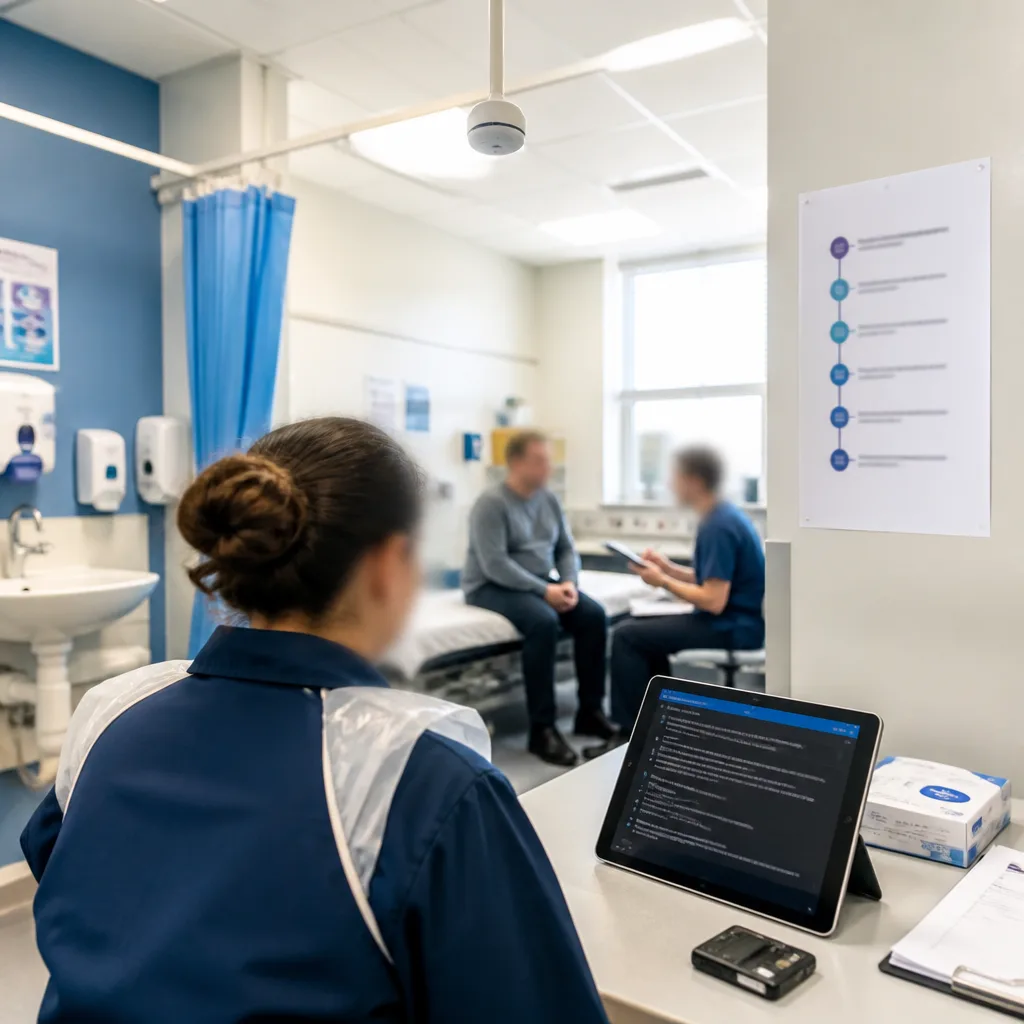
The system records consultations, produces structured clinical notes and presents them for clinician review and approval before they are uploaded into the patient’s record. The trusts said the equipment listened “securely” and that generated notes are edited where necessary before being added to records.
“This partnership marks a step forward for the Trusts, giving their clinicians the time and capacity to focus on patient care, rather than paperwork,”
Heidi Health, whose Europe director Raghav Sharma commented on the partnership, was chosen as the trusts’ preferred supplier following the pilot.
Claims and evidence
Walsall Healthcare’s lead for quality improvement and AVT, Dr Jamil Aslam, said the pilot had released “tens of thousands of hours back to frontline teams across multiple specialties, including the emergency department”. Group deputy chief executive and chief strategy officer for both trusts, Simon Evans, framed the move as part of a wider commitment to “adopting innovative digital solutions across all our care services to bring benefits”.
The trusts tested the technology across a variety of settings during the pilot, including emergency department, medical same‑day emergency care, dermatology, ENT and audiology, and obstetrics and gynaecology. Those areas were used to assess whether automatic transcription and note generation could integrate with clinical workflows while maintaining record accuracy.
What the technology does — and what it doesn’t
According to the trusts’ description, the AVT system performs three functions:
- captures consultation audio securely;
- generates structured clinical notes automatically;
- presents those notes for clinician review, editing and approval before they are added to the patient record.
| Feature | Reported result in pilot |
|---|---|
| Documentation time | Less than four minutes per patient on average |
| Workforce time reclaimed | “Tens of thousands of hours” back to frontline teams (as reported) |
| Initial deployment | EDs and outpatient specialties; full rollout by 2028 |
Benefits, questions and risks
The trusts emphasise reduced administrative burden and more clinician time for patients as the primary benefits. For services under staffing pressure and with heavy paperwork, even modest per‑patient time savings can accumulate into substantial capacity gains.
However, technology that records consultations and auto‑generates clinical records raises well‑documented questions that remain salient as deployment expands:
- How accuracy is validated across specialties and accents;
- Which safeguards govern storage, access and retention of recorded consultations;
- How consent and patient privacy are managed in routine clinical care;
- Clinical governance for edited machine-generated notes — who is accountable for final content.
The trusts say notes are reviewed and approved by clinicians before being added to records, which is a key control. They also describe the capture as secure, though neither trust set out technical details of encryption, retention periods or third‑party access in the material provided.
Wider context
The move follows a growing interest from NHS organisations in digital tools that aim to reduce admin burden on clinicians, from electronic records to decision support and, increasingly, speech‑to‑text assistants. Vendors have sought to position ambient transcription as a way to cut documentation time and clinician burnout; trusts need to show those claims hold up in varied, high‑pressure clinical settings.
As the pilots scale, regulators and NHS bodies will be watching how trusts balance efficiency gains with data protection, clinical accuracy and patient consent. For patients and clinicians, the promise is clear: less time facing screens and paperwork, more time on direct care — provided the technology proves reliable and the governance is robust.
The trusts say the phased rollout will begin in the named areas and expand across both organisations by 2028.