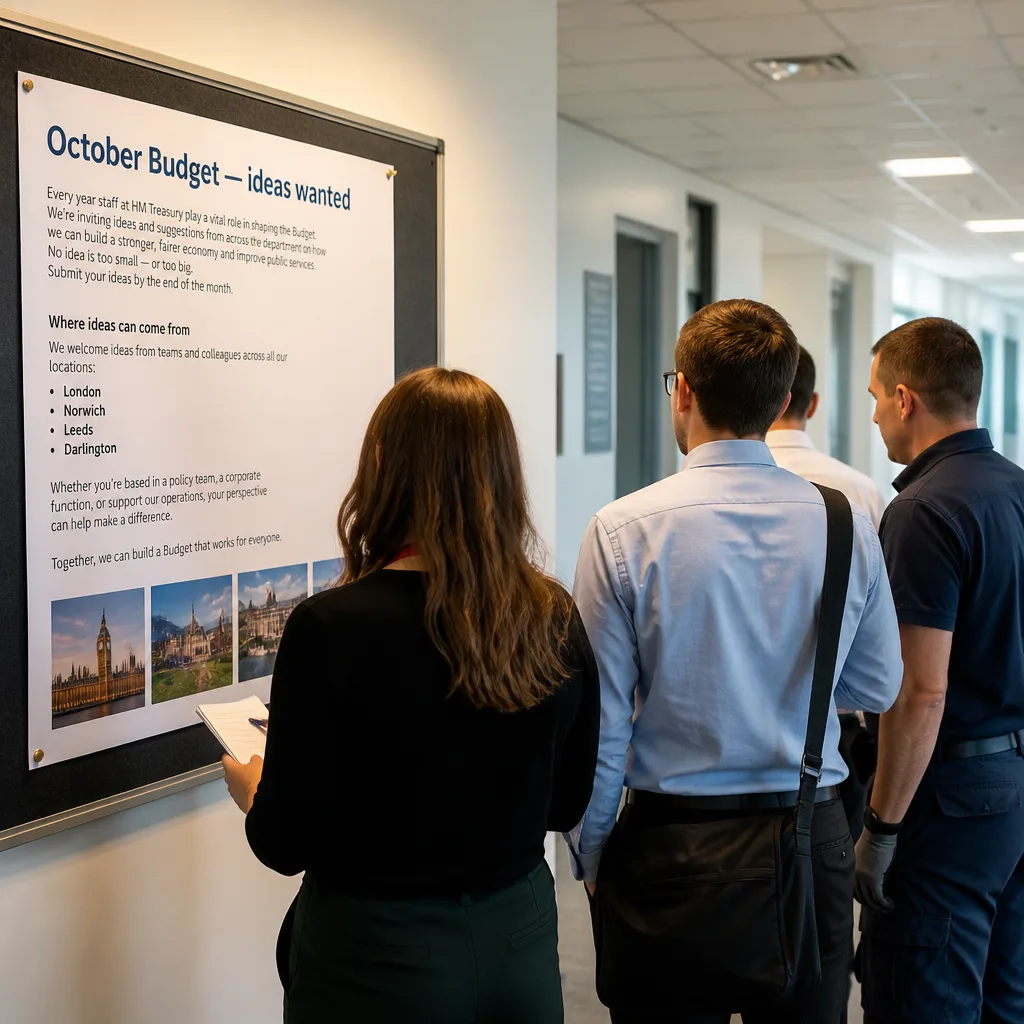
The Chancellor of the Exchequer has launched an internal call for ideas to shape the next fiscal statement, asking staff at all levels of the Treasury to contribute proposals for the October budget.
Broad sweep of suggestions invited
In an unorthodox move, the chancellor asked junior officials, apprentices and non‑policy staff — including IT workers — to submit suggestions. The appeal was made in a written communication to Treasury employees at its campuses in London, Norwich, Leeds and Darlington, with a promise that the most interesting proposals will be invited to be pitched in person.
"Just as we want growth in every postcode, we want ideas from every postcode. The chancellor wants to harness the talent in the Treasury and across the country to improve our communities and high streets, and give people and businesses a bit more breathing space."
The Treasury said the exercise was intended to challenge what a source described as "traditional Whitehall hierarchies" and to surface ideas that could help spread growth regionally, bolster local industries and cut costs for households and businesses.
Political and fiscal context
The approach comes as the chancellor faces a demanding autumn. Officials expect a challenging economic backdrop marked by sluggish growth and a possible rise in inflation, alongside pressure from other departments for additional resources, particularly for defence.
Healey, who was the surprise choice for chancellor following the party leadership change, has emphasised that the outreach does not signal a loosening of fiscal rules. On broadcast media he set out that the government would pursue "continuity of a Labour government with a change of leader" and reiterated a commitment to fiscal discipline, saying his administration would not "max out the country’s credit card".
The chancellor has previously clashed with government colleagues over defence spending. He resigned as defence secretary under the previous leader over differences about the defence investment plan and the timetable for increasing defence spending to 3.5% of GDP.
How the process will work
A Treasury spokesperson underlined the intention to draw on ideas from across the department and beyond. Officials said the exercise targets both policy and practical proposals, and will consider contributions from staff not traditionally involved in policy development.
- Submissions invited from staff at all grades and professions.
- Staff at four Treasury campuses have been contacted directly.
- Selected contributors will be asked to present their ideas to the chancellor.
Those are the only details released publicly about the mechanics of the exercise; the Treasury has not published a deadline for submissions nor a limit on the number of proposals it will consider.
| What the chancellor asked for | Who he invited |
|---|---|
| Ideas to shape the October budget, with emphasis on regional growth and cost reduction | Apprentices, IT staff, junior officials, senior economists and private secretaries |
Potential consequences
The initiative serves several purposes. It signals an attempt to democratise policy input inside Whitehall and to demonstrate responsiveness to concerns about regional inequality and the cost of living. It also allows the chancellor to cast the budget as informed by practical frontline experience as well as economic analysis.
At the same time, the chancellor must reconcile any fresh spending ideas with the government’s stated fiscal constraints and competing departmental demands, including for defence. How far suggestions from junior staff will translate into material policy change remains unclear, but the move will be watched in Treasury corridors and by ministers for what it implies about the priorities shaping October’s statement.
The Treasury has framed the effort as a way to "harness the talent in the Treasury and across the country". Whether that will produce substantive contributions to the budget will depend on the selection process and how proposals are weighed against the economic realities facing the chancellor.