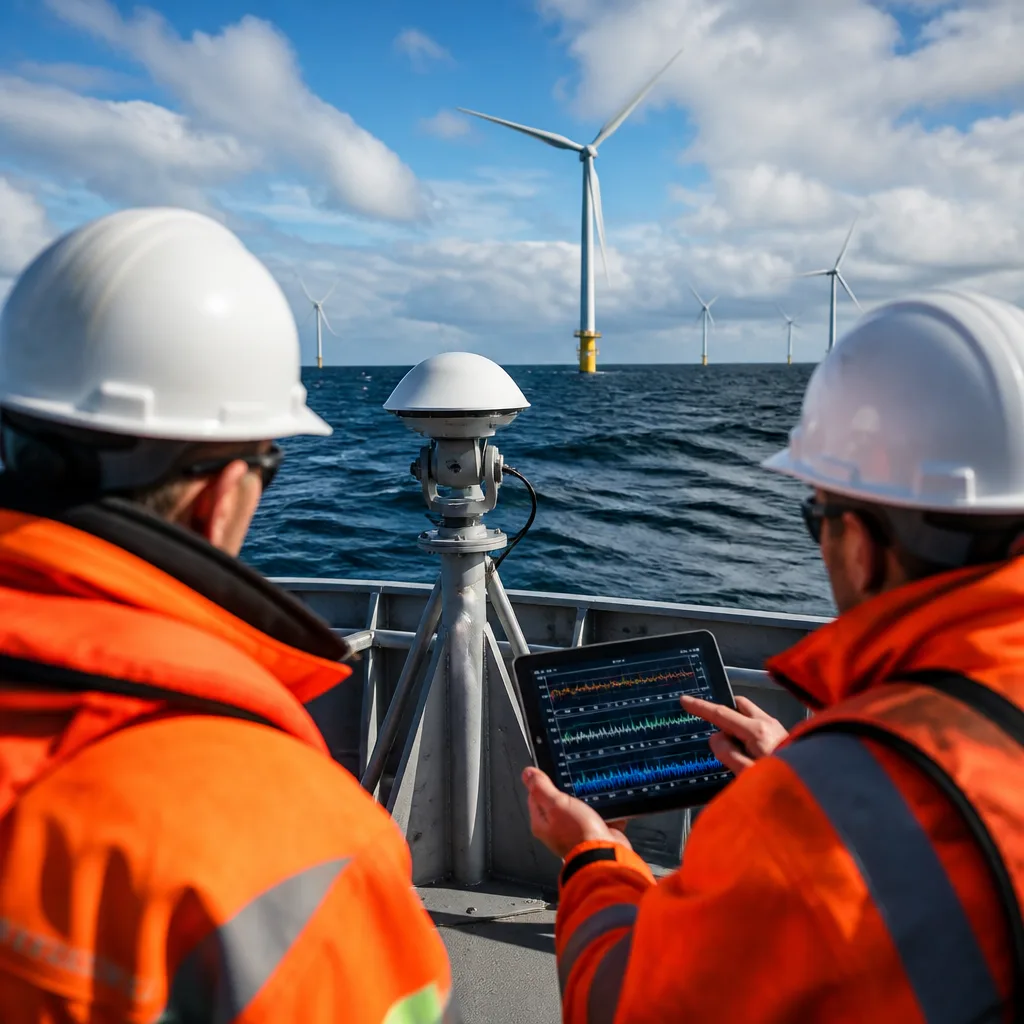
The Netherlands company NextOcean has been contracted to fit its WavePredictor motion radar to the ESVAGT NJORD, a Service Operations Vessel (SOV) working on the Dudgeon offshore wind farm. The system is intended to give crews real‑time forecasts of vessel movements, helping officers make better informed go/no‑go decisions for turbine transfers.
Real‑time motion prediction for safer transfers
The WavePredictor system combines a motion radar and dedicated software to project how a vessel will move in the coming minutes. For technicians boarding turbines from a SOV, being able to anticipate vessel motion reduces reliance on subjective judgement and can increase both safety and effective working time in marginal weather.
“On an SOV, the crew makes dozens of go/no‑go calls a day. Our system shows the officer on watch what the vessel is going to do in the coming minutes, so that call is backed by verified predictions and not by feel alone.” — Karel Roozen, CEO, NextOcean
NextOcean says the installation on the ESVAGT NJORD will extend its presence in the Offshore Service Vessel market, where its technology is already deployed on ships operating worldwide. The new installation is scheduled to take place this month.
Operational gains and safety outcomes
Operators of SOVs make frequent operational calls about whether to attempt personnel transfers to turbines. The decision directly affects site productivity: attempting a transfer in unsafe conditions risks injury and equipment damage, while being overly cautious reduces the number of workable days and raises costs.
The WavePredictor aims to change that calculus by providing:
- Short‑term, data‑driven motion forecasts so watch officers can see likely vessel behaviour minutes ahead.
- Improved decision support for go/no‑go calls that would otherwise rely on subjective judgement.
- Potentially higher uptime for technicians who can safely access turbines on more occasions when conditions permit.
Those benefits are particularly pertinent at Dudgeon, where maintenance crews must make the most of limited weather windows to service turbines and keep generation reliable.
What the deployment entails
The contract covers the supply and installation of the radar and accompanying software on the ESVAGT NJORD. While the announcement does not disclose technical specifications or cost, it confirms the system will be fitted to the vessel this month and form part of the ship’s operational toolkit.
| Item | Detail |
|---|---|
| System | WavePredictor motion radar and software |
| Vessel | ESVAGT NJORD (Service Operations Vessel) |
| Operational area | Dudgeon offshore wind farm |
| Installation timing | Scheduled this month |
NextOcean’s chief executive framed the system as a direct aid to the constant stream of transfer decisions made on SOVs. By offering verified short‑term predictions rather than relying on an officer’s perception of the sea state, the company argues transfers can be both safer and more frequent where conditions allow.
Broader implications for the offshore wind sector
As the UK and other markets push to increase renewable generation, efficient operation and maintenance of turbines is critical. Systems that reduce downtime or make maintenance operations safer can have a measurable effect on the cost base of offshore wind projects.
Deployments like the one on the ESVAGT NJORD also highlight how sensor and predictive technologies are being integrated into maritime operations to support human decision making rather than replace it. For operators, the immediate question will be whether the technology leads to a consistent uplift in safe transfer rates and a reduction in lost working days—metrics that will determine commercial uptake across fleets.
For now, the focus is practical: install the radar, gather performance data through the coming months and see whether verified short‑term motion forecasts result in safer, more productive visits to turbines at Dudgeon and beyond.