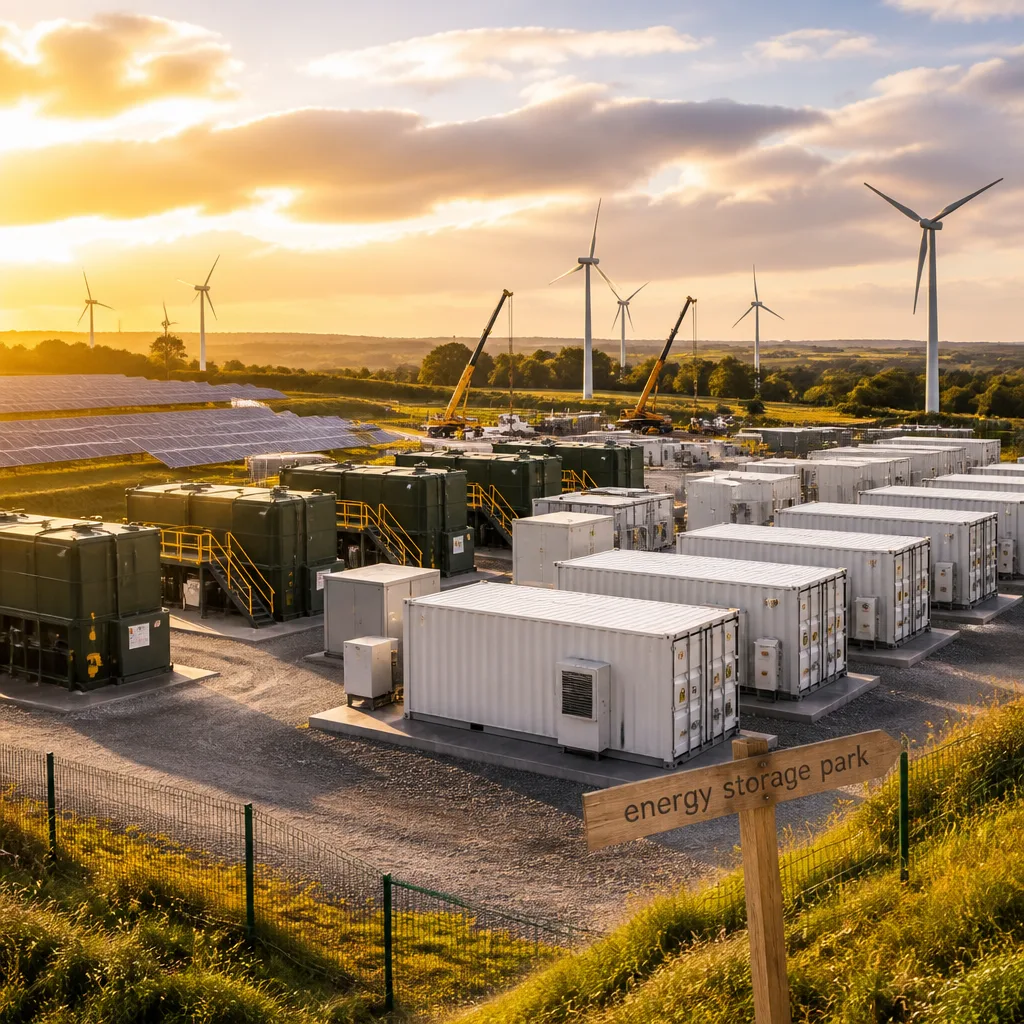
Battery storage is no longer an accessory to renewable energy — it has become a central part of the electricity system. In the past fortnight alone, commercial battery projects and fresh production lines for alternative chemistries have reached key milestones across multiple continents, underscoring how storage is reshaping generation, grid planning and financing.
Rapid deployments and bigger ambitions
Project announcements and commercial starts tracked recently show the scale and geographic spread of today's storage build‑out. Examples include a 300 MW / 1,200 MWh installation in California; a US$510 million solar‑plus‑storage financing closing in Mexico; and a 250 MW facility in Texas that has entered operation. These projects are not isolated experiments — they reflect system‑level thinking about how to manage variability from wind and solar.
Where once battery systems were added to smooth short‑term fluctuations, developers and grid operators increasingly use storage to shift substantial blocks of energy in time, firm intermittent generation and defer costly transmission upgrades. For agriculture and off‑grid or rural applications, that means solar‑battery combinations can power farms through the night rather than selling low‑value midday output and repurchasing electricity later at higher prices.
New chemistries enter commercial scale
Beyond lithium‑ion variants, manufacturers are bringing alternative battery chemistries into mass production and deployment. A major battery maker has started mass production of a sodium‑ion battery line, while other firms are rolling out large sodium‑chromium‑oxide systems in North America. At the same time, companies are advancing long‑duration technologies: utility‑scale vanadium flow projects and compressed‑air energy storage in geological caverns have moved from pilot to commercial plans.
These developments matter because not all storage needs are the same. Shorter‑duration lithium‑iron‑phosphate (LFP) batteries are well suited to shifting energy over hours, while flow, compressed‑air and other long‑duration options target multi‑hour to multi‑day supply balancing. A broader technology mix reduces single‑point dependency and offers greater flexibility to grid planners.
- Scale: Recent commercial projects range from hundreds of megawatts to gigawatt‑hour installations.
- Chemistries: LFP retains a leading role, while sodium‑ion, sodium‑chromium‑oxide, vanadium flow and compressed‑air systems are moving into commercial service or production.
- Finance: Large deals, including half‑a‑billion‑dollar financings, show investor appetite for integrated solar‑plus‑storage assets.
What this means for grids and markets
First, storage changes the timing and value of electricity. By storing surplus generation and releasing it when prices or demand peak, battery systems reduce price volatility and can improve renewable project economics. This is crucial for sectors such as farming, where on‑site storage keeps generation local and usable instead of being sold cheaply into a saturated midday market.
Second, the diversification of technologies addresses different reliability needs. Short‑duration lithium‑based systems handle intra‑day swings effectively; longer‑duration chemistries and mechanical storage provide seasonal or multi‑day resilience. Having multiple technological pathways mitigates supply‑chain pressures and raw‑material concerns that have affected some lithium markets.
Third, the financing landscape is responding. Institutional capital and project financiers are underwriting larger, more complex packages that combine generation and storage, reflecting growing confidence in revenue streams from capacity, arbitrage and ancillary services.
Questions that remain
Scale, while impressive, raises operational and regulatory questions. Grid operators must adapt market rules to value services that storage offers — frequency response, capacity and flexibility — while avoiding perverse incentives that favour short‑term revenues over long‑term reliability. Siting, permitting and integration with existing transmission networks remain practical hurdles, especially for long‑duration projects that may require specialist sites such as salt caverns.
Finally, lifecycle and recycling considerations are increasingly material. As deployments accelerate, policymakers and industry need clear pathways for recycling and responsible materials sourcing to limit environmental impacts and secure supply chains over the next decade.
In short, battery storage has moved from the margins to the mainstream. The immediate impact is to enable renewables to meet demand more reliably; the longer‑term effect will be a reconfiguration of how electricity markets, project finance and grid planning work — provided regulators, developers and investors align around new rules and standards for a storage‑first system.
| Item | Recent example |
|---|---|
| Large project (MW / MWh) | 300 MW / 1,200 MWh (California) |
| Major financing | US$510 million (Mexico solar‑plus‑storage) |
| Long‑duration tech | Vanadium flow, compressed‑air in salt cavern |