Meta chief Mark Zuckerberg has warned that the United States could lose its technological advantage to China in artificial intelligence unless Washington urgently accelerates expansion of energy supplies and the physical infrastructure that supports large‑scale AI, according to a note reported on Tuesday.
AI leadership and global balance
Zuckerberg argued that the countries that lead development and deployment of advanced AI systems will help determine the next geopolitical balance of power, with implications for democratic values, economic growth and national security. He highlighted a particular concern over China’s rapid progress in building the infrastructure needed to support compute‑intensive AI.
“Which nations lead the development and deployment of advanced AI will contribute to a new geopolitical balance of power that will determine the prevalence of democratic values, prosperity, and security in the future,”
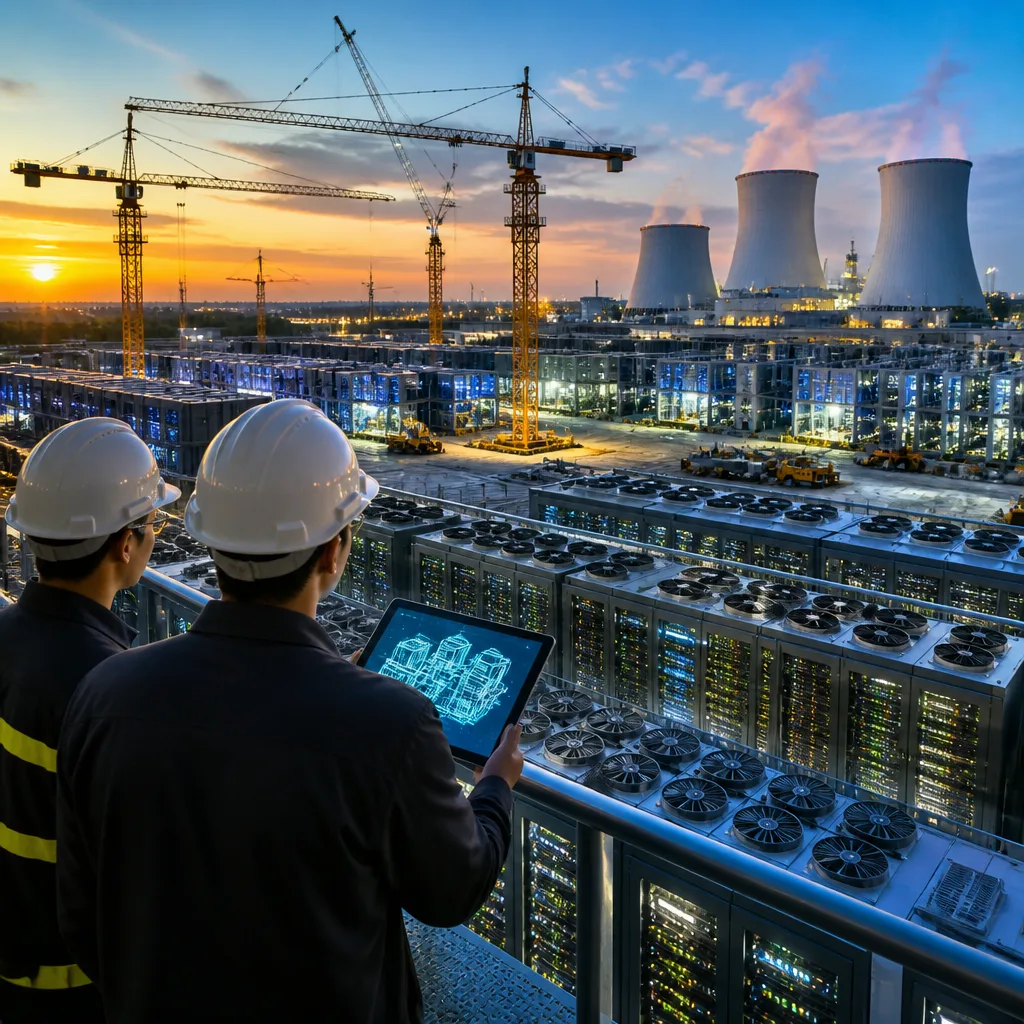
While noting that the United States retains an advantage in silicon design, Zuckerberg said the US is lagging when it comes to expanding energy capacity and constructing the physical data‑centre and power infrastructure required to host large AI models.
Energy, data centres and the race for compute
In the note, Zuckerberg drew attention to the pace of China’s energy build‑out, asserting that “countries like China are bringing online 1GW+ of nuclear capacity every other week”. He said the United States will need to accelerate both energy and data‑centre construction to remain competitive in the race to host and operate advanced AI systems.
The argument frames AI not only as a technological competition over talent and chips, but as an infrastructural race requiring major investments in electricity generation, grid capacity and large‑scale data centres capable of sustained high power draw.
- Strategic stakes: Leadership in AI could influence economic prosperity, military capabilities and global governance norms.
- Infrastructure gap: Zuckerberg contrasts US strengths in chip design with perceived shortfalls in energy and data‑centre expansion.
- China’s pace: The note cites rapid Chinese additions of nuclear capacity as evidence of its ability to scale power for compute‑heavy industries.
Implications for India and other democracies
The issues Zuckerberg raises carry direct resonance for India, which is both a major consumer of cloud and AI services and an aspiring hub for data centres and semiconductor investment. Energy availability, grid stability and favourable policy for data‑centre development are central to nations seeking to host advanced AI workloads.
India has in recent years attracted investment in data centres and cloud infrastructure; the note’s emphasis on energy and physical capacity underscores the broader policy choices democracies face around permitting, investment incentives and coordination between energy and digital infrastructure planning.
Policy choices and private sector roles
The note implicitly points to a shared responsibility between governments and large technology firms. Private companies build and operate many data centres and AI compute clusters, but their expansion is conditioned by national regulations, energy availability and long‑term planning for power and cooling needs.
Zuckerberg’s comments reflect a growing chorus in industry and government that sees AI strategy as more than algorithms and chips: it is also about national energy policy, industrial planning and supply‑chain resilience. The warning may intensify debates in Washington and other capitals over permitting, grid upgrades and public‑private coordination to secure compute capacity.
| Area | Zuckerberg's observation |
|---|---|
| Silicon design | US advantage |
| Energy & data centres | US lagging; China scaling rapidly |
The note does not offer detailed prescriptions, but by focusing attention on energy and data‑centre build‑out it reframes competition in AI as requiring coordinated infrastructure investment. For India and other countries, the debate highlights the balance between attracting compute‑heavy investment and meeting domestic energy and environmental priorities.
As nations weigh policy responses, the interplay between technological capability, infrastructure investment and geopolitical strategy is likely to remain a central issue in discussions on the future of AI and global power dynamics.