US President Donald Trump was secretly shuttled from Turkey to Britain on an Air Force C-32A after publicly boarding an older Air Force One in Ankara, The Washington Post reported on Monday, saying the covert switch followed an Iranian threat. The manoeuvre has prompted scrutiny of security arrangements for a newly renovated, Qatar‑donated presidential jet that accompanied the president to the NATO summit.
Sequence of events
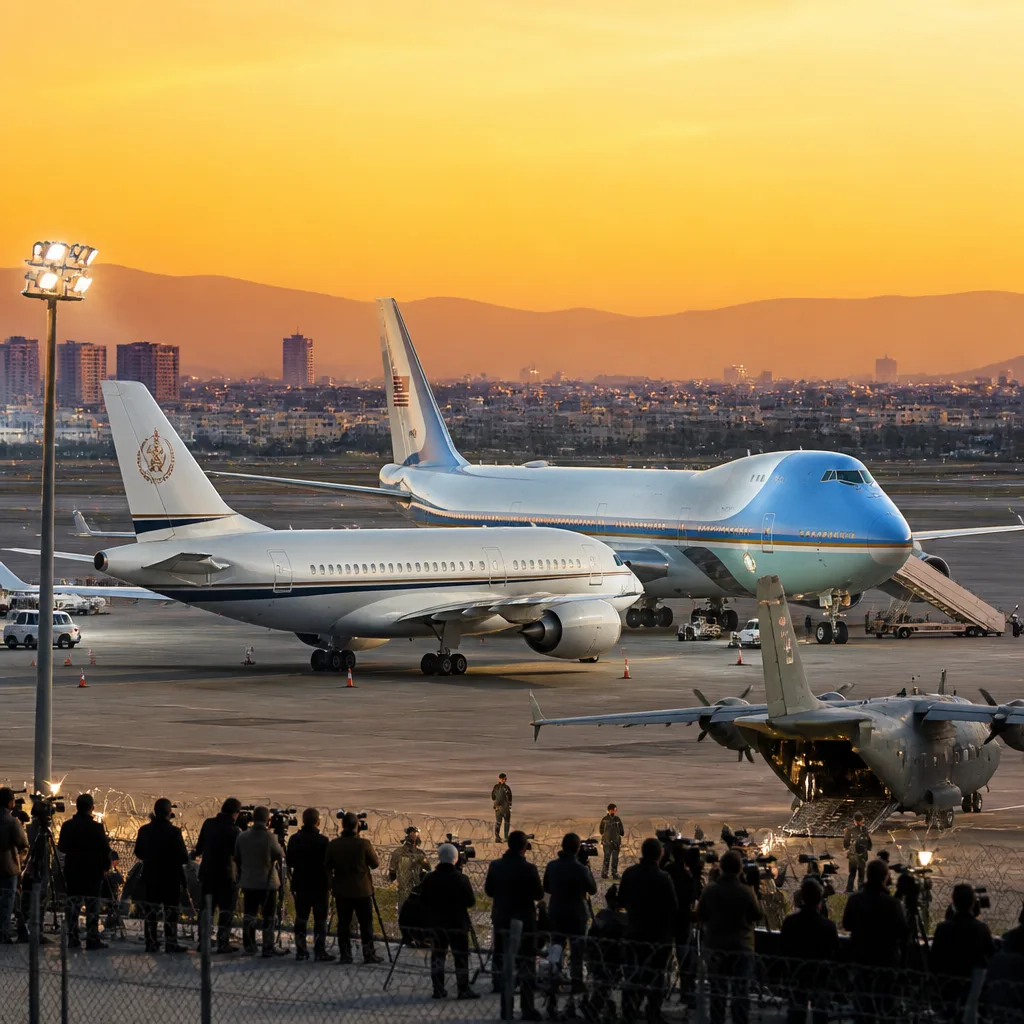
The report said Mr Trump travelled to Ankara on the renovated jet, which had been presented as the president's Air Force One for the trip. However, when he left Turkey he was filmed boarding an older, baby‑blue Air Force One. Moments later, the president was reportedly moved by an airport catering truck to a smaller aircraft — an Air Force C‑32A — which then flew to Britain.
- The C‑32A is reported to have arrived in Britain at about 10:20 pm, with the older Air Force One and media following minutes later.
- The trip to NATO marked the first international use of the renovated, Qatar‑donated jet, the report noted.
The Washington Post attributed the account to a US official familiar with the operation and another person familiar with the president's travel. The Pentagon had not immediately commented, according to the report.
White House response and security rationale
The White House provided a statement from Communications Director Steve Cheung, stressing that the Qatar‑donated aircraft has been equipped with "high‑level security protocols" to protect the president and staff. The statement, as reported, said the administration uses "every tool at our disposal" to address threats.
"As the President has said recently, there are many enemies of America who have their sights on him, and we use every tool at our disposal to address those threats," the White House statement said.
Mr Trump himself posted on his Truth Social account that he would use the older Air Force One "for old time's sake" on the Ankara to RAF Mildenhall leg, while the new jet would stop at the same base so US service members there could tour it.
Questions raised
The covert transfer generated immediate questions about the operational security of the newly renovated jet. Critics and observers may view the switch as indicative of either prudence in responding to a credible threat or of deeper vulnerabilities in the aircraft's security that necessitated a last‑minute change.
The report also underscored the sensitivity of presidential travel amid heightened tensions with Iran, a nation that shares a border with Turkey. The NATO summit trip occurred as hostilities between the United States and Iran were reported to be escalating, a context that officials said shaped protective measures for the president.
| Event | Reported detail |
|---|---|
| Initial departure from Ankara | President photographed boarding older Air Force One |
| Covert transfer | Moved by catering truck to Air Force C‑32A |
| Arrival in Britain | C‑32A arrived ~10:20 pm; older Air Force One and media arrived minutes later |
The Pentagon did not immediately respond to queries, the report said. The Washington Post cited unnamed US officials familiar with the operation for its account.
India connection and wider implications
For New Delhi and other capitals, the episode highlights how rapidly changing threat assessments can alter the logistics and optics of state visits by heads of state. India, which watches developments in the Gulf and the wider West Asian region closely because of energy and diaspora linkages, has an interest in the operational resilience of allied partners' protective measures as tensions with Iran could affect regional stability.
Officials and analysts will likely scrutinise whether the decision reflected prudent counter‑threat planning or revealed shortcomings in the security apparatus tied to the new jet. The matter may also prompt further questions about coordination between host nations, military transport units and presidential advance teams during international summits.
The Pentagon and the White House responses, as reported, underscore that high‑level security protocols guided the decision, while leaving unresolved public questions about the precise nature of the reported Iranian threat and the technical or procedural reasons for the aircraft swap.