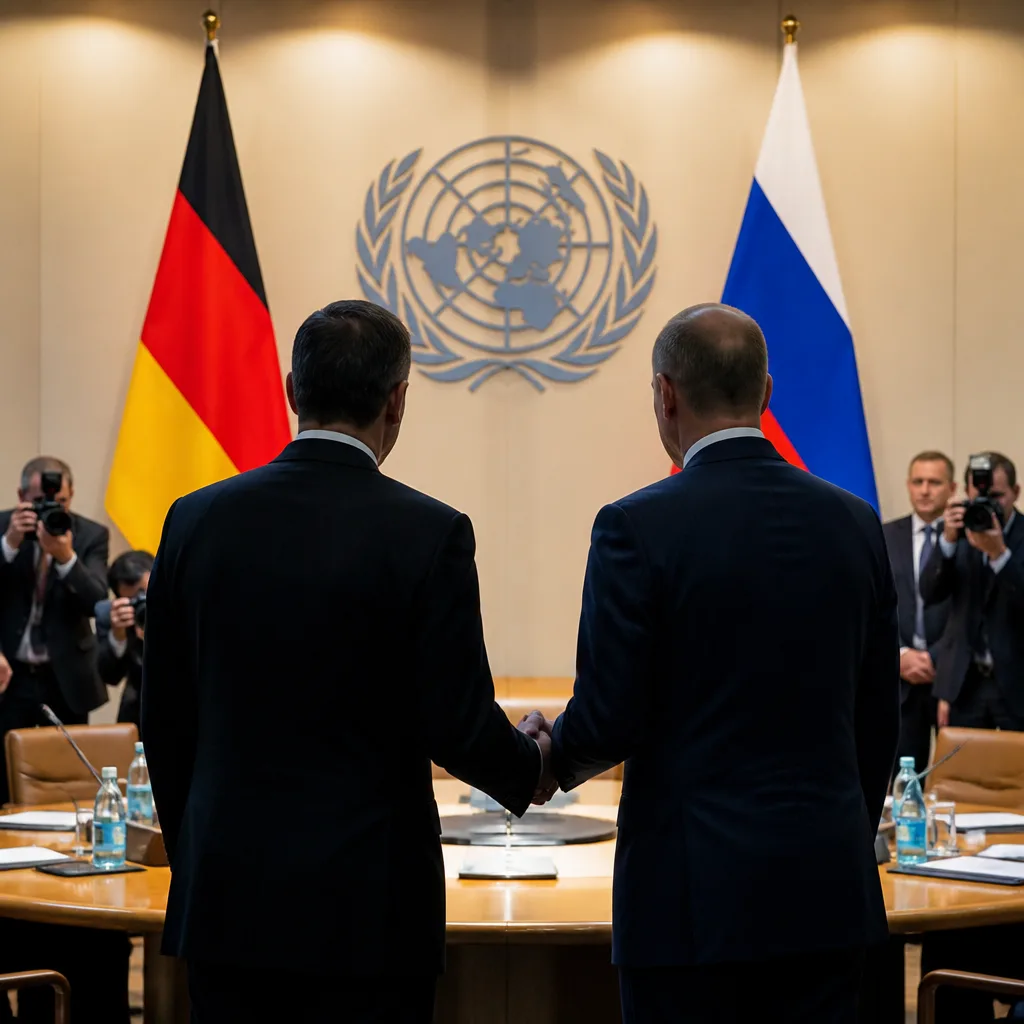
UNITED NATIONS: Germany’s foreign minister and his Russian counterpart held a rare face-to-face meeting on the sidelines of the United Nations General Assembly on Saturday, in what officials described as the first bilateral of its kind since Russia launched a full-scale invasion of Ukraine in 2022.
Brief encounter amid rising tensions
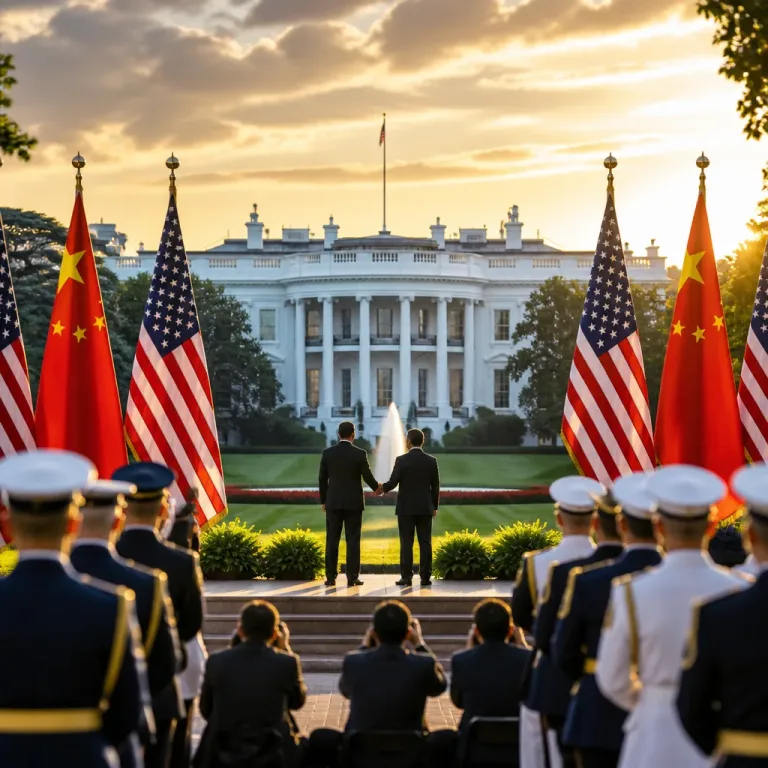
The conversation between Johann Wadephul and Sergey Lavrov lasted roughly 20 minutes in a room provided by the Russian side, according to a German delegation official. The two ministers shook hands at the conclusion of the exchange. German officials said Wadephul used the opportunity to press Russia to desist from what he characterised as a “dangerous path of escalation” that threatens Germany, Europe and the NATO alliance.
Wadephul also signalled that Berlin remained open to improved relations, but that any thaw would require a genuine Russian willingness to end the conflict in Ukraine. The German official underlined that dialogue must be matched by concrete steps to halt escalation.
Lavrov’s address and wider themes
Shortly after the bilateral, Mr Lavrov spoke to the General Assembly and defended Moscow’s course in Ukraine while sharply criticising Western policies. In his address, he argued that the West was attempting to preserve its privileges and impose its rules, and suggested that a more balanced, multipolar global order was emerging.
“A fairer, multipolar world order is emerging before our very eyes,” Lavrov said, according to a transcript of his speech.
He also rejected the idea of expanding permanent membership of the UN Security Council to include Germany or Japan, an issue that has gained traction among some Western capitals. The United States, along with several other countries, has previously signalled support for new permanent seats for Germany, Japan and India.
Context: strained ties and recent incidents
The meeting comes against a backdrop of deteriorating relations between Germany and Russia in recent weeks. Berlin has attributed an attempted drone attack at Leipzig airport last month to Russian actors, and the incident triggered reciprocal diplomatic measures. Those developments had already cooled bilateral ties and added sensitivity to any high-level contacts.
- Duration of meeting: Reported at about 20 minutes.
- Location: Side room at the UN General Assembly, provided by the Russian side.
- Immediate outcome: Handshake and no breakthrough reported; Lavrov later said “nothing new came from” the conversation.
| Item | Detail |
|---|---|
| Participants | Johann Wadephul (Germany), Sergey Lavrov (Russia) |
| Primary focus | Calls for de-escalation; prospects for bilateral ties |
| Follow-up | Lavrov’s UN address criticising the West and supporting a multipolar order |
Implications for Europe and beyond
The exchange underscores the delicate balance European capitals are attempting to strike: maintaining pressure on Moscow over its actions in Ukraine while preserving channels for diplomacy. German officials framed the meeting as an attempt to communicate clear red lines — notably the demand that Russia steps back from escalatory actions — while leaving open the possibility of improved relations if Moscow alters course.
For India, which has emphasised strategic autonomy and maintained engagement with multiple powers, the episode is another reminder of the shifting multilateral equations at the United Nations. Lavrov’s emphasis on a multipolar order and his criticism of Western influence reflect themes that Moscow and several Global South partners have advanced in recent years, even as Western capitals press for accountability over the Ukraine campaign.
Although no concrete diplomatic breakthroughs were reported, the meeting may help manage immediate risks of miscalculation between Europe and Russia. German officials have been careful to stress that any future normalisation would hinge on observable Russian steps to end hostilities in Ukraine.
After the encounter Wadephul reiterated openness to a better relationship but insisted that such a prospect depended on tangible changes in Russia’s approach. Lavrov, for his part, told reporters after his speech that the conversation produced no new outcomes.
The brief engagement at the UN highlights both the limits and the importance of face-to-face diplomacy in a period marked by confrontation and competing visions for global governance.