
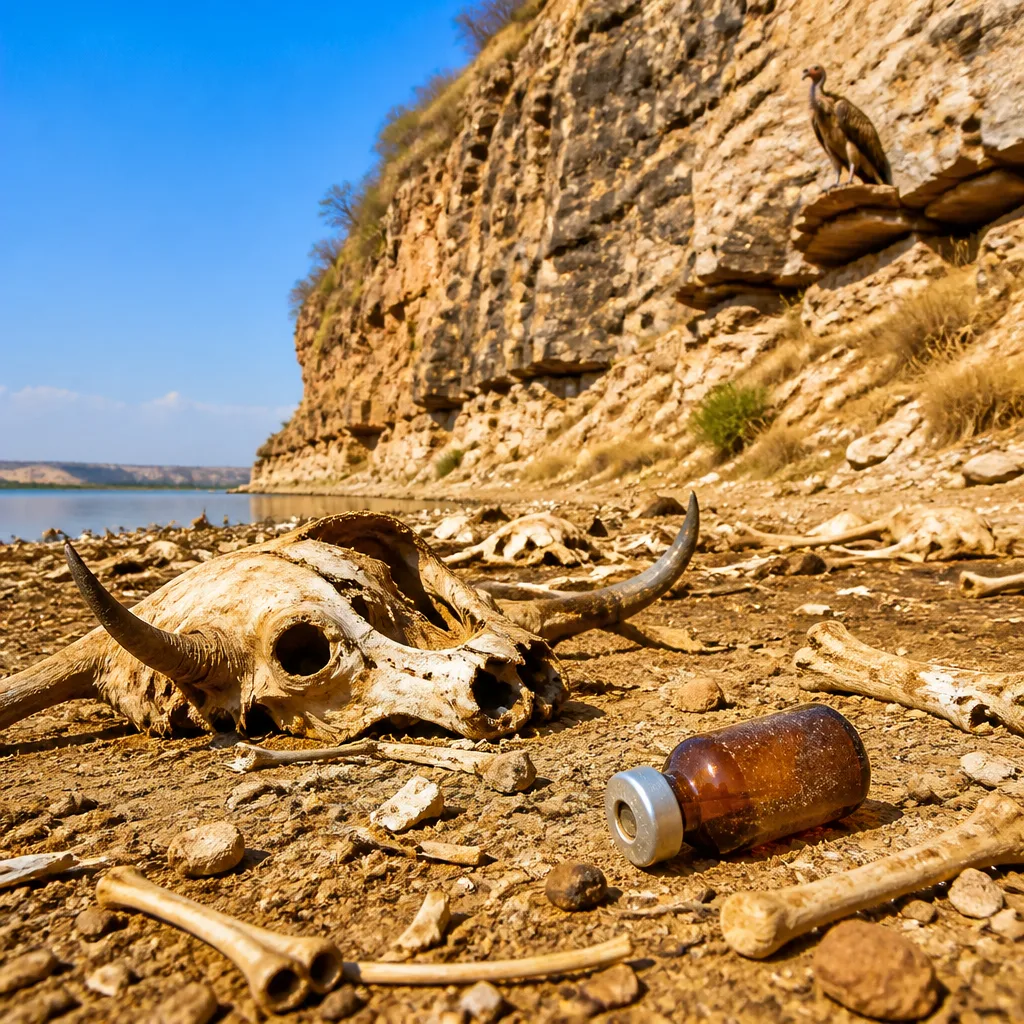
Between the 1990s and mid-2000s, vulture populations in India fell by more than 99 per cent, placing one of the country's most efficient scavengers on the brink and drawing attention to the wider implications for public health and ecosystem functioning.
Primary cause identified
Analyses of the decline point to a single, human-linked cause: the anti-inflammatory veterinary drug diclofenac. When vultures fed on carcasses of livestock treated with the medication, they developed kidney failure and visceral gout, conditions that proved rapidly fatal for scavenging birds. This causal link has been central to scientific and conservation accounts of the crash.
"Between the 1990s and mid-2000s, vulture populations in India fell by more than 99 per cent."
Landscape context and nesting ecology
While the drug was the proximate cause of mortality, habitat features continued to shape vulture distribution and potential recovery. For instance, Panna's sandstone terrain—with deep gorges and sheer cliffs—offers ledges used by vultures for nesting and roosting, and the forests below support prey species important for sustaining food chains. Such landscape attributes remain important for any restoration or protection measures aimed at population recovery.
Why the decline matters
Vultures perform a critical ecological service as rapid scavengers, removing carcasses that might otherwise harbour pathogens or attract feral dogs and other scavengers. A collapse in vulture numbers therefore has knock-on effects for sanitation, zoonotic risk and the balance of scavenger communities. The precipitous loss of a species that had been ubiquitous across much of the subcontinent is a wake-up call for linking veterinary practice, wildlife health and ecosystem management.
- Scale of decline: More than 99% reduction in the period cited.
- Immediate cause: Veterinary diclofenac leading to kidney failure in vultures.
- Habitat role: Geographic features such as cliffs and nearby forests support nesting and prey availability; these remain relevant to recovery.
Public interest and education
The topic has entered mainstream awareness partly through educational material: a national-level preparatory quiz for civil services aspirants has highlighted vulture decline and related conservation questions. This underlines how biodiversity issues form part of civic and administrative knowledge frameworks and may influence future policy awareness among administrative entrants.
| Period | Observed change in vulture populations |
|---|---|
| 1990s to mid-2000s | More than 99% decline |
Implications for conservation action
The documented role of a widely used veterinary medicine in driving the collapse highlights the need for cross-sector measures that link animal health, pharmaceutical regulation and wildlife monitoring. Protecting and restoring vulture populations requires continued surveillance of threats in the field, safeguarding of key nesting landscapes, and targeted interventions that prevent exposure of scavengers to harmful substances. The enduring presence of appropriate nesting sites—such as cliff ledges in sandstone terrain—and supporting habitats will be decisive for any recovery effort.
As the issue remains part of national environmental literacy and examination syllabuses, it also offers an opportunity for renewed public discussion on how veterinary practices intersect with wildlife conservation and public health. The vulture crash remains one of the most striking examples globally of how a single human-linked cause can precipitate an ecological collapse, and it underscores the need for integrated monitoring and rapid policy response when new threats emerge.












