Conocarpus, the fast-growing buttonwood tree long used to quicken urban greening, is increasingly the focus of state-level restrictions after environmentalists and reporting flagged its ecological and civic costs. A recent report by Mongabay and statements from conservationists have catalysed action, with several states moving to ban or discourage its planting in public spaces.
Why the alarm
Introduced for its tolerance of heat, salinity and drought and praised for rapid canopy formation, Conocarpus erectus became a common choice for roadside plantations, green belts and municipal beautification. But concerns have mounted over the tree's effects on native ecosystems and civic infrastructure.
Environmentalist Jasmit Singh Arora of the Gutli Mission said the tree's ecological impact is profound and far-reaching. He criticised the practice of prioritising quick greenery over species that sustain local biodiversity.
“While Conocarpus trees grow fast, they are a serious ecological threat. Their leaves release chemicals into the soil that suppress the growth of native plants, creating what I call a ‘green desert’—a landscape with little to no biodiversity where local birds, bees and insects struggle to survive,”
Arora added that the debate should be anchored in long-term environmental sustainability rather than short-term landscaping benefits, and pointed to native species such as mango as examples of trees that enrich soil and support wildlife.
Reported impacts
The concerns reported include:
- Biodiversity loss — allelopathic effects and dense monospecific stands can suppress native understorey and discourage native fauna.
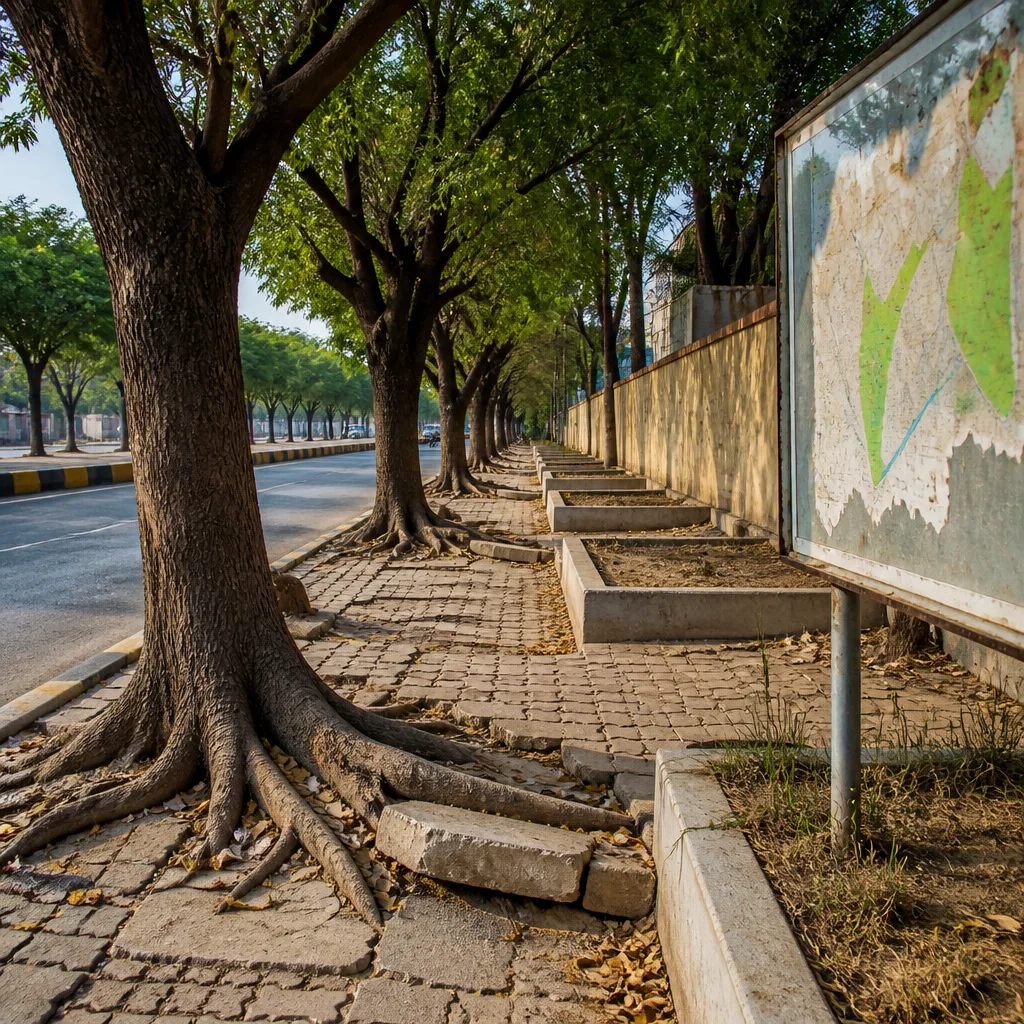
- Infrastructure damage — aggressive root systems can affect pavements, drains and buried utilities, raising maintenance costs for civic bodies.
- Public health and nuisance — dense leaf litter and particular plant chemistry may affect air and soil quality and alter urban microhabitats in ways that concern residents and planners.
These factors have led several state governments to reassess street‑tree choices and issue directives limiting further Conocarpus plantations in municipal works.
| Reported issue | Consequence for cities |
|---|---|
| Biodiversity suppression | Loss of native plants and reduction in bird, bee and insect populations |
| Root damage | Cracked pavements, blocked drains, higher maintenance costs |
| Chemical effects on soil | Failure of native saplings to establish; need for active restoration |
Policy and planning implications
Municipalities that planted Conocarpus during large-scale greening drives must now weigh short-term canopy targets against longer-term ecological resilience. The experience has highlighted several planning lessons for urban foresters and civic agencies:
- Assess species not only for growth rate but for ecological compatibility with local flora and fauna.
- Factor in lifecycle costs — including pavement and drain repair — when selecting street trees.
- Prioritise native and ecologically supportive species where feasible, to sustain pollinators and birds.
Some environmental advocates urge that city greening programmes move beyond aesthetic metrics to embrace ecosystem services — shade, soil enrichment, pollinator support — that diverse native plantings provide. Arora’s work with the Gutli Mission, which promotes native mango trees for their ecological benefits, was cited as an example of this approach.
While Conocarpus offered a quick visual win for urban corridors, the emerging scrutiny underscores a broader shift in urban landscaping: from rapid, uniform plantation to curated, ecologically informed greening. As states refine their lists of permitted and discouraged species, municipal planners will need to reconcile ambitions for quick canopy cover with the slower, but more resilient, returns of species diversity.
For residents, the change may mean a slower pace of visible greening in some localities, but planners and conservationists say the trade-off could yield richer urban nature in the long run — trees that host birds and insects, stabilise soil and demand less disruptive maintenance.