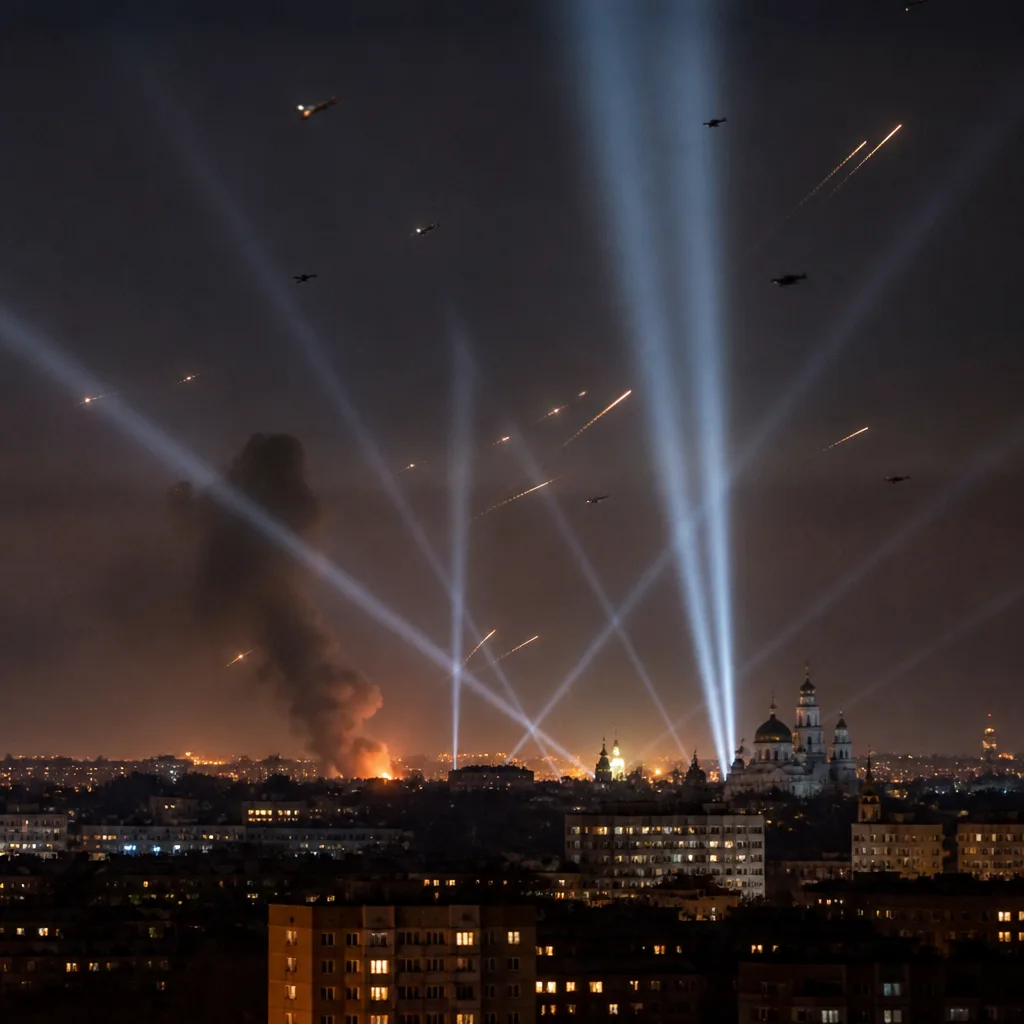
Moscow — Russian authorities reported that hundreds of Ukrainian drones were intercepted on Saturday in what was described as one of Kyiv’s largest aerial operations since the full-scale invasion began, according to reporting by Indian Express.
Wider regional fallout
The strikes coincided with a surge in violence across the Middle East. Israeli air operations in southern Lebanon killed at least 11 people, marking one of the deadliest single-day tolls since a fragile truce between Israel and Hezbollah came into effect on June 20, the report said. Separately, the United Arab Emirates accused Iran of striking one of its tankers in the Strait of Hormuz, reportedly the third such incident in a week, and Iran-aligned Houthi fighters struck a Red Sea port in Yemen.
These incidents underline the widening reach of the conflicts and the risk that local hostilities will trigger disruptions to international shipping and energy supplies — issues of direct interest to India given its dependence on Gulf energy and major maritime trade routes.
Qatar-Iran diplomatic row and search for pilots
Qatar dismissed an allegation that it was detaining any Iranian pilots as misleading, at a time when Doha has sought to mediate and reduce tensions in the region, Indian Express reported.
"Qatari rescue teams had searched thoroughly for three missing aviators, had already coordinated the handover of one pilot’s remains to Iran,"the report quoted Majed Al-Ansari, a spokesman for the Qatari foreign ministry, as saying. He added that Doha had invited an Iranian team in April to be briefed on the search, an offer Tehran had not accepted.
The denial followed claims that Qatar was holding Iranian airmen, an allegation that Qatar said risked undermining de-escalation efforts. The episode highlights the delicate balancing role Qatar has played in recent months, including behind-the-scenes mediation efforts between regional actors.
Conflict spillover and implications for India
While the Ukraine-Russia front remains distinct, the simultaneous intensification of hostilities across the Middle East and attacks on commercial shipping lanes increase the likelihood of wider economic and security consequences. For India, several factors are salient:
- Dependence on Gulf energy: Disruption in the Strait of Hormuz or other key maritime chokepoints could impact crude and liquefied natural gas flows to India.
- Maritime security and trade: Attacks on ships and ports in the Red Sea and Arabian Sea threaten major commercial routes used by Indian exporters and importers.
- Indian nationals and diaspora: Escalation in hostilities raises risks to Indian citizens in affected countries and to seafarers on affected vessels.
India has consistently urged restraint among regional actors and emphasised the need to protect commercial shipping and ensure uninterrupted energy flows, while maintaining diplomatic engagement with multiple parties.
Uncertain trajectory
The clustering of violent incidents — from the interception of large numbers of drones over Russian territory to lethal strikes in Lebanon and reported attacks on Gulf shipping — indicates a heightened risk of conflation between separate theatres of conflict. Analysts warn that parallel escalations, even when geographically separate, can interact through proxy networks, maritime interdiction and diplomatic recriminations.
At the time of publication, Russian authorities and regional actors had offered differing accounts of the incidents and responsibilities. Reporting by Indian Express provided the principal details of the day’s developments.
Given the potential for rapid changes on multiple fronts, governments and energy traders are likely to track developments closely in the coming days, while international calls for de-escalation and protection of maritime commerce are expected to continue.