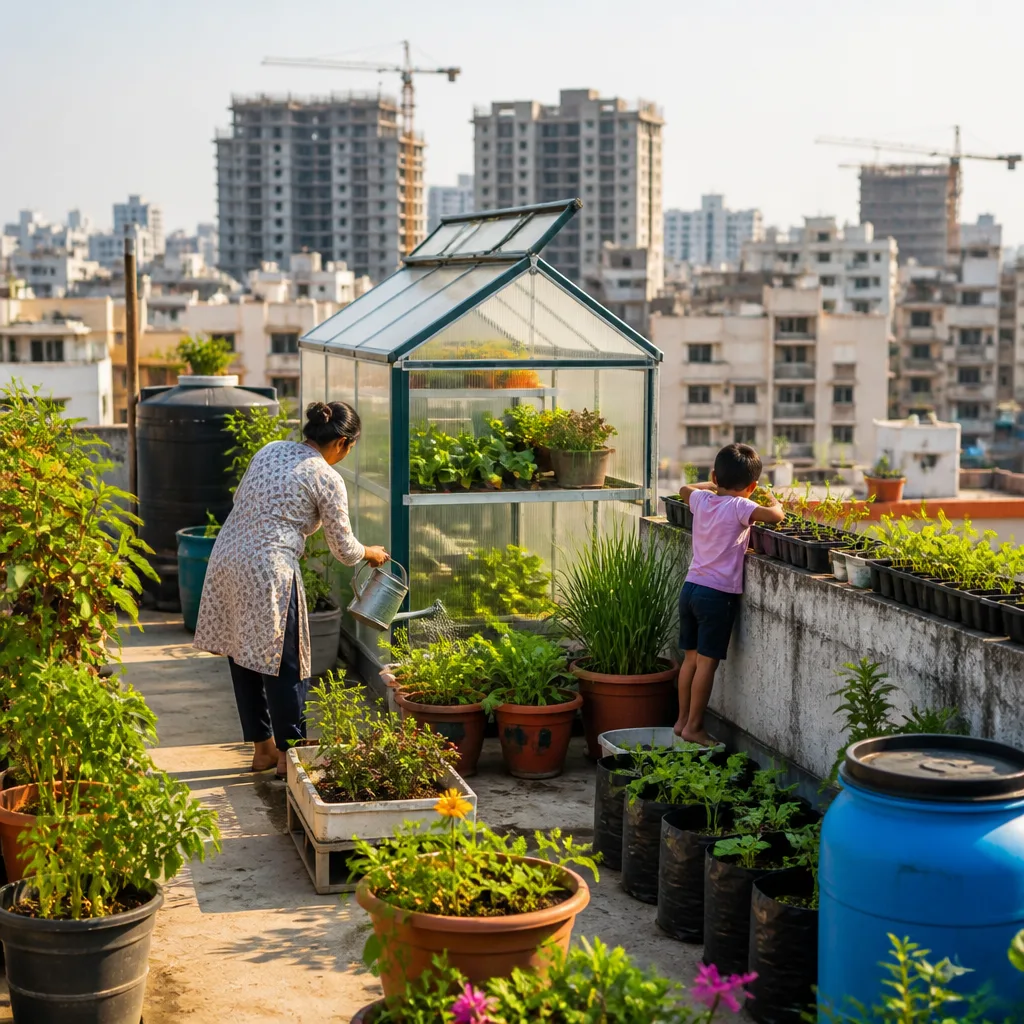
Across Indian towns and cities, households are adopting small-scale vegetable gardens as a pragmatic response to rising living costs and rapid urban expansion. The movement spans terrace pots, community plots and small rooftop greenhouses and is being taken up both for additional income and for its environmental and educational value.
Practical response to economic and urban pressures
With food prices and urban land pressures increasing in many parts of the country, small-scale growing offers households a way to reduce grocery bills while making use of under-utilised space. Gardeners report harvesting leafy vegetables, herbs and seasonal crops that otherwise contribute to monthly food expenses. For some families, surplus produce is sold locally, offering a modest source of cash income.
Multiple benefits beyond food
Practitioners and community groups highlight that benefits extend beyond immediate economics:
- Nutrition and food security — direct access to fresh vegetables improves dietary diversity for households, especially children and the elderly.
- Green cover and microclimate — rooftop and balcony gardens help reduce heat on buildings and can modestly improve local microclimates in dense neighbourhoods.
- Education and skills — families say gardening is a channel to teach children about plant cycles, composting and ecological stewardship.
In addition to traditional low-tech approaches, the trend includes technologically assisted practices. The feature reporting notes a high-tech greenhouse in the Netherlands as an example of how controlled-environment cultivation can increase yields and resource efficiency, a model some urban growers in India are studying for adaptation at smaller scales.
Community networks and knowledge sharing
Community gardens and neighbourhood initiatives are central to scaling small-scale food production. Shared plots allow households without private outdoor space to participate, while local groups exchange seeds, tips on pest management and composting techniques. These networks also provide social benefits by strengthening neighbourhood ties and offering spaces for intergenerational learning.
Municipalities and urban planners can support such efforts through modest interventions: allowing community land use for demonstration gardens, offering seed banks at public libraries or integrating rooftop gardening into housing schemes. Where municipal waste systems include organic collection, compost produced locally can close nutrient cycles and reduce reliance on chemical fertilisers.
Challenges and pragmatic solutions
Despite clear benefits, small-scale urban cultivation faces constraints. Limited space, variable water availability, contamination concerns in some soils and a lack of easy access to quality seeds and technical advice can limit uptake and yields. Addressing these hurdles requires low-cost, locally tailored interventions:
- Promoting container and vertical gardening suited to constrained spaces.
- Encouraging rainwater harvesting and water-efficient irrigation (drip, timer-based) where feasible.
- Facilitating soil testing and raised-bed or potting mixes where ground contamination is an issue.
These measures can increase productivity while maintaining safety and conserving resources.
Policy relevance and scaling prospects
Small-scale vegetable gardening illustrates how household-level action can contribute to urban resilience. While it will not replace formal supply chains, widespread adoption can reduce pressure on markets, diversify household incomes and foster stronger local food systems. Policymakers aiming to enhance urban sustainability can integrate gardening promotion into existing programmes on nutrition, waste management and climate adaptation.
As cities continue to grow, the incremental impact of many households converting balconies, terraces and vacant plots into productive green spaces can be significant — for livelihoods, urban ecology and community well‑being alike.