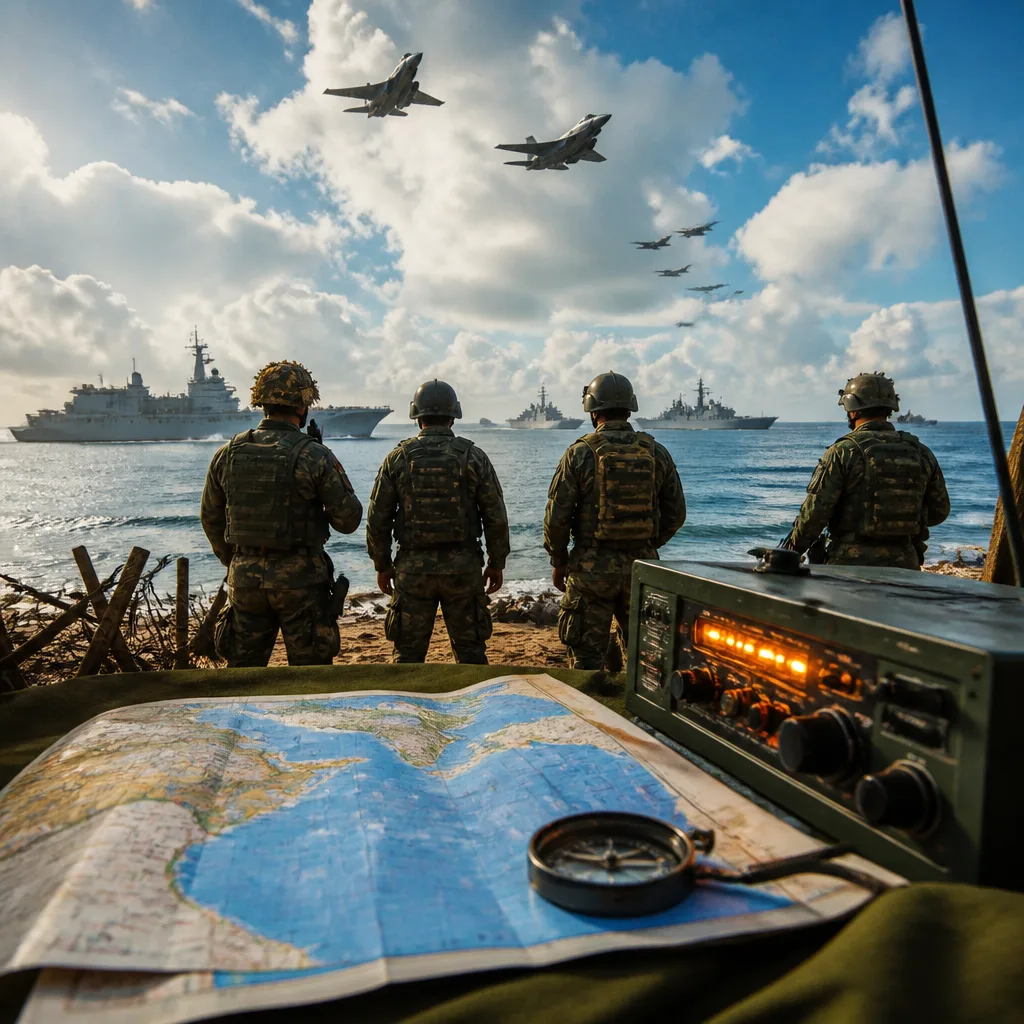
Seoul, Aug 14: North Korea on Friday lambasted the forthcoming US–South Korea Ulchi Freedom Shield exercises as a “rehearsal for an aggressive war” and warned it would take unspecified but "stern steps" in response, according to a statement carried by state media. The declaration came ahead of the allies' 11‑day drills, which Washington and Seoul have characterised as defensive and similar in scope to previous years.
Pyongyang signals possible escalation
The statement from North Korea’s Foreign Ministry said the combined training would produce “a different level of instability in the region” and declared that Pyongyang would counter a perceived new level of threat with “a new level of a deterrent.” The North also said the upcoming exercises would be of a "more serious provocative nature and dangerousness than last year," and claimed they would involve all the military assets and war‑fighting modes of the United States and South Korea — a description not confirmed by the allies.
"It is our consistent principle of ensuring security to respond to a new level of a threat with a new level of a deterrent,"
Analysts have noted that such rhetoric is typical ahead of major US‑South Korean drills and often precedes an uptick in North Korea’s weapons testing. The country has in the past used allied exercises as justification to conduct missile launches and other demonstrations of capability, underscoring the risk of heightened tensions during the drills.
- Exercise: Ulchi Freedom Shield
- Duration: 11 days, starting Monday
- Allies' position: Allies say the exercises are defensive and similar in scope to prior years
Allies stress defensive intent
US and South Korean military authorities have maintained that the Ulchi Freedom Shield exercises are routine and designed to strengthen readiness against threats from the North. A US military statement reiterated the defensive nature of the training, emphasising interoperability and preparedness rather than offensive planning.
Despite those assurances, Pyongyang’s announcement increases the risk of miscalculation. Experts quoted in reporting observed that North Korea frequently cites allied drills as a pretext to expand its weapons testing and rally domestic support for leader Kim Jong Un. Any such testing could complicate diplomatic efforts and regional security calculations.
Regional and Indian implications
While the immediate dispute centres on the Korean Peninsula, the situation carries broader implications for strategic balances in the Indo‑Pacific, where India has been deepening defence ties with partners concerned about freedom of navigation and regional stability. Indian security planners monitor developments closely as escalation could affect maritime security and the diplomatic environment in which India pursues its strategic interests.
India has not been a direct party to the US–South Korea drills, but New Delhi’s engagement with both the United States and other regional partners means any prolonged tension or increased weapons testing will feature in bilateral and multilateral security discussions.
What to watch
Observers will be tracking several indicators over the coming days:
| Indicator | Why it matters |
|---|---|
| Missile launches or weapons tests by North Korea | Could signal escalation and prompt international condemnation or sanctions responses |
| Allied public statements and force posture | May affect deterrence perceptions and risk calculations |
| Diplomatic exchanges (channels or emergency talks) | Could offer de‑escalatory openings or formal protests |
The Ulchi Freedom Shield exercises, marked by combined command‑post and field training, are scheduled to run for 11 days. The allies say the scope mirrors previous years' rehearsals aimed at strengthening readiness. North Korea’s state media and the Foreign Ministry framed the drills as an existential provocation that requires a stronger deterrent response.
The coming week will test whether Pyongyang’s warnings materialise as concrete military actions or remain rhetorical signalling. Any movement from the North will be closely watched by Seoul, Washington and regional partners, including India, which views stability on the Korean Peninsula as contributing to broader Indo‑Pacific security.