Fuel supply disruptions linked to geopolitical tensions in the Middle East and the Gulf have begun to ripple through India’s energy system and everyday life, producing visible changes in household behaviour, power-grid operations and labour markets, according to a recent account of conditions on the ground.
Household coping: induction, rationing and higher bills
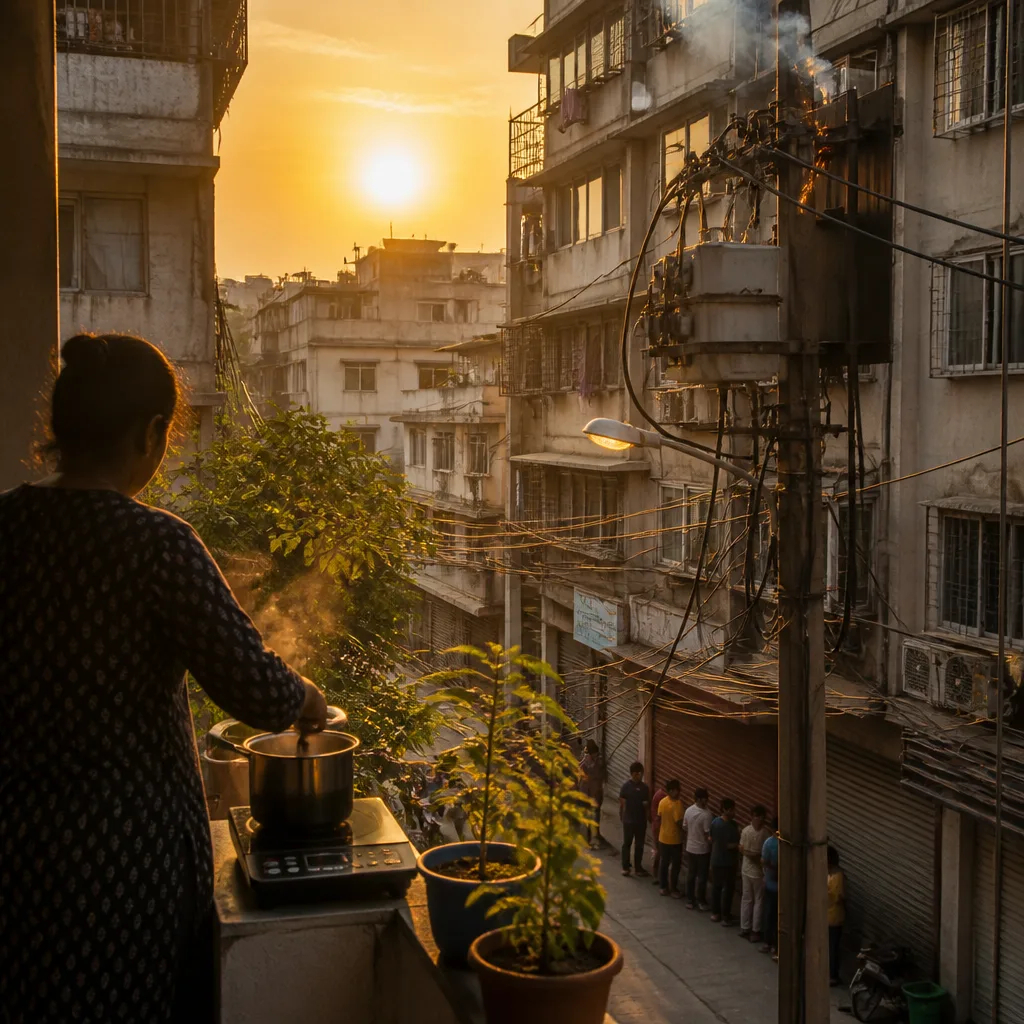
With supplies of cooking gas strictly rationed, many households have switched from LPG to induction cooktops, a shift that has increased demand on local electricity networks. The account notes that "local power grids are now prone to overloading, and electricity supply fluctuates unpredictably, affecting the safety of electrical appliances." At the same time, consumers are cutting back on petrol for two‑wheelers and otherwise curbing fuel use to stretch resources.
Labour movements and service-sector impacts
Rationing of LPG and rising urban living costs are prompting migrant workers to return to rural homes, where households may rely on firewood and other traditional fuels. Businesses are feeling the pinch: hotels have reduced menus or closed, contributing to unemployment and making daily services harder to secure for urban residents dependent on domestic help.
Macro effects: prices, currency and financial markets
The account links the energy shock to rapid movements in international oil markets: every escalation between the United States and Iran sends oil prices higher, with fast transmission into the Indian economy. The rupee has weakened against the dollar and stock markets have seen volatility. Mutual fund gains built up over years may be wiped out overnight when geopolitical tensions spike, according to the reporting.
Supply chain and agricultural repercussions
Beyond fuel, disruptions affect fertiliser supplies, the piece notes, meaning that inflation originating in oil markets can end up on the dining table and in rural farmlands as well as urban households.
Policy responses and financial buffers
At the macro level, the Reserve Bank has been absorbing losses, and the prime minister has urged citizens to conserve fuel, edible oil and defer non‑essential imports and foreign travel. Policymakers, including the finance ministry, are described as calculating measures to cushion overlapping crises. These steps reflect a mix of demand management and attempts to protect financial stability while supply risks persist.
"The war 'out there' is a 'crude' shock in the most literal sense," the report said, describing how international tensions translate quickly into domestic economic strain.
Consequences and practical challenges
The narrative highlights several immediate and near‑term challenges for India’s energy and social landscape:
- Grid resilience: Increased domestic electrification for cooking elevates peak demand and creates safety risks when systems are overloaded.
- Fuel equity: LPG rationing disproportionately affects urban poor and migrant households who cannot access alternative fuels.
- Labour market disruption: Reverse migration reduces urban labour availability and adds pressure on rural economies.
- Price transmission: Oil‑driven inflation reaches food and farm inputs, complicating policy trade‑offs.
These outcomes underline how closely India’s domestic energy security is tied to global geopolitical events, and how short‑term coping strategies—such as rapid adoption of induction cooking—have secondary impacts on infrastructure and livelihoods.
| Sector | Observed impact |
|---|---|
| Households | LPG rationing; shift to induction; higher electricity bills |
| Power sector | Local grid overloads; appliance safety risks |
| Labour/Services | Migrant return; hotel closures; job losses |
| Macro economy | Rupee weakness; stock volatility; mutual fund losses |
| Agriculture | Fertiliser supply stress; inflation reaching farms |
While the account focuses on current coping measures and immediate policy signals, it points to the broader need for strengthening grid infrastructure, ensuring equitable fuel access, and building buffers in supply chains to reduce household vulnerability to external shocks.