Researchers at Edith Cowan University in Western Australia say iron‑rich rocks beneath the Pilbara region can produce hydrogen naturally and that the process can be enhanced in laboratory experiments — a development that, if it proves scalable, could underpin a new source of low‑emission energy.
Laboratory simulation of deep conditions
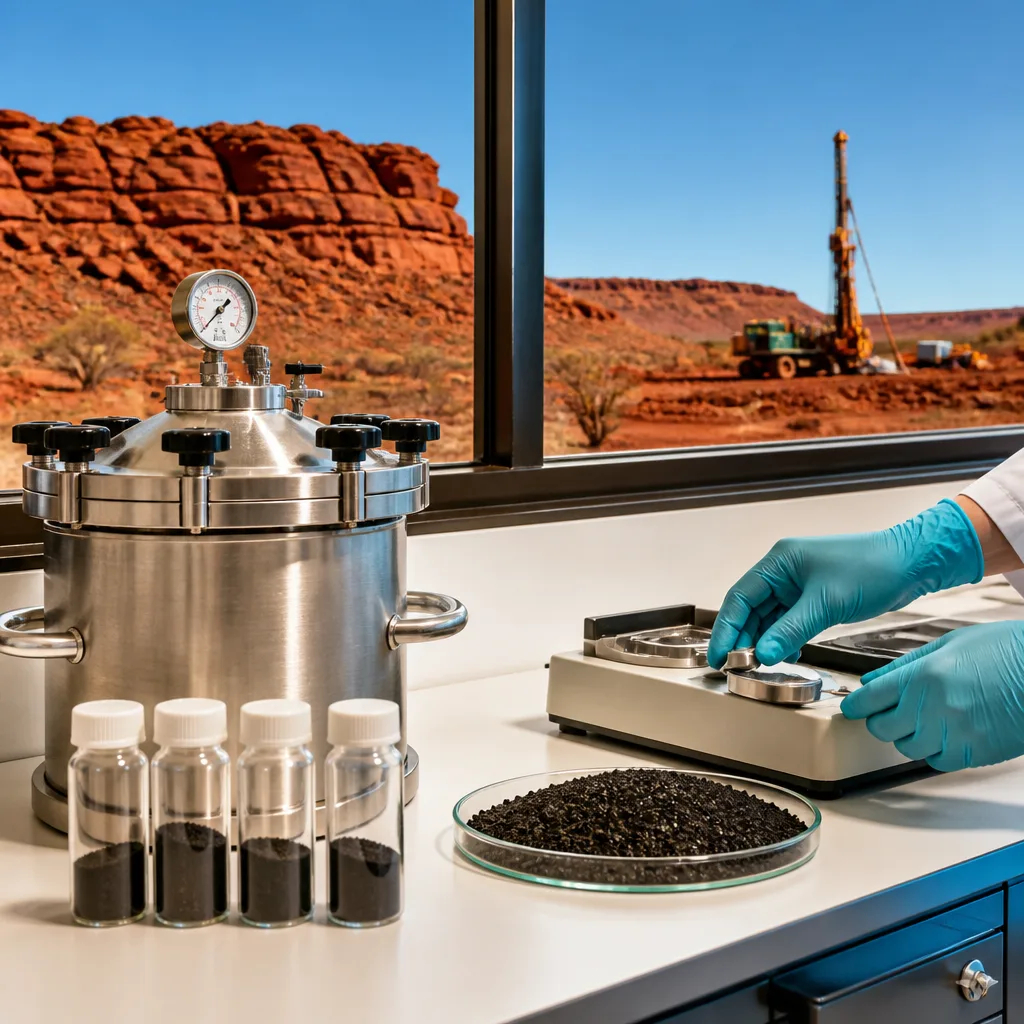
The team focused on magnetite, a common iron oxide in the Pilbara’s banded iron formations, and exposed samples to hot, pressurised water to mimic the subsurface environment. In experiments run over a period of 60 days at about 200°C, the mineral released hydrogen gas, offering a clearer view of how natural hydrogen might form within deep rock.
Potential to stimulate subsurface hydrogen generation
Beyond observing spontaneous hydrogen production, the researchers report they were able to increase hydrogen generation by injecting a fluid into the iron formations in their experimental set‑up. That raises the prospect that naturally occurring hydrogen could one day be deliberately enhanced underground rather than produced only by surface chemical processes.
“Australia could be sitting on a massive, untapped energy reserve -- and the potential is enormous,”
Associate Professor Alireza Keshavarz said in a statement, noting the scale of the Pilbara formations and the implications for both domestic use and export markets.
Why the Pilbara matters
The Pilbara contains some of the world’s largest banded iron formations — thick, layered deposits that are a major source of the region’s iron ore industry. Lead author Kaveh Moghanirahimi emphasised the scale of the geology in the research release, saying the area’s geology could be transformative for Western Australia’s energy future if the process can be unlocked at scale.
- Mineral tested: Magnetite
- Experimental conditions: ~200°C, high pressure, 60 days
- Outcome: Hydrogen gas produced and generation increased by injecting a solution
The researchers framed the discovery as a potential complement to other low‑emission hydrogen production methods, such as electrolysis powered by renewable electricity or low‑carbon industrial routes. They also emphasised that the findings improve understanding of how geological hydrogen forms and what conditions sustain its production.
| Parameter | Laboratory value |
|---|---|
| Temperature | ~200°C |
| Duration | 60 days |
| Material | Magnetite (banded iron formation sample) |
| Observation | Hydrogen produced; yield increased with injected solution |
Authors caution, however, that laboratory demonstrations are an early step. The release describes a plausible mechanism and a method to stimulate hydrogen release, but it does not assert that the technique is ready for field deployment or that economic recovery is established.
That caveat is important: scaling a laboratory reaction to kilometre‑scale geology entails technical, environmental and regulatory questions. The subsurface injection approach would need to be assessed for impacts on groundwater, rock stability and greenhouse‑gas balance, and the economics of extracting and purifying the gas would have to be established against competing hydrogen production pathways.
Still, the possibility of a large, geographically concentrated geological hydrogen resource has strategic implications. For a state like Western Australia — already a major minerals exporter — a commercially viable, low‑emission hydrogen supply could support domestic decarbonisation and supply international markets seeking low‑carbon fuels.
For other countries, including Canada, the study underscores an expanding view of potential hydrogen sources that extend beyond surface electrolysis and industrial by‑product streams. Geologically sourced hydrogen has been reported in other regions, and better knowledge of its formation and how to stimulate it could influence national energy planning and research priorities.
The Edith Cowan team’s next steps were not detailed in the release, but follow‑up work would typically include larger‑scale experiments, field trials to test real rock formations and comprehensive environmental assessments before any deployment could be contemplated.
In the meantime, the findings add to a growing portfolio of scientific efforts to find low‑emission energy pathways and illustrate how geological science might intersect with energy policy in the coming decades.