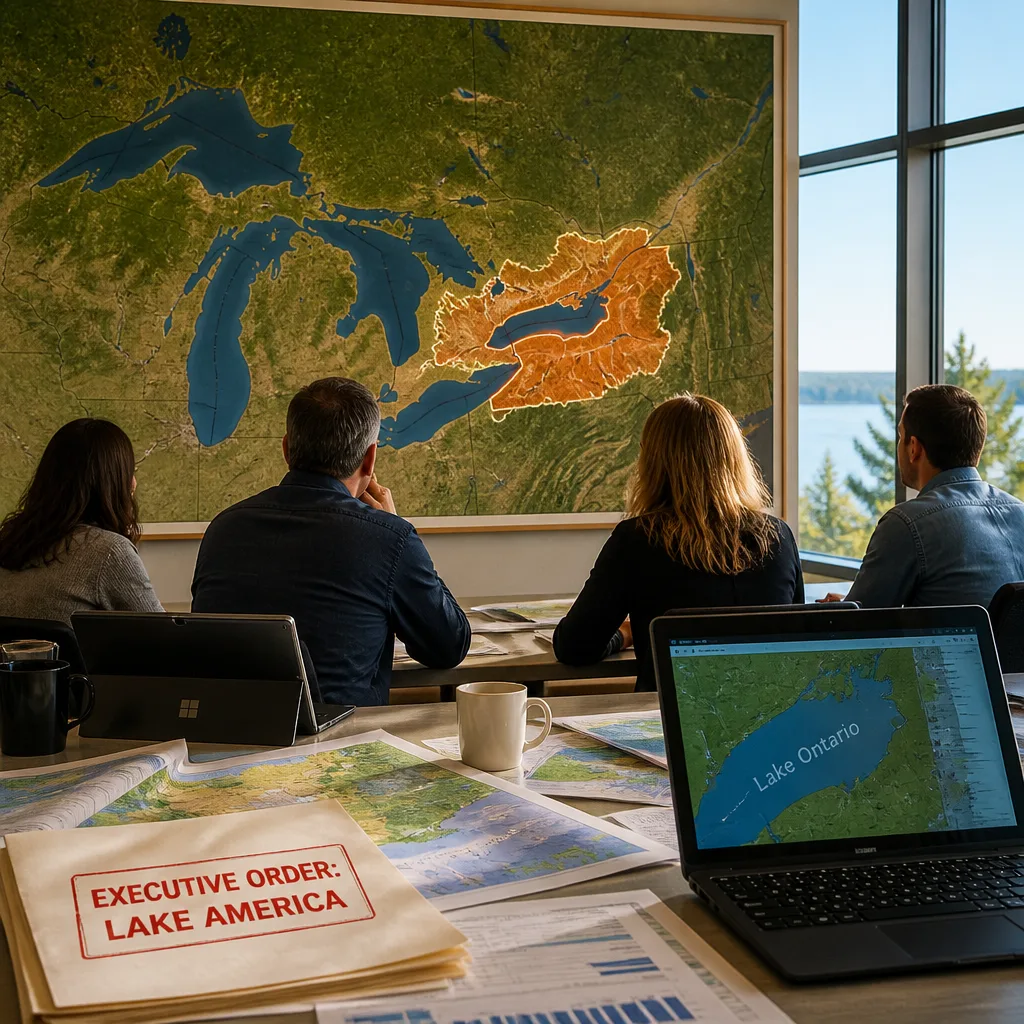
The International Association for Great Lakes Research (IAGLR) has made clear it will continue to use the historic name Lake Ontario in its scientific work, even after a U.S. presidential executive order on Aug. 27 directed federal agencies to adopt the name "Lake America." The group said the decision preserves clarity for research, honours Indigenous place names and protects the integrity of long-term datasets.
Scientific naming vs. political decisions
The executive order applies to U.S. federal government usage only; it cannot compel scientific organisations, academic journals or international partners to change established nomenclature.
"will continue to use the name Lake Ontario in all its publications, conferences, communications, and scientific activities,"
The IAGLR framed its stance in those terms, saying consistent and accurate naming is essential to the association's mandate to advance research and understanding of the Great Lakes. The organisation argued that the lakes cross political boundaries and that their study and stewardship depend on cooperation among scientists, institutions, governments and communities on both sides of the Canada–U.S. border.
History and cultural context
The association also noted the deep history of the name. It derives from the Wendat word Ontari’io, commonly translated as either "the lake is beautiful" or "the lake is big," and has been in use for more than four centuries — predating the founding of both Canada and the United States.
"naming reality means calling it Lake Ontario—then, now and always."
That formulation was used by Canadian political leaders responding to the U.S. order, underscoring the cultural and historical weight the name carries in Canada and among Indigenous peoples.
Why scientists insist on continuity
- Data integrity: Long-term environmental datasets rely on stable place names to track changes over decades and centuries.
- International collaboration: Research on the Great Lakes typically involves partners on both sides of the border; competing names could create confusion in joint projects and publications.
- Cultural respect: Retaining historically rooted names recognises Indigenous languages and the long human history of the region.
Those reasons guided IAGLR's announcement and mirror common scientific practice: researchers and journals generally follow internationally accepted nomenclature rather than unilateral political renamings.
| Item | Detail |
|---|---|
| Traditional name | Lake Ontario (from Wendat Ontari’io) |
| Reported meaning | "the lake is beautiful" or "the lake is big" |
| Duration of use | More than 400 years |
| U.S. executive order date | Aug. 27, 2026 |
Implications and next steps
For scientists, the immediate consequence is pragmatic: publications, conference materials and datasets will continue to identify the basin as Lake Ontario to preserve continuity and avoid ambiguity. That approach reduces the risk of misinterpretation in environmental monitoring, policy analysis and cross-border management of fisheries, water quality and ecosystem health.
Politically, the renaming order highlights tensions between symbolic acts and scientific conventions. While governments can set their own terminology for internal use, international scientific communities are likely to maintain established names unless a broadly accepted change is negotiated and adopted by relevant authorities and stakeholders.
For the Great Lakes themselves — and the decades of monitoring that track their changing climate, chemistry and ecology — the priority for researchers remains clear: stable, precise language that enables reproducible science and effective binational cooperation.
The IAGLR announcement is an early indicator that, at least among the scientific community, Lake Ontario's longstanding name will persist in research and stewardship work despite recent political developments.