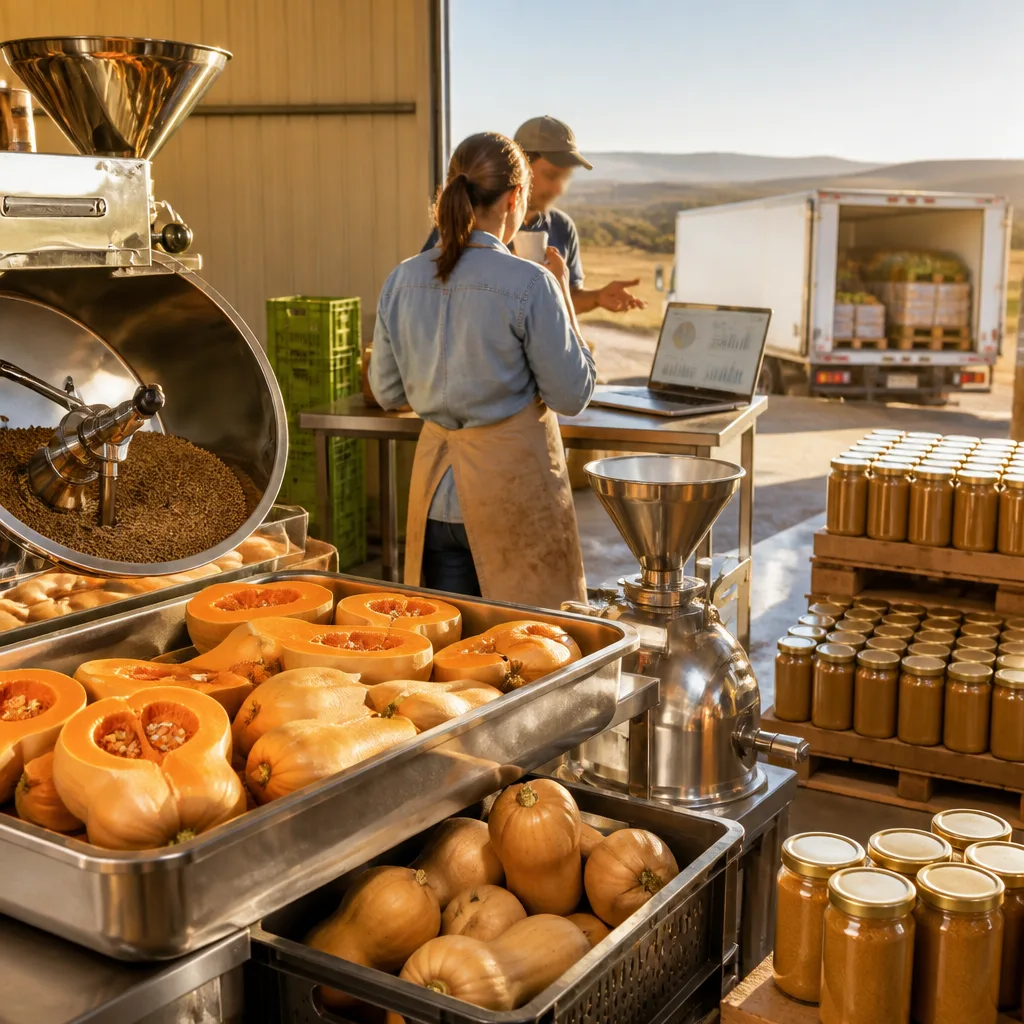
Chantelle de Bruyn turned a family health problem into a business and, in the process, exposed a common fault line in South Africa’s SME ecosystem: money matters, but it is not enough. Her Free State venture, Buttercup Farmhouse, registered in 2019, made a coffee alternative from butternut and reached major retailers by 2024 — a trajectory she attributes to a mix of funding, mentorship and market exposure.
Funding plus capability
De Bruyn’s path offers a compact case study of why small firms — and particularly women‑owned businesses — often struggle to scale. She undertook short courses in biochemistry, worked with the University of the Free State food science laboratory to refine the product over three years and used a combination of a development grant, a lending facility and partnership opportunities to enter shelves and new markets.
Through Absa, she received a business development grant, access to a lending facility and opportunities to showcase products at events such as Lemo Fest and on the Proudly South African platform. Those non‑financial supports — technical advice, marketing assistance and introductions to buyers — were instrumental to scaling, she said, and point to a broader policy implication: capital without capability and routes to market may deliver limited returns.
What the evidence shows
National measurement of small business pressures underlines the fragility many firms face. The Small Business Growth Index, described as South Africa’s first real‑time barometer of small business conditions, found that only 38% of businesses surveyed in 2025 believed they could survive for more than a year under sustained cost pressure without external support.
| Measure | Finding |
|---|---|
| Perceived one‑year survival under cost pressure (2025) | 38% |
That figure signals more than a funding gap: it highlights the exposure of firms to rising input costs, constrained demand and limited buffers. For household budgets and employment prospects, the stakes are clear. Small businesses contribute disproportionately to entrepreneurship and job creation, so their ability to withstand shocks matters to incomes and local economies.
- Grants and lending can unblock immediate cash needs and finance capital investment.
- Technical support — product development, food‑safety testing and quality control — enables market entry and compliance.
- Market access — retail listings, trade events and national platforms — convert capacity into sales.
Gendered gaps in the ecosystem
De Bruyn’s account emphasises that women entrepreneurs frequently face weaker links into this broader ecosystem. Even when finance is available, uneven access to mentorship, business development networks and buyer introductions can leave growth opportunities unrealised. The result is that funding alone may not shift many firms into higher‑productivity trajectories.
Policymakers, funders and corporate procurement programmes that aim to support SMEs will need to pair capital with targeted capability building and structured market access if they are to improve survival and growth outcomes. That has practical implications for how banks, development finance institutions and corporate suppliers design support: grants and loans should be bundled with technical assistance, quality testing and marketing pipelines.
For consumers and households, the consequence is dual. Successful scaling of firms like Buttercup Farmhouse can broaden product choice and support jobs in production, distribution and retail. Conversely, failing firms erode local incomes and reduce competition in supply chains. The Small Business Growth Index’s 38% metric should be a warning to stakeholders that survival under pressure cannot be taken for granted.
De Bruyn’s story is not an argument against funding — it is a reminder that capital is most effective when it arrives as part of an ecosystem that helps entrepreneurs transform ideas into products that sell and sustain livelihoods.