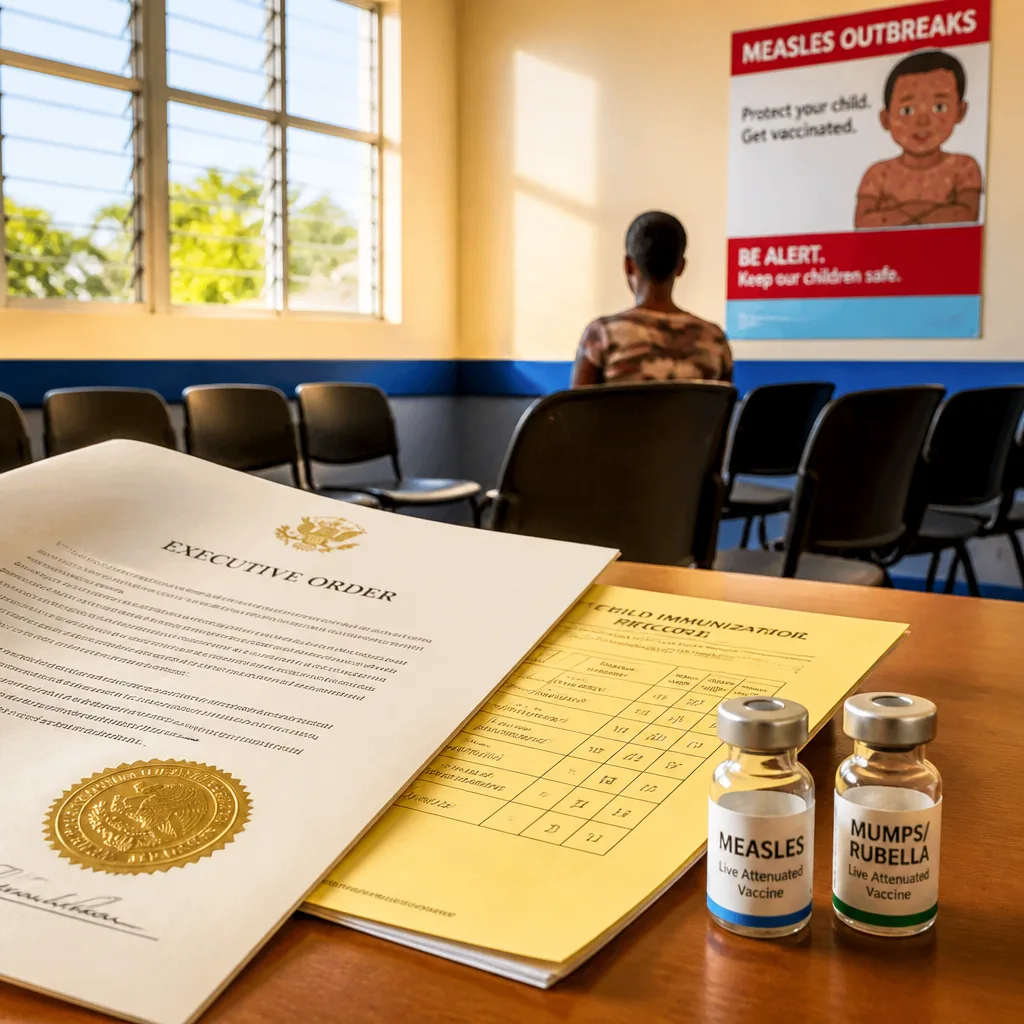
The White House this week issued an executive order that changes the United States’ approach to childhood vaccination by endorsing “maximal parental choice” and narrowing routine recommendations, according to the extracted reporting.
Key changes to the vaccination schedule
Under the order, the list of vaccines routinely recommended for every child would be reduced from 18 to 11. Several previously routine immunisations would instead be repositioned as options for parents to discuss with health‑care providers. Vaccines removed from routine recommendation include those for hepatitis A, hepatitis B, rotavirus, meningococcal disease, influenza and COVID‑19, the reporting states.
- The order calls for the measles, mumps and rubella (MMR) vaccine to be given as separate products when individual formulations become available rather than the combined MMR shot.
- It urges separate medical visits for each childhood vaccine, despite no evidence that multiple simultaneous vaccines overload children’s immune systems.
- States are asked to reconsider existing requirements that children be vaccinated before starting school.
“support maximal parental choice”
The executive order does not ban vaccines, nor does it immediately overturn state mandates for school entry. However, the reporting warns that giving presidential endorsement to the idea the established schedule is excessive or unsafe may have an outsized effect on public attitudes — particularly amid rising vaccine hesitancy.
Public health risks and measles resurgence
Vaccination operates not only to protect individuals but to interrupt transmission chains and protect those who cannot be fully immunised, such as infants and people with compromised immune systems. The reporting highlights measles as a clear example: preventing sustained spread typically requires around 95% of the population to have received two vaccine doses.
Recent figures cited in the reporting show a worrying resurgence of measles in the US: 2,465 cases recorded so far in 2026 and 2,289 cases in 2025. In 2025 there were three deaths and a hospitalisation rate of 11%, described as the highest case count since 1992.
| Metric | Figure |
|---|---|
| Routine vaccines recommended (before order) | 18 |
| Routine vaccines recommended (after order) | 11 |
| Measles cases in 2025 | 2,289 |
| Measles cases in 2026 (to date) | 2,465 |
| Hospitalisation rate for measles (2025) | 11% |
Public health analysts cited in the reporting express concern that splitting the combined MMR vaccine into separate component shots — each requiring a separate appointment — will create delays and reduce completion rates for the full course. Confusion about whether and when to obtain separate vaccines could further depress uptake.
Implications and what to watch next
Even without immediate legal changes to state requirements, the order's symbolic weight could influence parental attitudes and clinician practice. The reporting notes that in the context of falling coverage, such signals matter: lower uptake in some communities has already left pockets well below the herd‑immunity threshold.
Health systems and immunisation programmes will need to monitor coverage closely and reinforce clear, evidence‑based messaging about the safety and importance of timely combined vaccination schedules. Public health authorities also generally recommend consulting a clinician or clinic for personalised advice rather than deferring or fragmenting vaccine schedules.
This development will be followed closely by national and international public health bodies for its potential to accelerate vaccine‑preventable disease outbreaks. Readers concerned about vaccinations or the best schedule for their children should consult a trusted health‑care professional rather than relying on politicised guidance.
Reporting in the source material was used for this article.