The Climate Health Story Project (CHSP), run by Bhekisisa and supported by the Wellcome Trust, taught a cohort of researchers how to explain their climate‑related health work in plain English rather than in technical jargon that alienates non‑specialists. The programme aimed to take research beyond academic journals and into public conversation.
Why plain language matters
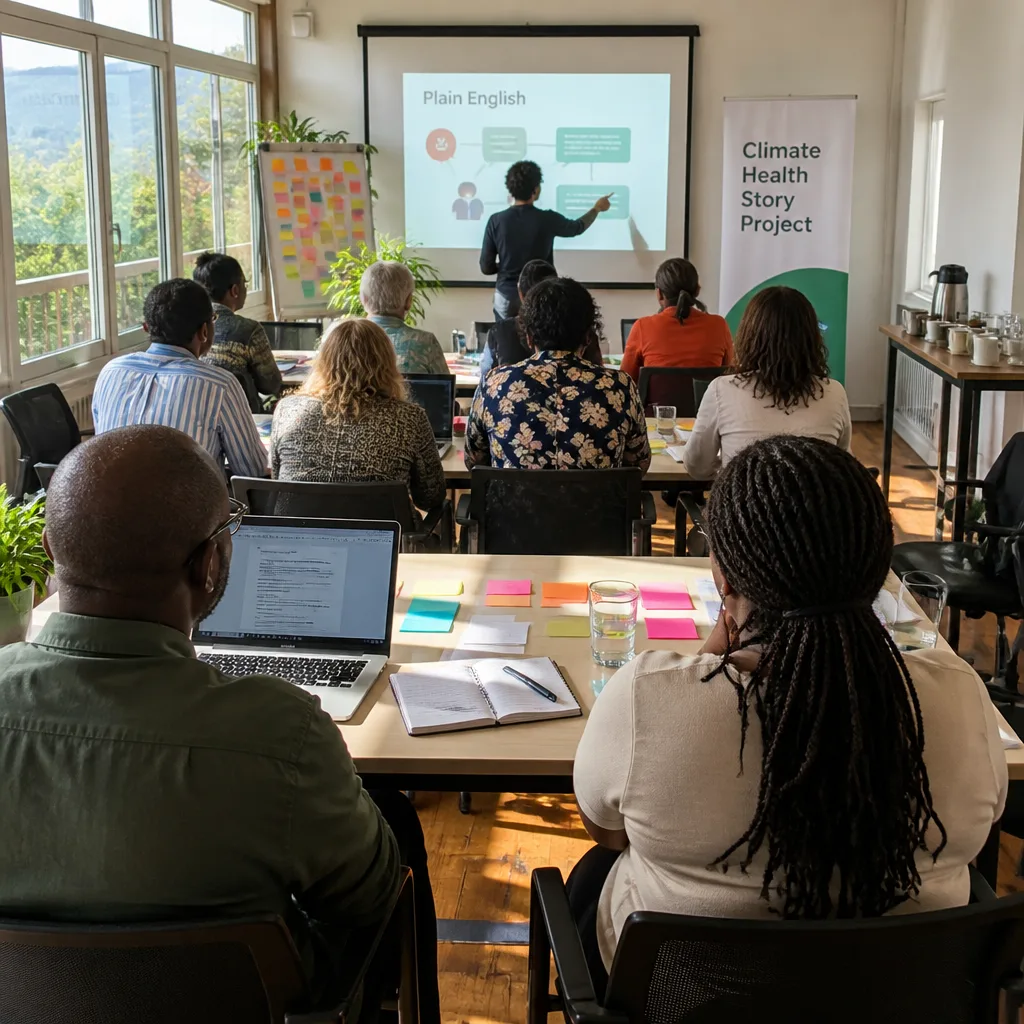
Many researchers are excellent at detailed analysis but struggle to present findings to the public. The CHSP organised two full‑day workshops, a series of webinars and a mentorship programme to help participants craft accessible narratives. A group of 10 academics and climate and health advocates took part.
The stated goal was simple: if scientists package their work into engaging, understandable stories, people are more likely to read about — and then explore — the underlying science. Bhekisisa senior journalist Ida Jooste, who led the training, told organisers the experience often changes researchers’ instincts about communication.
“Even if they instinctually resist techniques that package science into bite‑sized messages, they come to realise that engaging, accessible storytelling encourages people to explore the science more deeply.”
How the project worked
The CHSP combined practical training with ongoing support so that researchers could experiment with storytelling techniques and receive feedback. The core elements reported were:
- Two full‑day, in‑person workshops focused on story structure and plain‑language techniques.
- A series of webinars reinforcing concepts and featuring examples of public engagement.
- A mentorship phase where journalists worked directly with researchers on real stories.
The training emphasised replacing discipline‑specific shorthand — what the project calls “High Alien” — with language the public recognises and finds meaningful. The organisers framed the work as enabling scientists to participate more effectively in public debate about climate and health.
Implications for public health and climate communication
Plain language communication matters for several reasons. First, it can improve public understanding of how climate change affects health outcomes, from heat exposures to vector‑borne diseases. Second, clearer messages can help policymakers and funders grasp the urgency or feasibility of interventions. Third, accessible reporting builds trust; when people can follow the logic of a study, they are less likely to dismiss scientific claims as opaque or elitist.
Training researchers in storytelling does not mean dumbing down content. Rather, it is a method to present evidence and uncertainty transparently so non‑specialist audiences can make informed choices. As Bhekisisa’s editor‑in‑chief, Mia Malan, helped oversee the project, the approach aimed to preserve scientific accuracy while improving reach.
What participants gained
Participants reportedly walked away with practical skills: writing ledes that foreground the human impact of research, avoiding acronyms, and using metaphors or simple analogies to explain complex mechanisms. The mentorship component allowed researchers to test these techniques on draft pieces and receive journalistic editing tailored to public audiences.
| CHSP component | Purpose |
|---|---|
| Workshops | Hands‑on storytelling and plain‑language techniques |
| Webinars | Reinforcement and wider examples |
| Mentorship | One‑on‑one feedback on real communications |
By equipping climate and health researchers to speak in clearer language, the CHSP sought to make science more accountable and more useful to society. For public health professionals, communicators and policy‑makers alike, the takeaway is that the way research is presented shapes how it is received — and whether it will inform decisions that affect lives.
Project reporting, including reflections authored by Tanya Pampalone, encourages this model as a practical route to better public engagement with science. The CHSP also highlights a growing expectation in South Africa that researchers should be able to explain their work beyond academia if they want it to have policy or community impact.