
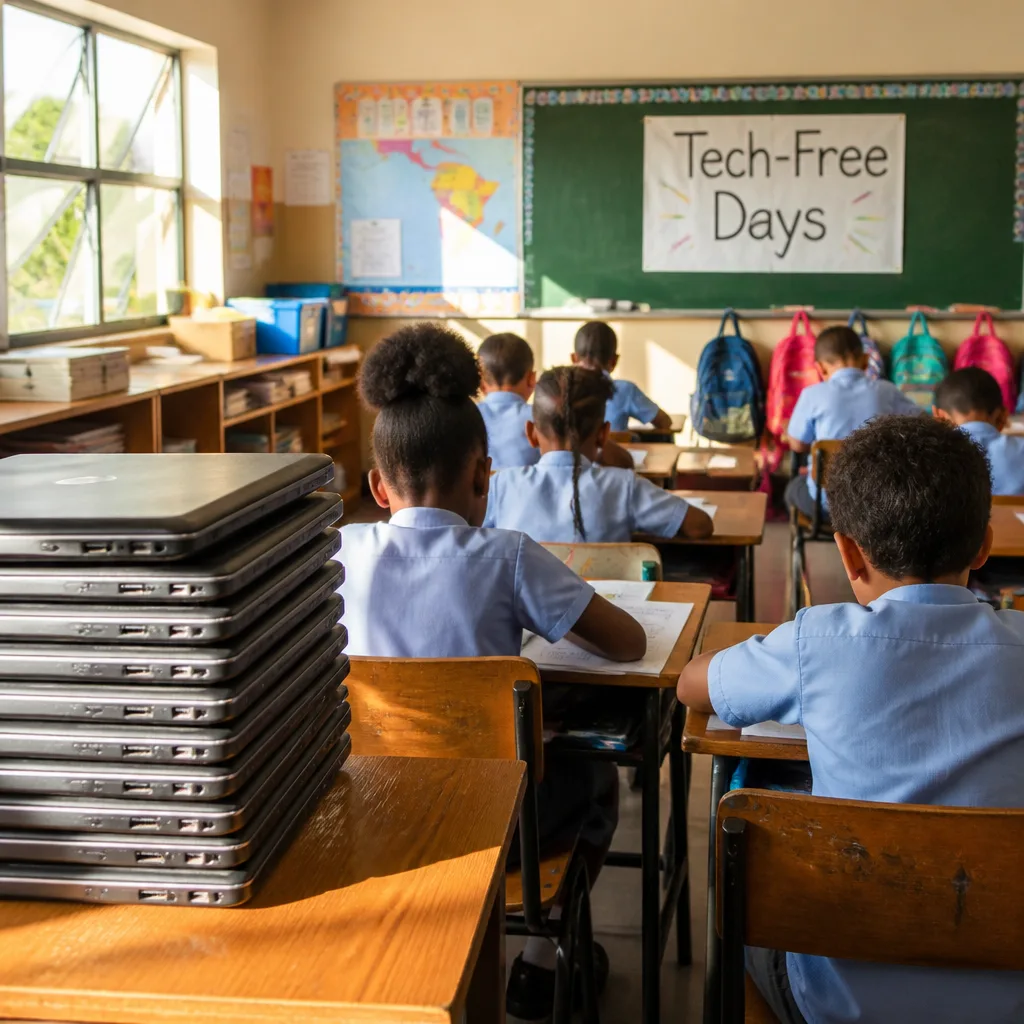
School districts in North Carolina have begun rolling back the era of one‑to‑one student devices, reducing screen time and reintroducing traditional paper‑and‑pencil learning as a core classroom tool. The move, reported this week, reflects a broader reconsideration of how and when technology should be used in schools.
Districts curb devices, prioritise purposeful use
Granville County Public Schools is now in its second year of a policy that designates two technology‑free days each week. Officials say the effort is meant to help teachers sequence lessons and reduce the amount of time learners spend on screens.
Other local authorities in the same state have adopted similar measures. Chapel Hill‑Carrboro City Schools has revised its digital‑learning plan to scale back routine technology use, while Burke County Public Schools declared last year that pencil and paper would be students’ primary tools for assignments. The state education department issued guidance over the summer advising schools on what it calls “purposeful screen use.”
“Everyone agrees that there is a problem, and that our young people are spending too much time on devices,” said Stan Winborne, superintendent of the Granville district.
Granville’s more recent approach removes devices from kindergarten to Grade 2 classrooms entirely and stops take‑home devices for learners in Grades 3 to 8. Those pupils will still be able to use laptops kept on carts at school, while high school learners retain take‑home access.
Classroom control, lesson sequencing and student pushback
Teachers and learners initially resisted the policies. Some educators were concerned about losing flexibility over how to plan lessons and whether to integrate devices. Older pupils, who had become used to unlimited laptop access, also objected.
Proponents argue the changes help teachers structure learning across units. Having two consecutive tech‑free days — now Mondays and Tuesdays in Granville — is intended to allow uninterrupted time for non‑digital activities and assessments, said district leaders.
Restrictions on content and apps
Districts are not only limiting device access but also student access to certain online services. In Granville, for example, learners will not be permitted to access YouTube from school‑issued devices. Other systems nationally are blocking social media or streaming apps unless a teacher permits them.
- Granville County: Two tech‑free days weekly; no devices in early grades; take‑home banned for Grades 3–8; high schoolers keep devices.
- Burke County: Pencil and paper prioritised for assignments (policy in place since last year).
- Chapel Hill‑Carrboro: Digital‑learning plan revised to reduce routine technology use.
- State guidance: Department issued advice this summer on “purposeful screen use”.
| Measure | Scope |
|---|---|
| Tech‑free days | Two consecutive days (Granville) |
| Early grades device ban | Kindergarten–Grade 2 (Granville) |
| Take‑home devices removed | Grades 3–8 (Granville); varies elsewhere |
| Content restrictions | YouTube and other streaming/social apps blocked without approval |
What this means for teaching and learning
The shift underscores a tension many education systems face: balancing the pedagogical advantages of devices — instant research, differentiated resources, multimedia learning — with concerns about distraction, inequitable home access and the loss of fundamental literacy and numeracy practice.
For teachers, the changes may simplify classroom management and allow planned, technology‑free blocks for deep focus, assessment or hands‑on activities. For parents and learners, removing take‑home laptops raises questions about homework equity, access to online resources outside school and how schools will support digital skills development despite reduced device time.
South African education leaders will watch these developments closely. Investment in devices has been a major policy focus in recent years, and debates here similarly revolve around whether technology complements or undermines classroom learning when introduced at scale without clear pedagogical limits.
As schools internationally experiment with policies that limit screens, the central challenge remains the same: designing clear, evidence‑based rules that keep learners’ needs and classroom outcomes at the centre, while giving teachers the professional discretion to decide when technology truly enhances learning.











